

Orchard Beach, also known as “The Bronx Riviera,” is currently the only public beach in the borough. It hasn’t always been in its prime, and at times it was even on the verge of being closed down or destroyed. Yet, despite everything, residents of the Bronx and beyond still spend sunny summer days here. In this article, we’ll dive into the history of how this beach was created and developed. All this and more on bronx.name.
Developing the Beach in Pelham Bay Park
The area of what is now Pelham Bay Park was once inhabited by Native American tribes, and later, the Dutch and English fought over the land. But in 1887, the New York government took control of this part of the Bronx, and in 1888, it officially opened a park here. To learn more about the history, transformation, and modernization of Pelham Bay Park, read this article.
For several years, it was a general park area, but in early 1902, the New York City Department of Parks and Recreation decided to prepare the area for visitors and expand recreational activities. They started by dismantling two old houses and using the salvaged wood to build free bathhouses on the shore, which served about 700 visitors daily during the summer.
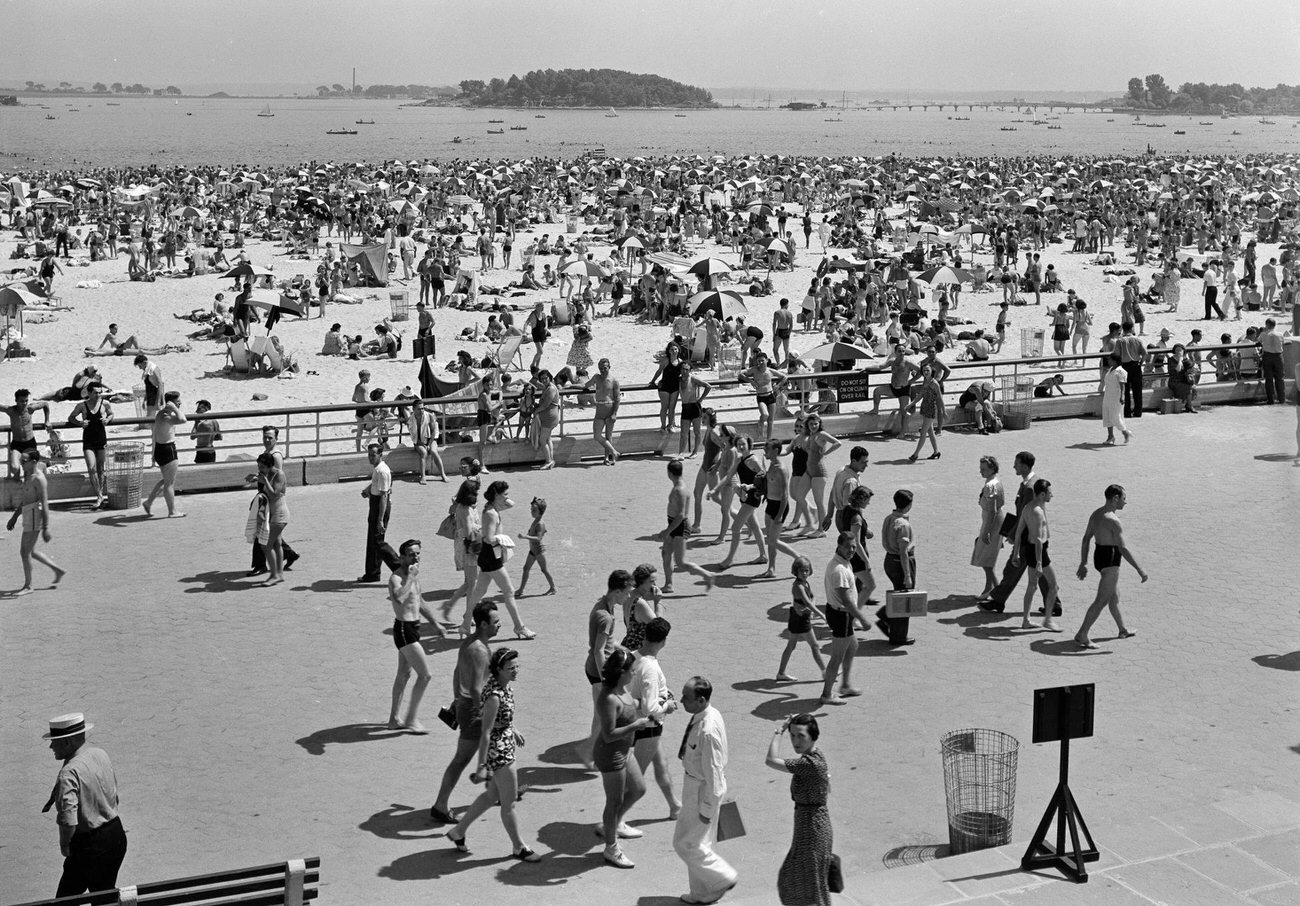
Around 1903, the nearby Hunter Island became a popular summer retreat. But no one expected the influx of people to be so massive. It was clear that one beach wasn’t enough; the shoreline needed to be expanded and equipped for public use. In 1905, a campground with 100 bathhouses was opened at Rodman’s Neck, southwest of the island. They also created a small beach there, named Orchard Beach, on the northeastern tip of Rodman’s Neck. The new beach was so popular that in the same year, Orchard Beach was expanded by 400 feet (120 m), restrooms were added, and the surrounding area was cleared. By 1912, Orchard Beach was seeing an average of 2,000 visitors on weekdays and 5,000 on weekends, making it one of the most popular summer spots in the Bronx.
Robert Moses’ Massive Reconstruction
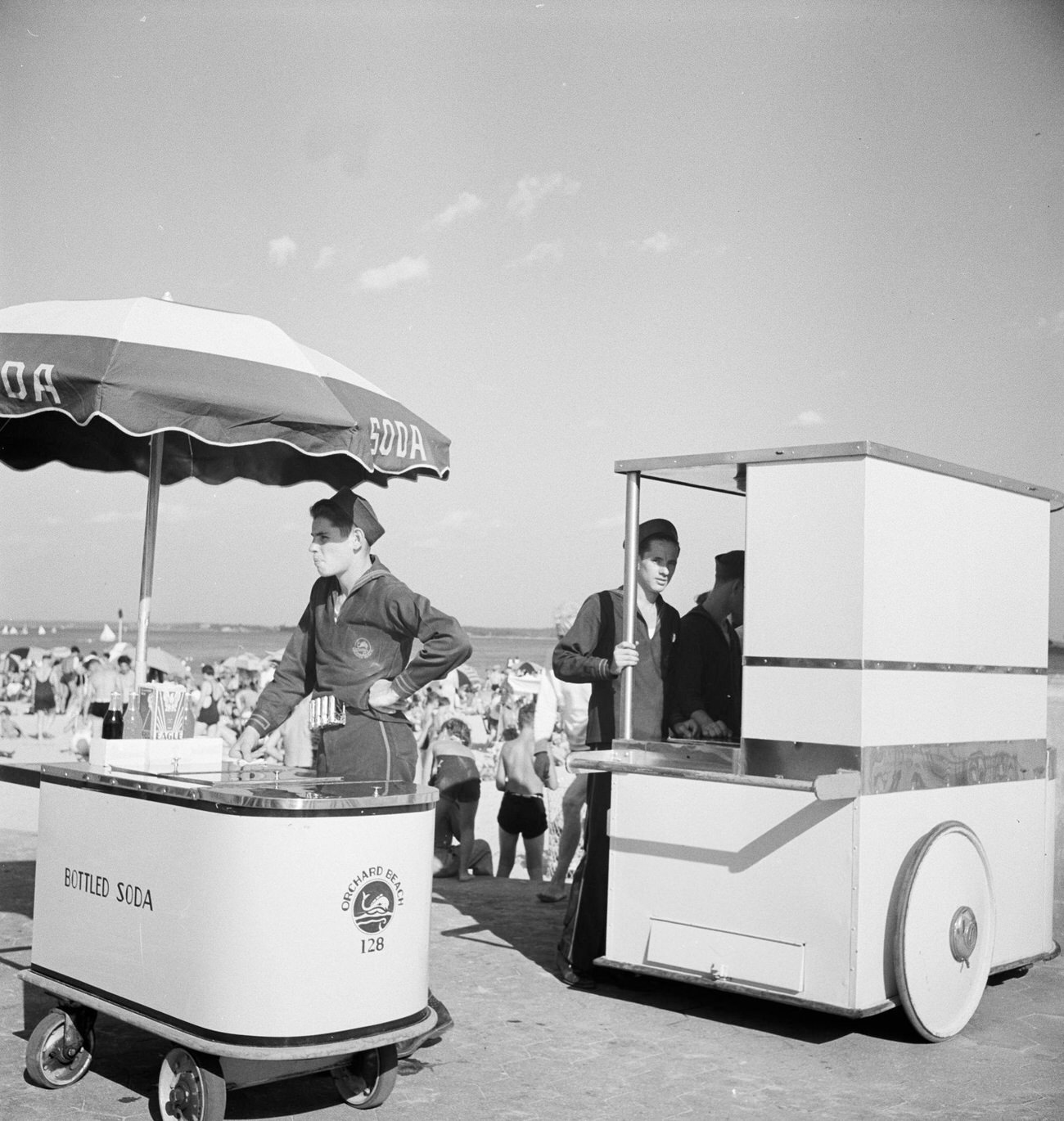
The modern recreational area of Orchard Beach was created in 1934 through the efforts of Robert Moses, who also designed the famous Split Rock Golf Course. Fiorello LaGuardia, the mayor of New York at the time, appointed Moses as the Parks Commissioner. Immediately after taking office, Moses ordered an inventory of all the city’s parks to determine which ones needed to be renovated. One of the first sites he focused on was Orchard Beach.
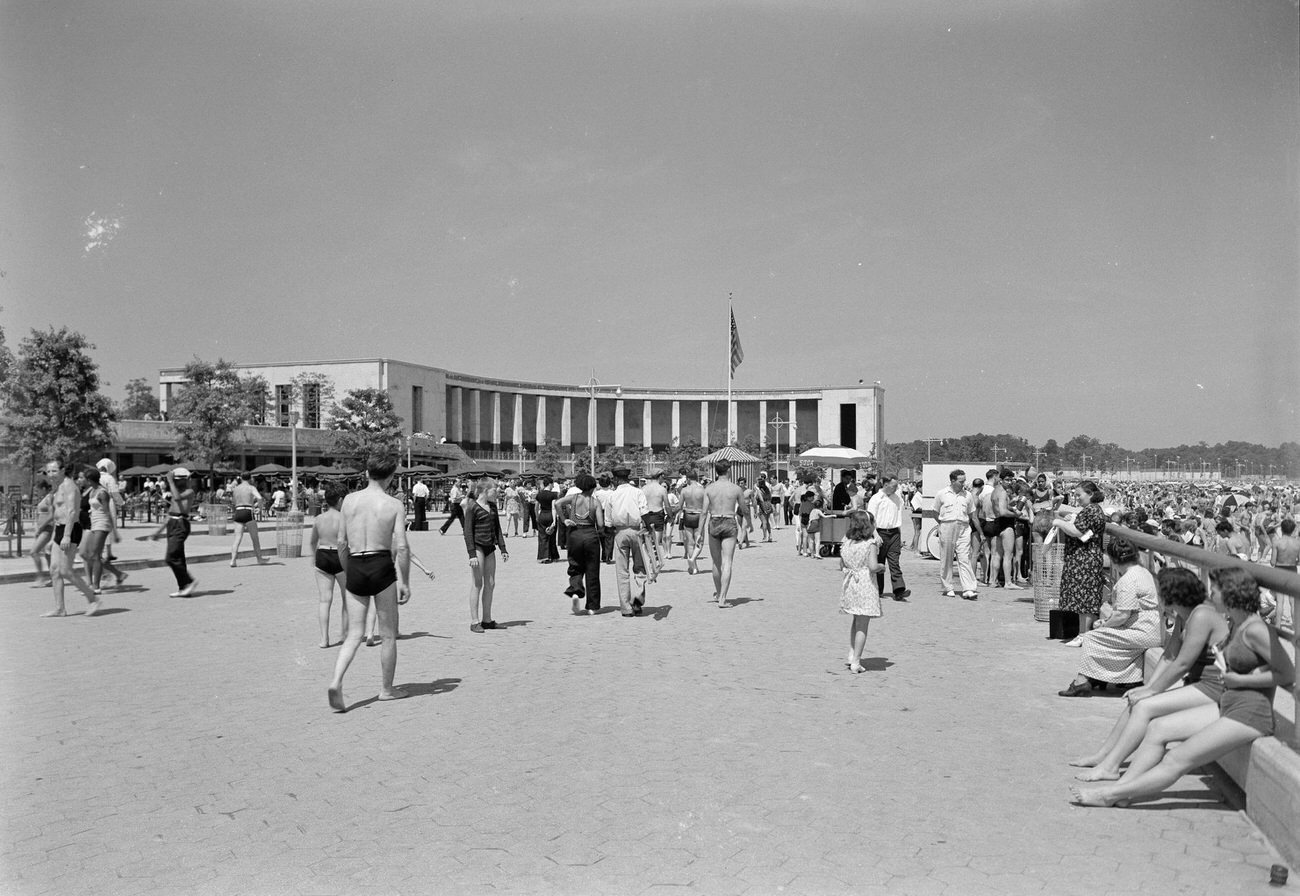
On February 28, 1934, Moses announced his plan for the beach’s reconstruction. But a tent city was in his way. In March, he canceled the leases for 625 campsites, and in May 1934, a court ruling was made in favor of the city, and the land was cleared of tents. After his victory against the campers, Moses set about realizing his idea. He wanted to create a large, spacious, crescent-shaped beach. This required filling in part of LeRoy’s Bay between Hunter Island and Rodman’s Neck. The project involved filling approximately 110 acres of the bay with garbage from the NYC Sanitation Department and sand brought from Sandy Hook and Rockaway. The work continued for nearly two years. In addition to the massive fill, two jetties were built, and the surrounding area was landscaped.
The beach opened in July 1936, even though it wasn’t fully completed. On the first day alone, it attracted about 18,000 visitors.
The Beach Under Threat
From time to time, various problems arose that put the existence of Orchard Beach in question. One early issue was the sewage from nearby City Island, which flowed into the beach area and worsened the water quality. Robert Moses then forced the construction of a new sewer pipe for the island to avoid the closure of Orchard Beach, as some of the sanitary indicators had become critical.
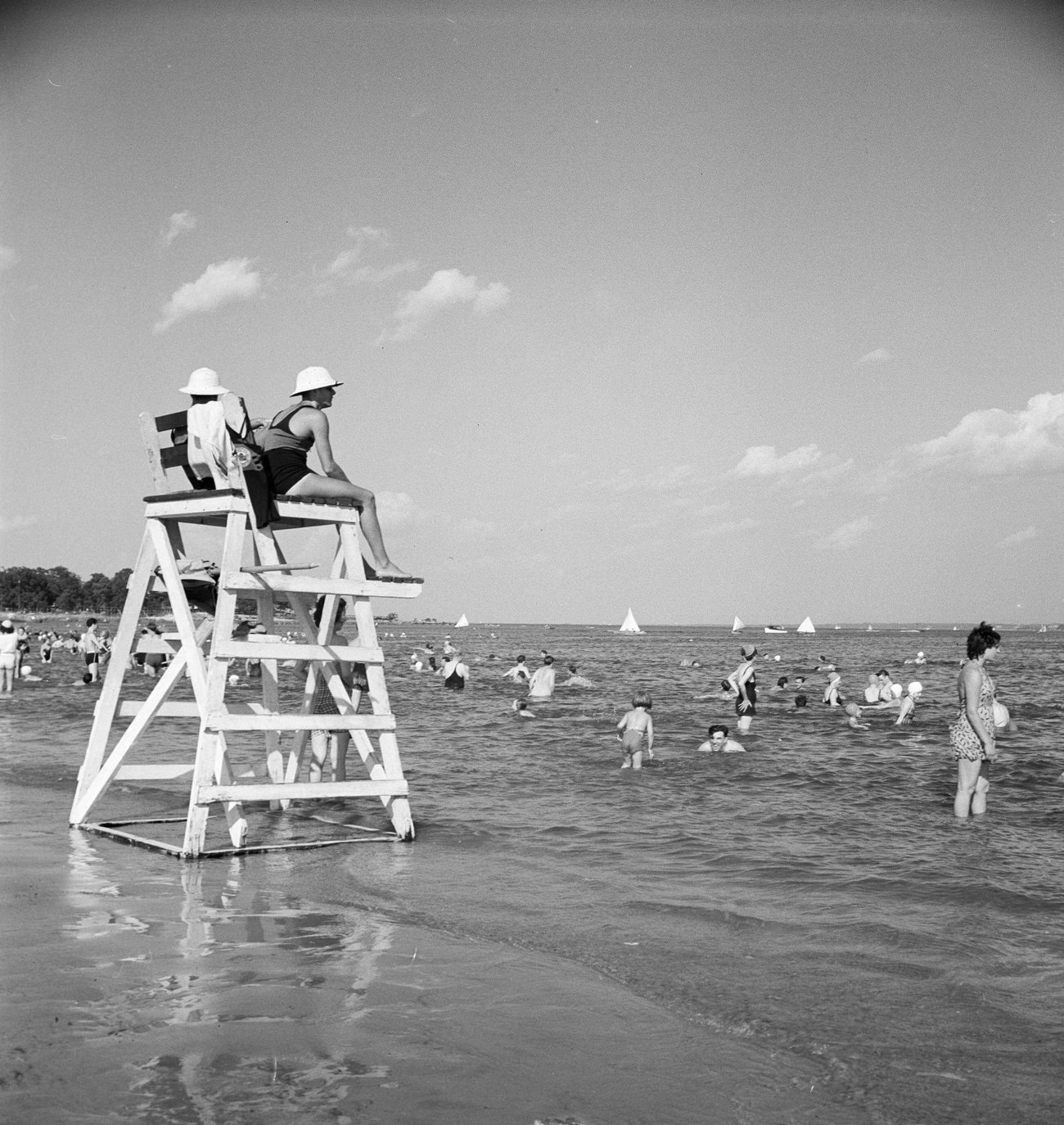
In 1939, a year after the beach opened, plans were made to expand it. However, all work was suspended from 1941 to 1945 due to World War II. The planned expansion only took place in May 1947. It added 7 acres (2.8 ha) of new land and 5 acres (2.0 ha) of restored beach.
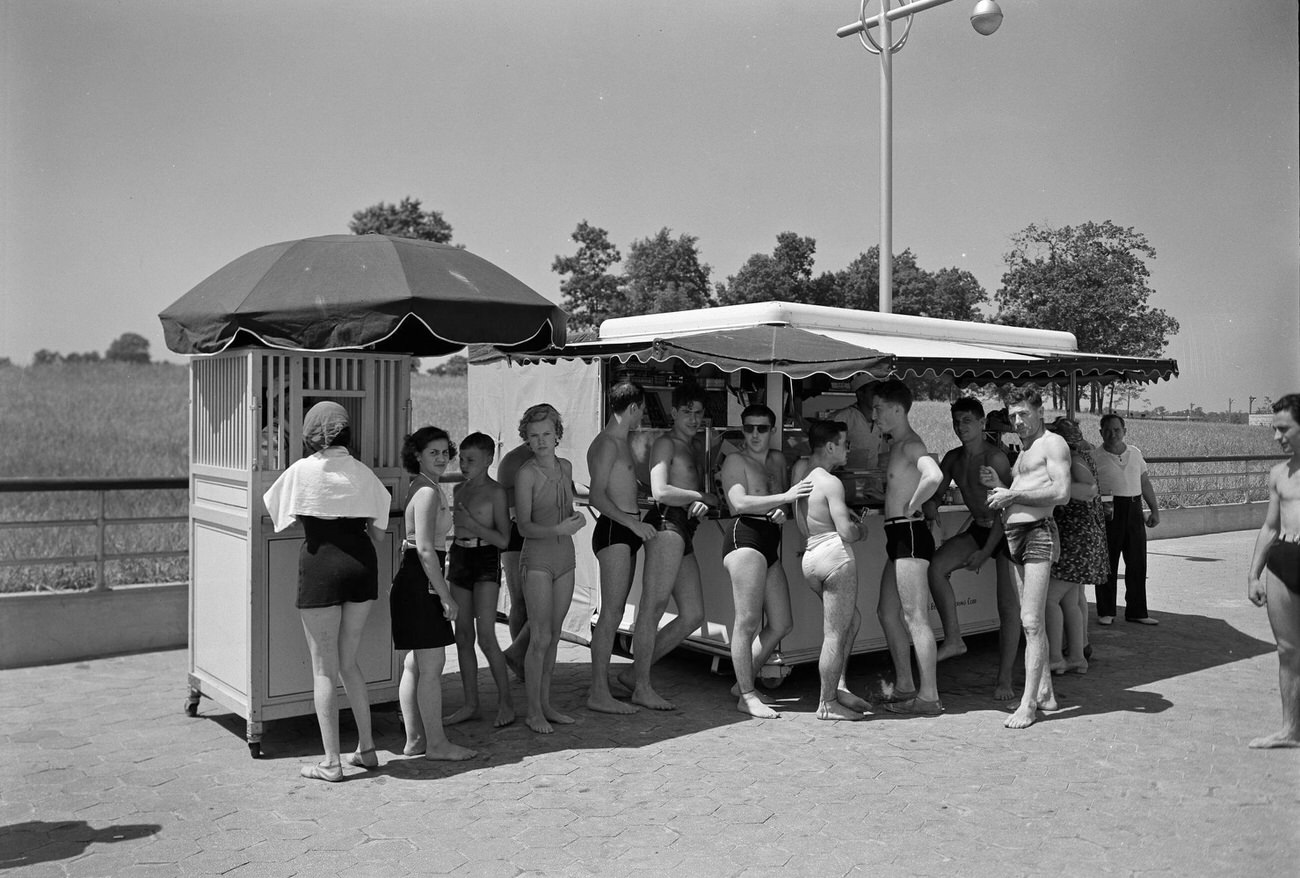
In its early days, the beach was frequented by Jewish folk singers from crowded Eastern European neighborhoods who brought their mandolins. From the early 1960s, as Puerto Ricans began moving to the Bronx in search of a better life, the beach became known as the “Puerto Rican Riviera.” At that time, Afro-Cuban music was heard along the boardwalk, and vendors sold garlic chicken, rice, and beans everywhere.
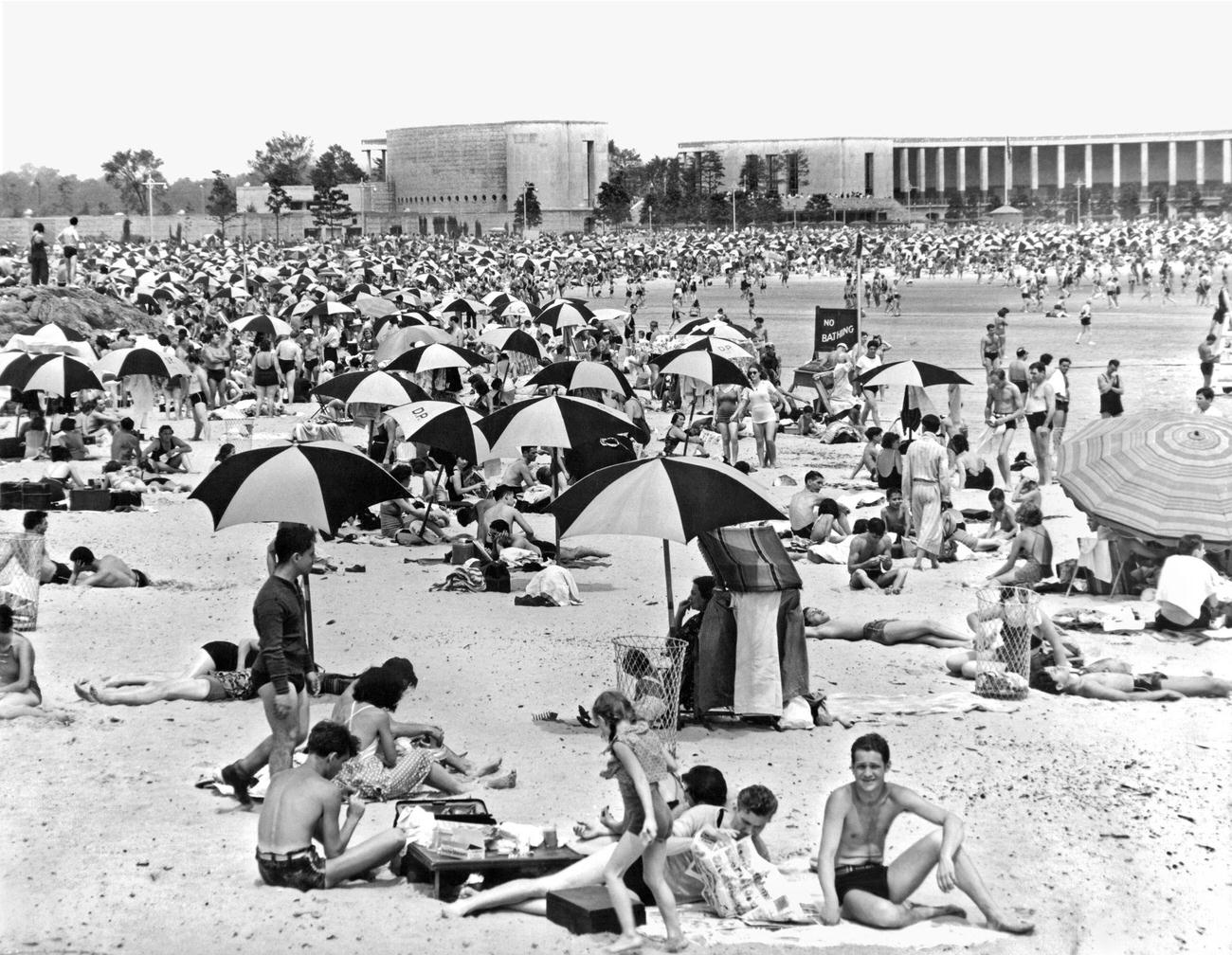
But then came another rough patch. In the early ’80s, Orchard Beach was in an extremely neglected state. The once-clean sand was covered with trash, the pavilions and benches were broken, the restrooms were vandalized, and the boardwalk was frequented by prostitutes and street gangs. But once again, funds were allocated for the beach’s reconstruction, as the residents of the Bronx couldn’t be left without the one place to spend hot summer days by the water. The $1 million renovation of the pavilions (equivalent to about $2.78 million in 2023) was completed in 1986. A section of Orchard Beach was designated a “quiet zone” where loud radios were prohibited. Families started to appear more frequently, and the loud, rowdy groups moved elsewhere.
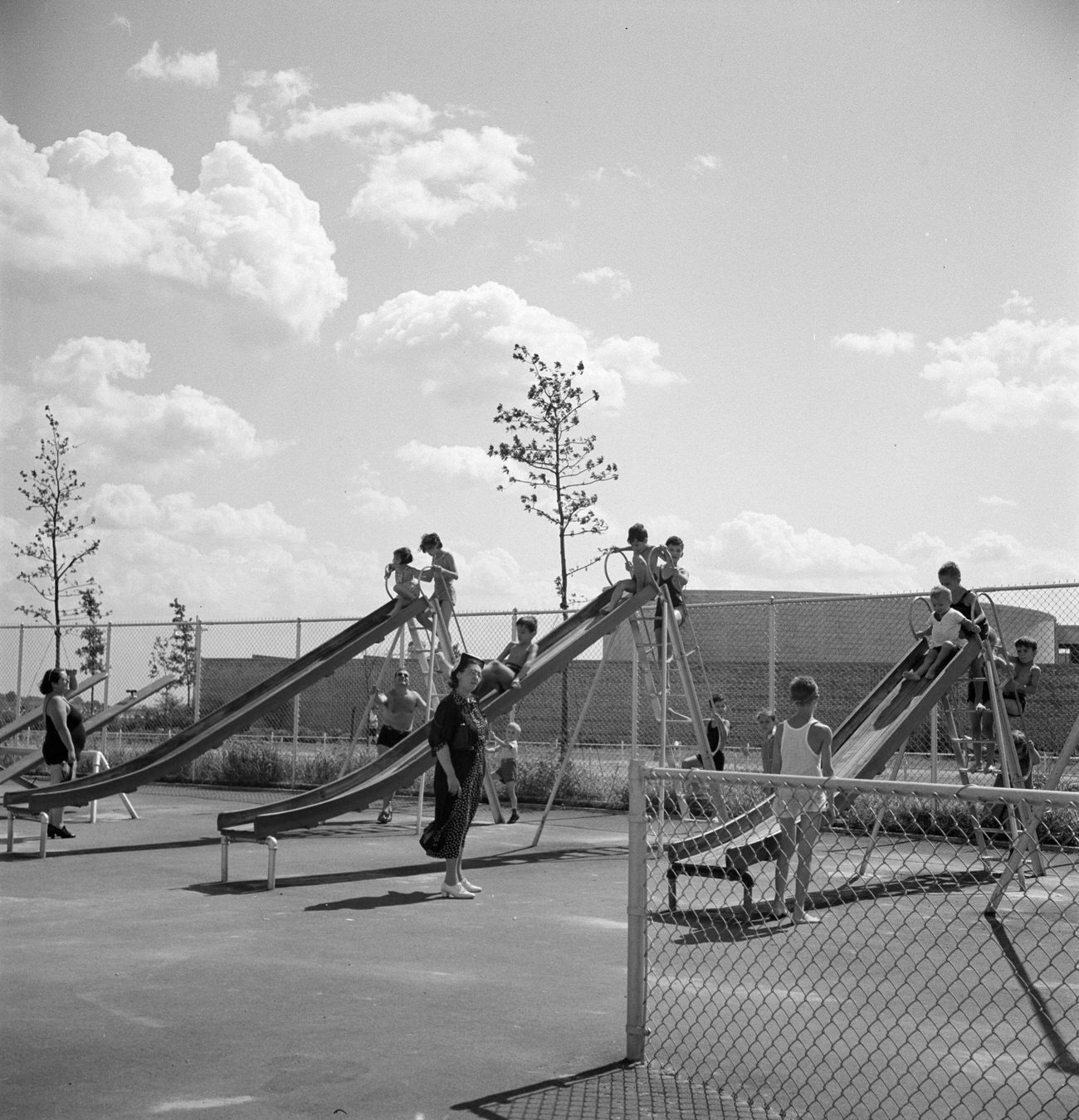
There were also plans for a water park at Orchard Beach, but this proposal was canceled in 1999 due to strong opposition from City Island residents.
A New Life in the 21st Century
In the mid-2000s, during the city’s unsuccessful bid to host the 2012 Summer Olympics, a number of facilities in Pelham Bay Park were proposed for modernization. The city planned a $23 million renovation of the Orchard Beach pavilion, with the southern wing to be used for public swimming and the northern wing for competitive swimming and water polo.
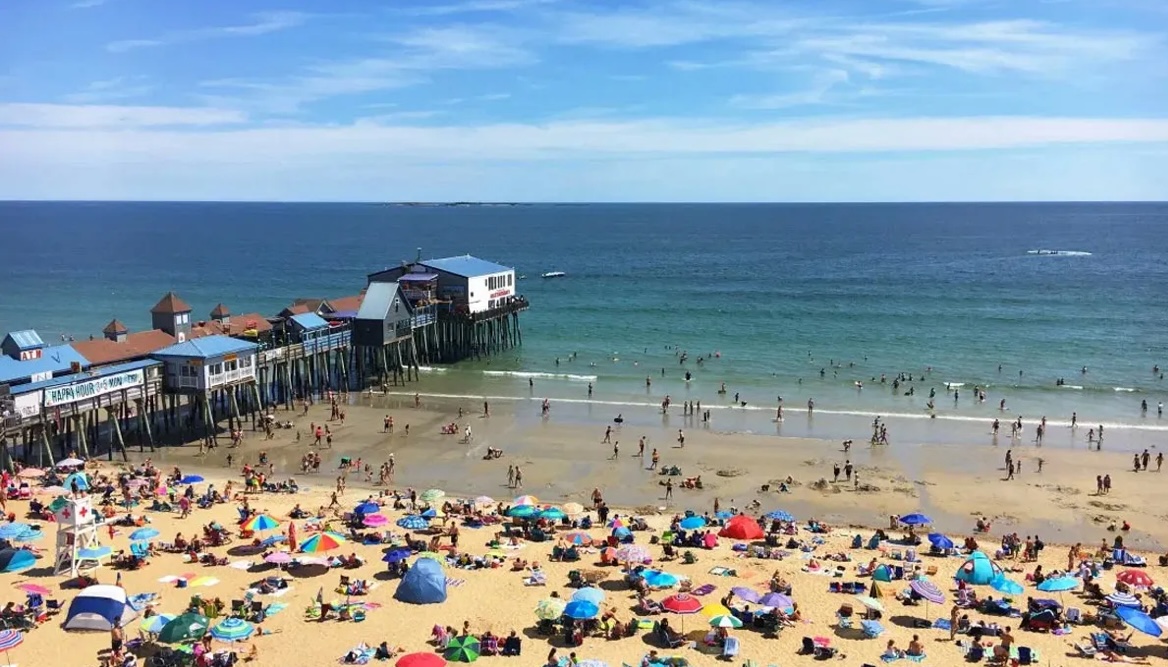
In 2010, construction began on the Orchard Beach pier extension, where about 250,000 cubic yards of fresh sand were pumped in. The total cost of the pier renovation project was $13 million, with $7 million provided by the U.S. Army Corps of Engineers and $6 million by NYC Parks.
In mid-2020, a drive-in movie theater opened in the Orchard Beach parking lot. At the same time, a major reconstruction of the pavilions began. The work was halted due to the COVID-19 pandemic, but Marvel Architects later resumed the project. The reconstruction includes upgrading the old pavilions with new ramps and retail spaces.
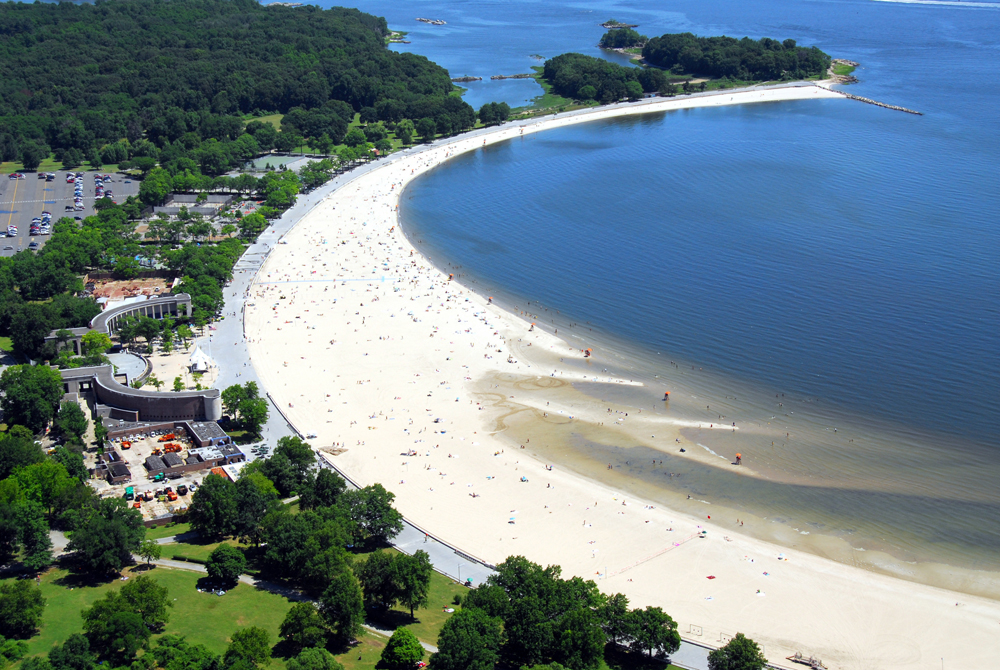
A Favorite Spot on Hot Days
At Orchard Beach, be prepared for large crowds on summer weekends—it’s a popular place for families with children. You can get here by public transport (take the subway to Pelham Bay Park station, then a bus to the Orchard Beach Circle stop) or by car. There is a large paid parking lot and a free bike rack near the beach.
It’s important to note that swimming is only allowed when lifeguards are on duty, from 10:00 AM to 6:00 PM.
The beach has all the necessary amenities for a full day of recreation:
- 2 picnic areas with tables and charcoal grills (but the number of grills is limited, so it’s better to bring your own portable one);
- Orchard Beach Snack Bar (with a menu including burgers, nuggets, french fries, and more);
- Vistamar Lounge Restaurant (Latin American cuisine);

- Seafood City Restaurant (seafood);
- playgrounds for children;
- a kayak launch in the lagoon;
- sports fields and courts.
Given that Orchard Beach is located in New York’s largest park, it’s a great opportunity to combine a day at the beach with a walk through a beautiful green area.
For more on current greening programs in the Bronx, check out this article.