

Trees are a key element of New York City’s infrastructure, helping to combat climate change. City residents are increasingly relying on trees to provide much-needed shade on hot days, which are becoming more frequent and intense due to climate change. In this article, bronx.name explores the role of green spaces in New York’s life and ways to solve existing problems in this sector.
New York in the Danger Zone
In large cities like New York, the temperature is higher than in rural areas. Due to climate change, the city is expected to see even more days with temperatures over 90°F (32°C) in the future—up to six times more than it does now. This can lead to serious health problems, from dehydration to heatstroke. Heat is already the leading cause of weather-related deaths, but these deaths are preventable—in part, thanks to trees.
New York City has about 7 million trees in total. The Bronx has over 128,000, Manhattan has over 96,000, Queens has over 291,000, and Brooklyn has over 229,000. Trees save the city an estimated $126 million a year by reducing the strain on the sewer system, filtering the air, and helping to conserve energy.
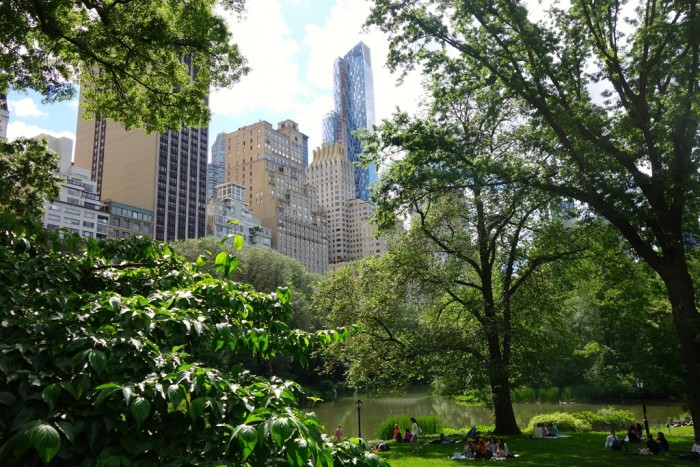
However, trees are not evenly distributed across the city, so new plantings are especially crucial in areas affected by the heat island effect—meaning they are hotter than others. In New York, these areas include Upper Manhattan, the South Bronx, and Central Brooklyn. The Bronx is a particularly critical area, especially neighborhoods like Woodlawn, Eastchester, Edenwald, Soundview, and Morris Park. Fatalities from heat are more common in neighborhoods with a high percentage of low-income and Black residents. This is due to factors such as a lack of green spaces, limited access to air conditioning, and poor housing quality.
The statistics are truly frightening. According to the city’s Office of Climate and Environmental Justice, about 370 people die from heat in New York every summer.
Planting new trees is one way to make the city cooler and safer. Therefore, programs aimed at increasing the number of green spaces in the city are being initiated more and more often. In addition to their critical environmental role, they also create new business opportunities—new contractors are brought in and new jobs are created.
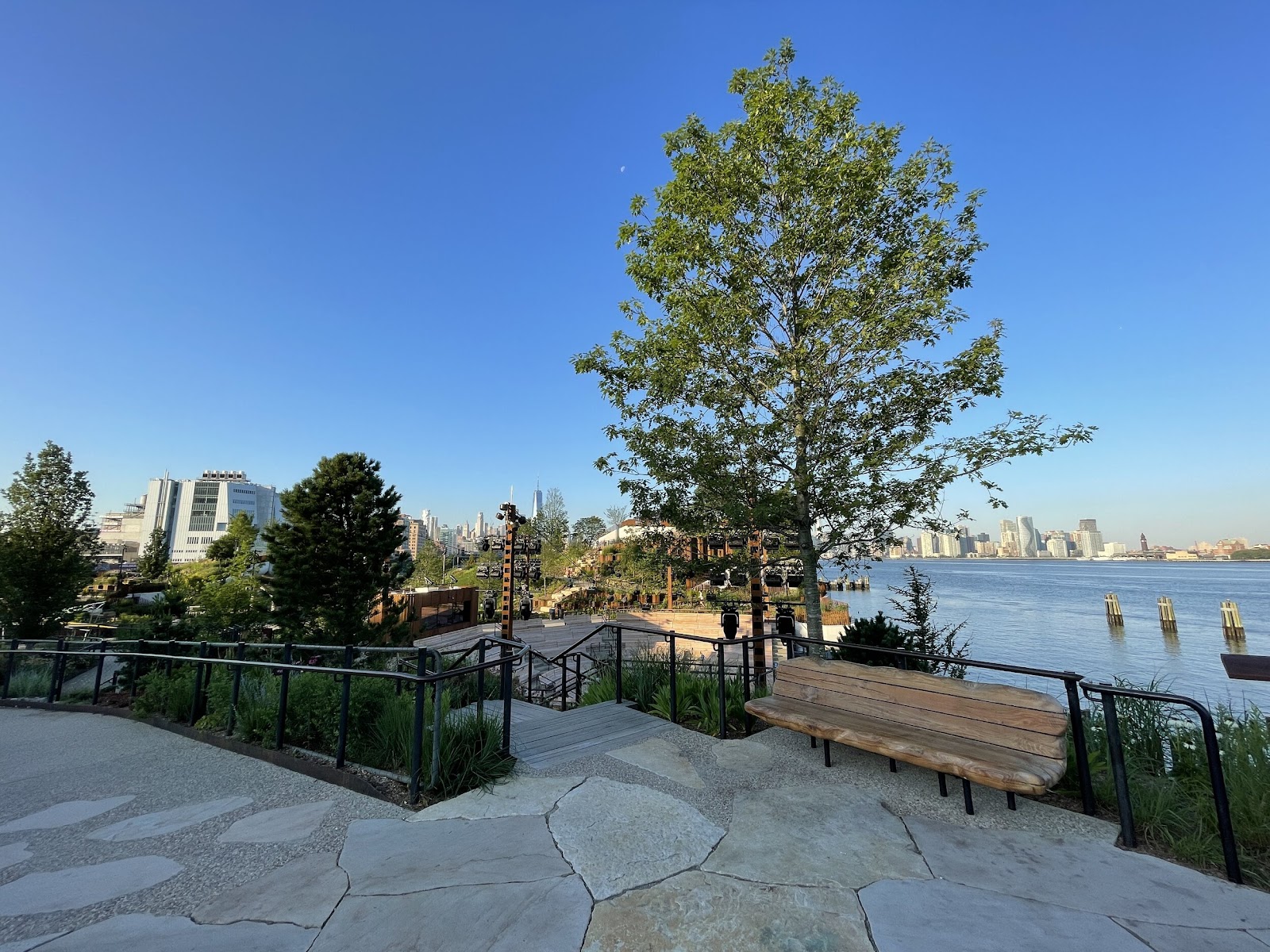
The NYC Department of Parks also organizes tree care events in various neighborhoods. Nonprofit organizations also get actively involved, and specific lessons are held for schoolchildren and students. But the situation remains unsatisfactory and requires more attention from the government and the public.
The Impact of Extreme Heat
Certain groups of New York residents are more vulnerable to high temperatures. These include:
- the elderly—who often have chronic illnesses, are less mobile, or are socially isolated;
- people with mental illnesses—who may be less able to recognize danger or take protective measures;
- shelter or prison residents—who may not have access to cooling on hot days;
- outdoor workers—especially in construction, transportation, utilities, and manufacturing, where air conditioning is nonexistent or inadequate.
The New York City Department of Health and Mental Hygiene (DOHMH) created the Heat Vulnerability Index (HVI), which assesses the risk of death during heat waves in different neighborhoods. The index considers surface temperature, the presence of green spaces, access to air conditioning, and the percentage of low-income residents. These indicators help identify which areas need the most attention and support during the climate crisis.
Severe heat also poses serious challenges to the city’s infrastructure:
- it overloads the power grid, which can cause blackouts;
- it damages roads and asphalt from overheating;
- it makes getting around the city more difficult: walking or biking on shadeless streets becomes dangerous;
- because of the heat, the MTA has to reduce train speeds;
- critical communication infrastructure overheats.
Given climate trends, the average temperature will only continue to rise in the future. Therefore, the problem of a lack of trees, especially in large cities, is becoming more pressing every year.
The New York City Tree Map
The New York City Tree Map is a modern online tool that provides comprehensive information on all trees under the care of NYC Parks. It covers both street trees and those growing in parks, allowing anyone to learn more about the city’s green infrastructure. Users can explore tree locations, view their characteristics, track updates and maintenance, and record and share their own participation in tree care.
On the map, each tree is marked with a circle, the size of which corresponds to its diameter. In addition to viewing the overall list of trees, you can click on individual trees to get detailed information. The entire city is divided into boroughs and neighborhoods on the map. The more trees in a given area, the darker the shade of green it is colored.
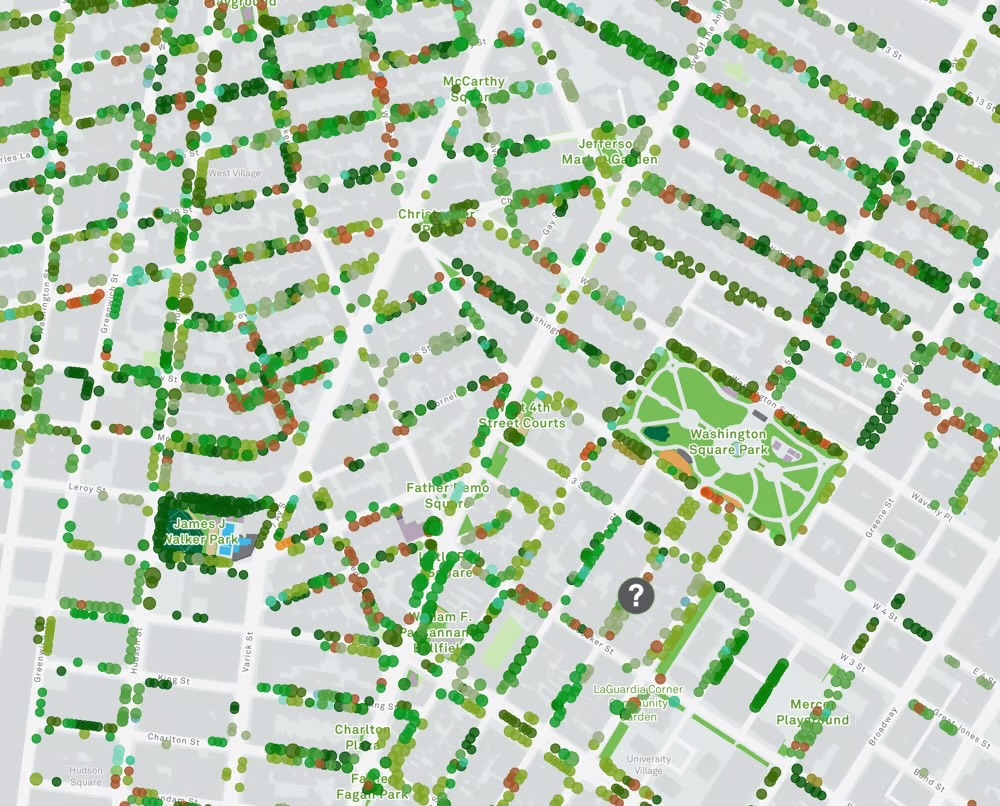
By clicking on a neighborhood, a user can find out how many trees are there, what species they are, and what ecological benefits they bring to the city.
The map also allows you to filter trees by species and size. Each species is assigned a specific color, and similar species have a similar shade. Users can tag their favorite trees by adding them to “My Trees.” For those who want to get actively involved in tree care, there is an option to log their actions: select a tree, click the “Record Your Care” button, and note the date, duration, and type of activity—for example, watering or cleanup. All of this information is saved in the tree’s history.
Severe Tree Shortage in the Bronx
Bronx Borough President Vanessa Gibson has called on New York City Mayor Eric Adams to increase funding for the Department of Parks and Recreation in the 2026 city budget, with a special emphasis on the need to plant more trees. She has proposed allocating 1% of the budget to parks to fairly expand green spaces in the Bronx and throughout the city.
Gibson notes that the issue of expanding green spaces has become especially pressing—primarily for neighborhoods with a high concentration of minorities. The Bronx Borough President emphasizes that the authorities must do everything possible to ensure the health and safety of residents, especially in areas with high rates of asthma and diabetes.
Despite the large overall area of parks in the Bronx, trees are not evenly distributed in the borough. In the South Bronx, in particular, there is an extremely low level of greenery. For example, in Sector 1, only about 14% of the area is covered by trees, and in Sector 2, it’s less than 8%, which is far below the city average of 22%. According to New York City’s Heat Vulnerability Index, these are the neighborhoods with the highest risk of heat-related deaths.
Government Support for the Bronx Greening Project
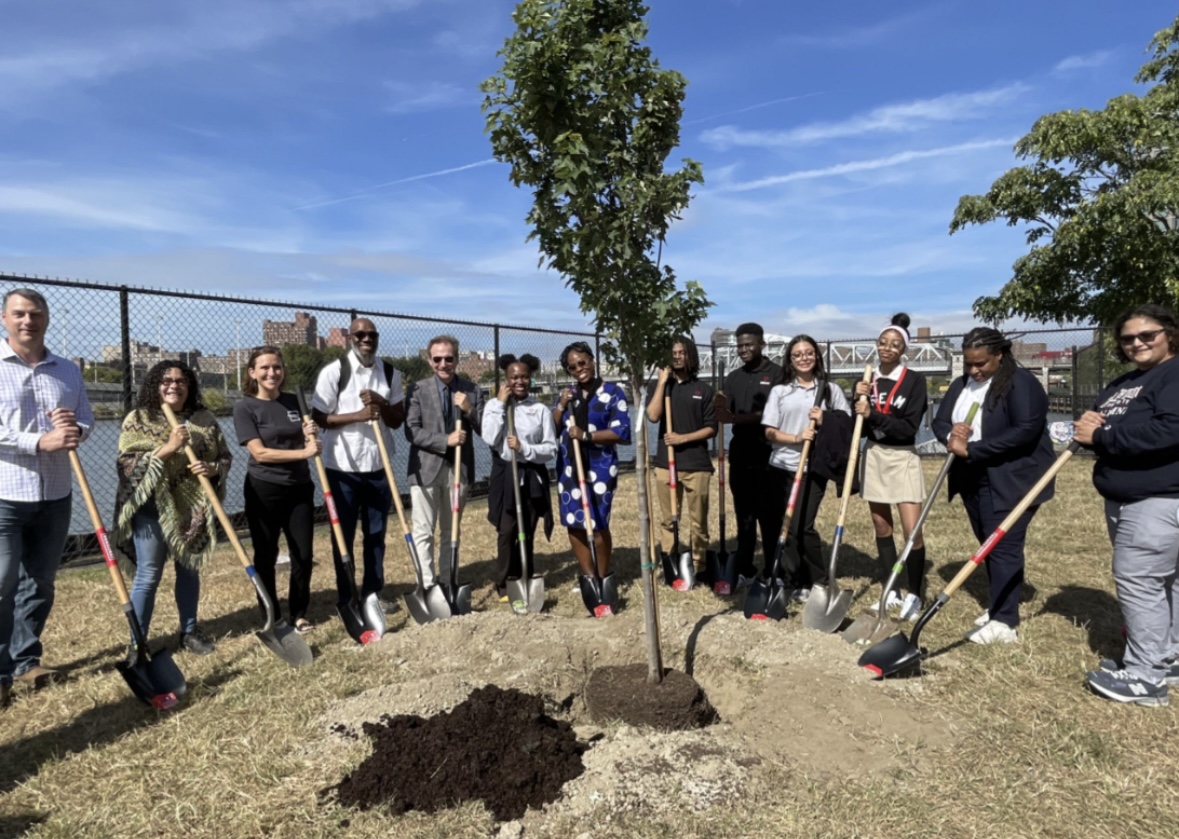
New York City Mayor Eric Adams announced the start of the city’s first-ever Urban Forest Plan. Its goal is to increase the city’s tree canopy to 30% to combat extreme heat, improve the environment, and promote environmental justice. The plan was presented in the Bronx, at St. Mary’s Park, where the importance of engaging local communities was emphasized.
The plan is being developed by the Mayor’s Office of Climate and Environmental Justice in partnership with NYC Parks, the City Parks Foundation, and a number of other partners. To bring this initiative to life, an application has been submitted for a $20 million federal grant to help fund its implementation.
Mayor Adams emphasized that trees play a key role in city life—they clean the air, cool overheated neighborhoods that are especially suffering from climate change, and have a positive impact on mental health.
“Trees are an essential multi-benefit tool in planning our city’s future; they beautify our streets and parks, clean our air, absorb stormwater, and keep our communities cool during increasingly hot summers,” said Deputy Mayor Meera Joshi. “As we commit to a 30% citywide tree canopy, the first-ever Urban Forest Plan will be critical to ensuring the equity and success of that goal.”
According to NYC Parks, over 15,000 new trees were planted in 2024, so let’s hope the mission is accomplished.