

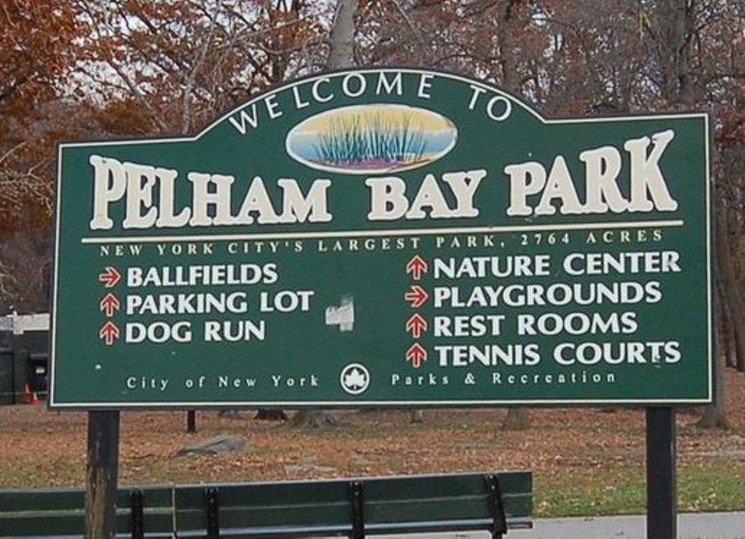
Pelham Bay is like a green town in the middle of a bustling metropolis. It has everything you could imagine: islands and peninsulas, beaches, lagoons, recreational areas for kids and adults, golf courses, baseball, basketball, and soccer fields, running and bike paths, tennis courts, food courts, and notable historical and architectural landmarks. Today, it’s New York’s largest park, spanning 1,122 hectares, but this land was once the site of real conflicts. In this article on bronx.name, we’ll tell the story of Pelham Bay Park, from its ancient origins to the present day.
Native American Tribes and English Aristocrats: The First Owners of Modern-Day Pelham Bay Park
The first known inhabitants of the area that is now Pelham Bay Park were members of the Siwanoy tribe, a Native American people who spoke the Munsee language and lived along the coast of Long Island Sound in what is now the Bronx, Westchester County, and Fairfield County, Connecticut. By the mid-17th century, this area became a point of contention between Dutch and English colonial interests.
In 1639, the Dutch West India Company acquired the territory and named it Vreedelandt, meaning “land of peace,” located in the southwestern part of the modern-day Pelham Bay Park. However, the English did not give up their hope of claiming these lands.
In 1642, the Englishwoman Anne Hutchinson and her family moved from Rhode Island and settled on the bank of a river that would later be named after her. But in August 1643, the Siwanoy destroyed Hutchinson’s settlement and killed her family in retaliation for massacres committed by Willem Kieft in the New Amsterdam colony. The Siwanoy weren’t concerned with whether their targets were English or Dutch—everyone was fighting to protect their own interests and people.
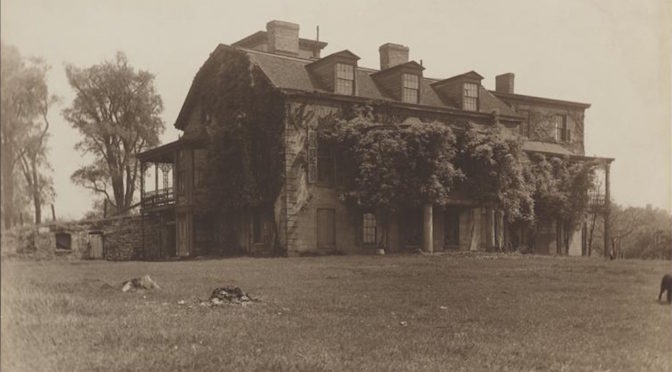
The English made a second attempt to settle in the Pelham Bay Park area with the arrival of the English landowner Thomas Pell in 1654. He was able to negotiate with the Siwanoy tribe and purchased 50,000 acres of land from them, including the territory of the neighboring town of Pelham, and established his estate. After receiving a charter from Charles II in 1666, the land became known as the Manor of Pelham. Thomas Pell died in 1669, leaving his property to his nephew John. Several succeeding generations managed this inheritance differently. Some sold off land, while others preserved the territory for their descendants. In the mid-18th century, ownership passed to the Bartow family, who were descendants of the Pell family on their mother’s side. In 1842, the Bartow-Pell family mansion was completed. But in 1880, the mansion was sold to the city. The building stood vacant until 1915, when the New York government and the International Garden Club began to jointly maintain it.
The Park’s Founding: Fiery Disputes and Fierce Opposition
In the 1870s, landscape architect Frederick Law Olmsted proposed creating a greenbelt in the Bronx that would include parks and boulevards to fit the natural landscape. He wanted to create something more organic, unlike the grid plan used in the 1811 plan for Manhattan, which became the basis for Central Park with its many artificial elements. However, in 1877, the city refused to implement his ideas.
At the same time, John Mullaly, editor of the “New York Herald,” advocated for the creation of parks in New York, proposing to use the lands of the Van Cortlandt and Pell families in the Bronx for this purpose. In November 1881, Mullaly founded the New York Park Association. Support from newspapers and lobbyists helped him file a petition with the New York State Senate. In June 1884, Governor Grover Cleveland signed a law allowing the creation of a park system. But it wasn’t so simple. Many opponents of the new parks in the Bronx argued that it would divert funds from more important infrastructure and that all city residents would have to pay taxes for their upkeep, even if they didn’t live nearby. Ultimately, despite numerous lawsuits and opposition, the city acquired the land in 1887 for $2,746,688 (approximately $93 million in 2023). In 1888, the official opening of Pelham Bay Park was announced.
The territory covered over 1,700 acres (690 hectares) and included parts of several old estates. To ease the concerns of landowners in Westchester who had lost their properties due to the creation of the park system, the New York City Board of Assessors paid out compensation. The total amount of compensation was $9 million (equivalent to $305 million in 2023).
Private Estates and Public Zones in One Place
Inspired by his victory and the realization of his project, John Mullaly began actively promoting the new park. He wanted as many people as possible to learn about it. In 1890, Mullaly proposed using the park’s territory to host the 1893 World’s Fair, but the event was ultimately awarded to Chicago. That same year, a decision was made to preserve the Pell family vault, and in July 1891, the family’s descendants received permission to maintain and restore it. After the park opened, some people were allowed to live in the historic mansions on its grounds. In 1892, the New York City Department of Public Parks separately authorized the inhabitation of the Hunter, Hoyt, and Twin Island houses.
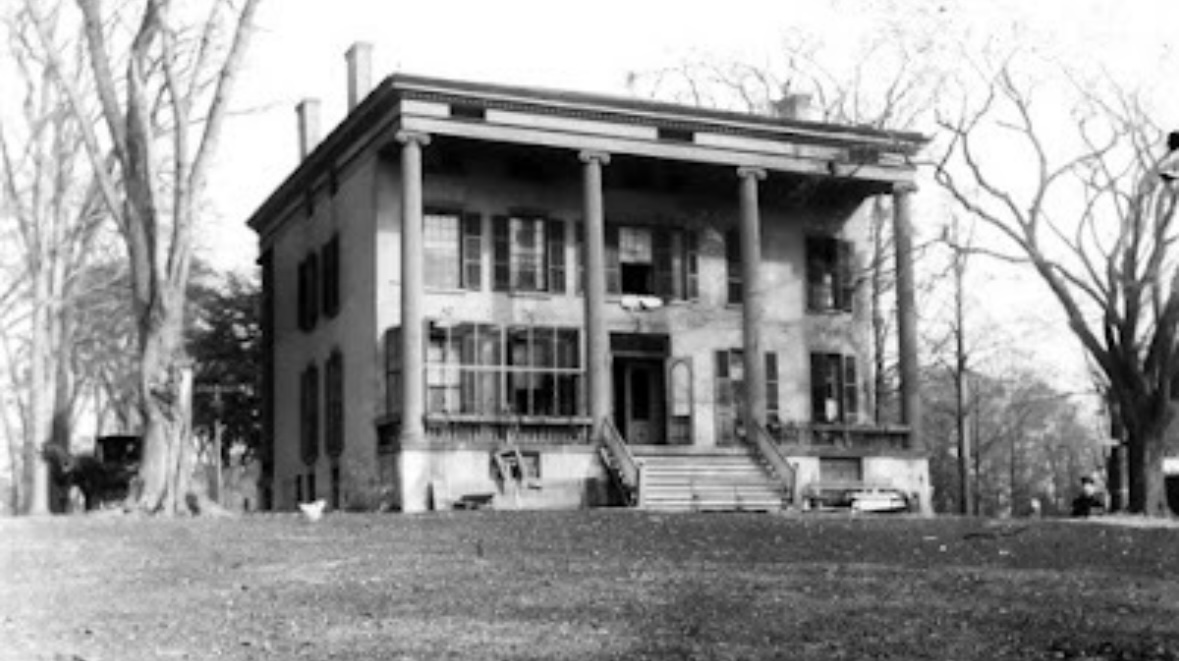
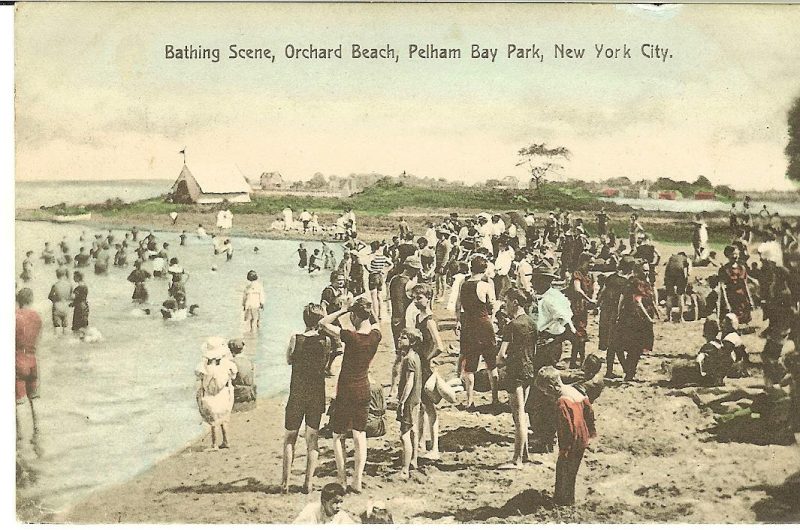
Even though the park was intended for public use, people continued to live in separate private houses. This situation did not sit well with members of the Department, who wanted to make all parks a continuous green space. By 1900, thirty-six houses in Pelham Bay Park were being used as private residences, which accounted for 75% of all rented houses in the Bronx parks. The following year, that number dropped to 33. In the spring of 1902, two more houses in Pelham Bay were demolished. The wood salvaged from the demolition was used to build free bathhouses, which served about 700 people daily in the summer. In 1903, Hunter Island became a popular summer retreat. To expand the waterfront area, a campground was opened at Rodman’s Neck, on the southern part of the island, with 100 bathhouses. In 1904, Pelham Bay Park gained many new sports facilities. Now people came here not just for walks and swimming but also for sports and to attend various competitions.
However, the park’s condition began to deteriorate in the 1920s. Hunter Island was closed, and camping was banned, which led to some visitors illegally setting up tents in the park. Litter, drunken fights, and vandalism were not uncommon in Pelham Bay Park at that time.
Robert Moses’ Massive Reconstruction
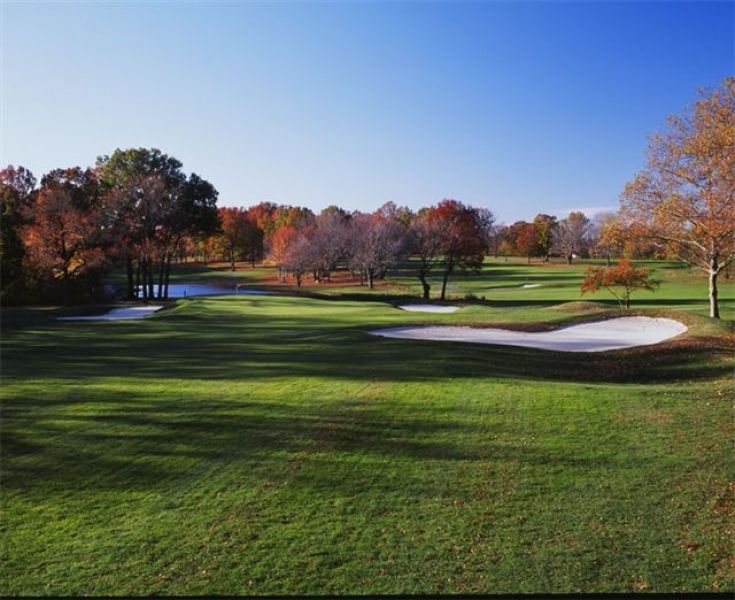
Everything changed with the arrival of Robert Moses as New York City Parks Commissioner in 1934. He ordered engineers to survey all the city’s parks to determine which ones needed to be renovated. Impressed by the popularity of camping on Hunter Island, Moses developed a plan for a new recreational area at Orchard Beach. On February 11, 1934, he announced the creation of a new golf course, and two weeks later, he presented a plan for renovating the beach, inspired by Jones Beach on Long Island.
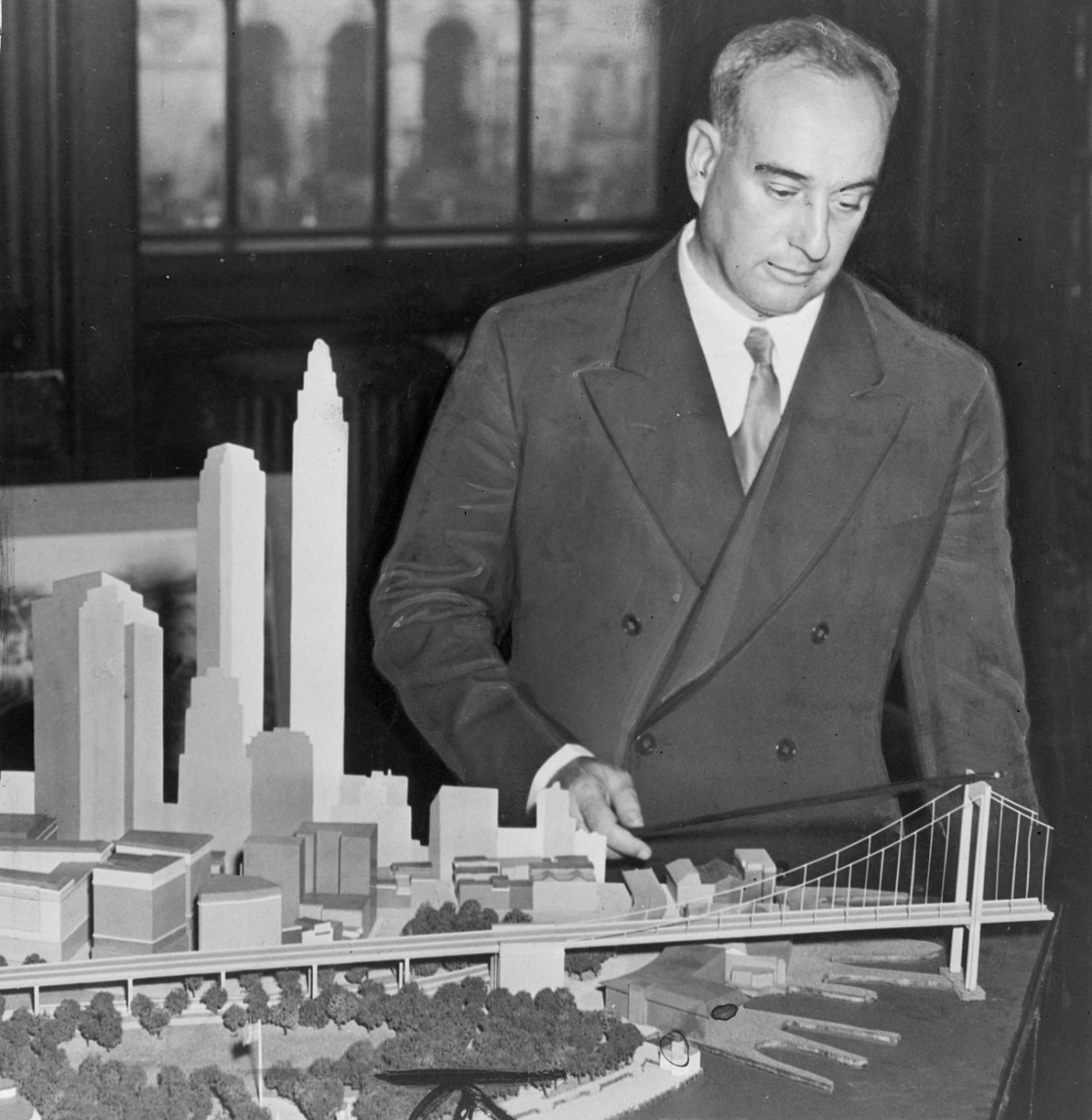
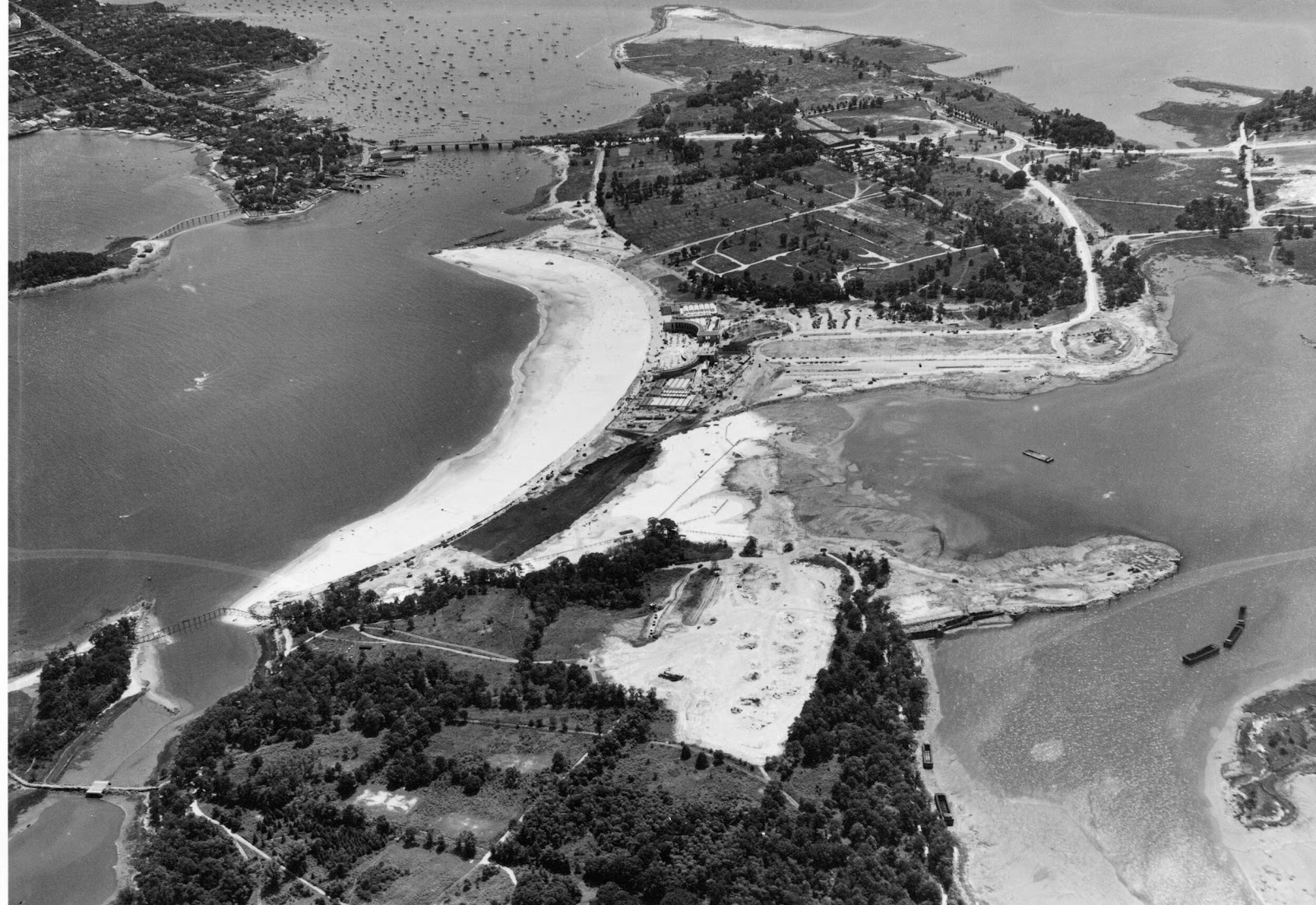
Moses decided to connect Hunter Island and neighboring islands to Rodman’s Neck by filling in part of LeRoy’s Bay. The final beach project was presented in July 1935 and called for filling in about 110 acres of LeRoy’s Bay with a total of 4 million cubic yards of garbage and sand. The beach, designed by Gilmore David Clarke and Aymar Embury II, opened in July 1936, although work was not yet complete. The official opening took place on June 25, 1937. New piers were also built in 1946-1947.
A Turn Towards Ecology and Modernization
While the park was more or less put in order, some problems remained unresolved. One of them was the landfill on Tallapoosa Point, located in the southwest of Pelham Bay Park near the bridge. In 1963, the city government organized a temporary landfill here, arguing that this area was not part of the park’s infrastructure and was not used by anyone, so it wouldn’t cause any harm. Tallapoosa Point remained a landfill until May 1968, when its permit was revoked. However, the dump continued to operate until 1975 and was only officially closed in 1978. In 1983, it was revealed that the area was severely contaminated with toxic waste, which had caused health problems for local residents. In 1988, Tallapoosa Point was declared a hazardous site, and cleanup only began in 1989.
Read the article about dirty air in New York and the Bronx here.
Other environmental initiatives also moved forward. In 1983, a proposal was made to create the Theodore Kazimiroff Environmental Center, which opened in June 1986 along with a nature trail. In 1990, $6.3 million was secured to improve Pelham Bay and other parks. In 2010, construction began on a new $13 million pier at Orchard Beach, and a $2.9 million project to restore the Pelham Bay Park shoreline was also launched, which included dam reconstruction and the creation of new recreational facilities.
Today, Pelham Bay Park has once again become a favorite recreation spot for residents of the Bronx and visitors. It is now safe, clean, and welcoming.
To learn how Bronx residents are getting involved in environmental preservation, check out this article.