

The Brother Islands boast a long and compelling history that dates back to the era of early European colonizers. In 1614, these two tiny landmasses were officially named De Gesellen by the Dutch West India Company, which translates from Dutch to “companions” or “brothers.” According to one theory, this name eventually evolved into their current designations: North Brother and South Brother. Some sources also credit the naming of these islands to the navigator Adriaen Block, one of the first Europeans to explore the coast of modern-day New York.
By the late 17th century, control of the islands had passed to the British. In 1695, the Crown granted them to James Graham, the first Attorney General of the New York colony. However, he didn’t develop the islands, as the surrounding waters were too treacherous for navigation, making any development or construction difficult.
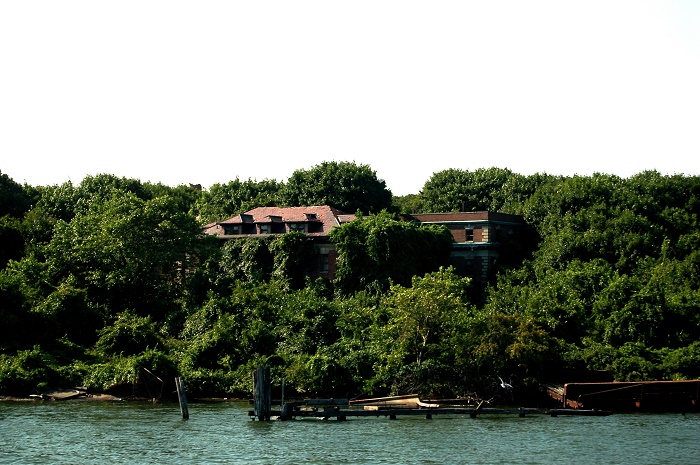
As early as 1791, both North Brother and South Brother Islands were advertised for auction at Merchants Coffee House, a hub of New York City’s commercial life at the time. They were promoted as an ideal location for a pilot station or even an entertainment venue, thanks to their convenient riverfront location. The description mentioned that North Brother already had a house, a barn, an orchard, and even firewood supplies. Yet, no one ever ventured to launch such a business venture.
Initially, both islands were part of Queens County. However, their administrative affiliation shifted over time. In 1870, even before the consolidation of the five boroughs into one New York City, the islands were incorporated into the newly formed Long Island City. After the city’s consolidation in 1898, they gradually became part of the Bronx. North Brother Island was officially transferred to the Bronx on June 8, 1881, while South Brother Island followed much later, on April 16, 1964.
The Islands’ Special Status
North Brother Island spans approximately 20 acres (over 8 hectares), while the smaller South Brother is about 6 acres (2.4 hectares). Both islands are officially designated as part of a city wildlife sanctuary.
Public access to both islands is strictly limited. However, permits are occasionally granted to researchers, environmentalists, or journalists, always accompanied by a Department of Parks staff member who supervises their presence on the territory.
From the 1980s to the early 2000s, North Brother served as a crucial nesting ground for colonies of black-crowned night herons, one of New York City’s most distinctive marsh birds. For a period, it was one of the largest nesting sites in the region. However, by 2008, these birds had disappeared from the island for unknown reasons. Despite this, the abandoned structures remaining on the island continue to attract other birds, notably barn swallows, which actively nest there.
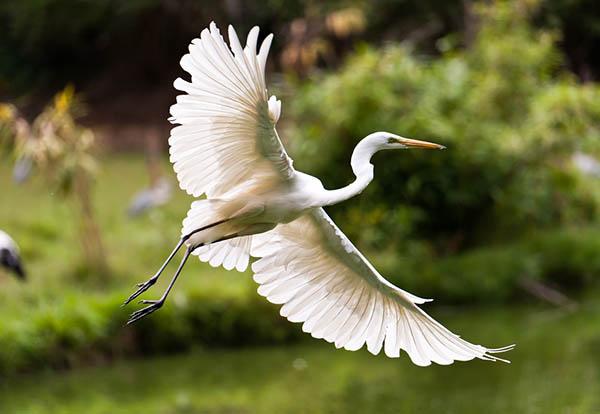
South Brother, in contrast, has become a true haven for colonies of marsh birds. The dense shrubs covering the island create ideal nesting conditions for several species: black-crowned night herons, great egrets, snowy egrets, and double-crested cormorants. For over twenty years, nesting on the island has been monitored by the New York City Audubon, which regularly tracks the population size and species composition of the colonies.
South Brother Island
In the mid-19th century, South Brother Island temporarily became a landfill for New York City. Alfred White, the city’s health commissioner, decided to use this isolated patch of land for municipal waste disposal—manure, animal carcasses, meatpacking waste, and other urban refuse were transported here. The idea seemed practical: move the foul-smelling and hazardous waste away from the densely populated city center.
However, South Brother is located just half a mile from the Bronx coastline, where New York City’s elite, including heirs to tobacco empires like William Liggett and Jacob Lorillard, had their lavish estates. Moreover, the unpleasant odors and potential health threats bothered residents of the coastal villages in Queens. It was the combined pressure from wealthy Bronx residents and the Queens community that compelled the Queens County Supreme Court to intervene. Subsequently, the landfill operations on the island were ceased.
In 1975, the city sold South Brother Island to Hampton Scows Inc., a Long Island-based company, for a symbolic sum of just $10. Although the new owners paid annual taxes, no development or construction ever took place on the land.
It wasn’t until 2007 that a new chapter in the island’s history began. Thanks to a $2 million federal grant, the island was purchased by the Wildlife Conservation Society and the community organization POINT CDC. The transaction was facilitated by the Trust for Public Land, which transferred the island’s jurisdiction to the New York City Department of Parks.
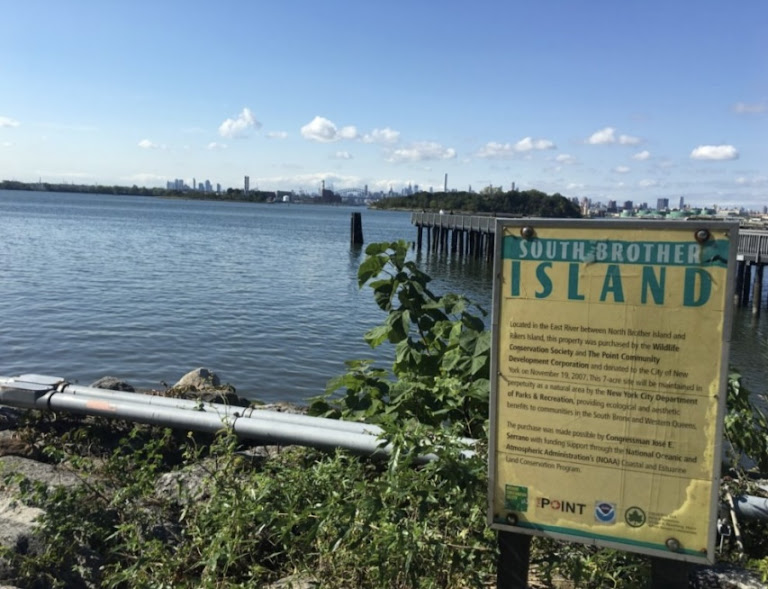
Since then, South Brother has officially held the status of a wildlife sanctuary. It is the 13th island the city has placed under the protection of the parks department. Now, the Department of Parks and the Bronx Zoo manage it, preserving the untouched nature of this unique natural haven amidst the urban landscape.
North Brother Island: 7 Intriguing Facts
North Brother Island is an abandoned place, perhaps best known today for its picturesque ruins, popular for photo shoots. But behind its crumbling walls and overgrown foliage lies a layered history. Here are seven lesser-known facts about the island, compiled from Christopher Payne and Randall Mason’s book, North Brother Island: The Last Unknown Place in New York City.
- Remains of an old lighthouse still stand on the island.
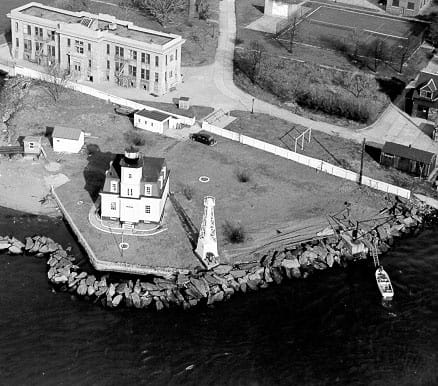
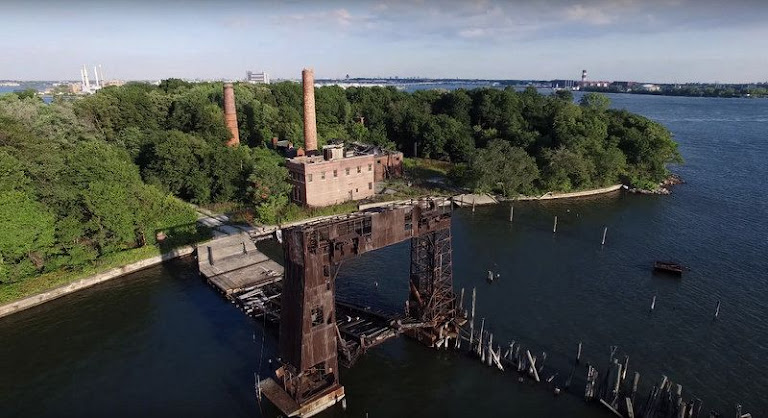
The first attempt to build a lighthouse on the island was in 1829, but it failed due to landowners’ refusal. In 1868, the federal government finally acquired land on the southern tip of the island, and a small lighthouse with an octagonal tower and a mansard roof was built—the first permanent structure on North Brother. Traces of this lighthouse can still be seen amidst the overgrowth.
- The hospital on the island successfully combated epidemics.
In the 1880s, the city decided to relocate its infectious disease hospital from Blackwell’s Island (now Roosevelt Island) to North Brother. Here, patients suffering from typhoid fever, smallpox, and tuberculosis were treated. The facility was considered an effective defense for the city against epidemics.
- “Typhoid Mary” died here.
North Brother became the place of confinement for one of the era’s most infamous figures: Mary Mallon, better known as “Typhoid Mary.” She was an asymptomatic carrier of typhoid and worked as a cook for wealthy families, infecting dozens of people. She was first isolated on the island from 1907 to 1910. After a brief release, she returned to the same work under a false name, causing another outbreak. In 1915, she was again placed on North Brother, where she spent the rest of her life in isolation until her death in 1938.
- One of New York’s most tragic maritime disasters occurred near the island’s shores.
Before 9/11, the sinking of the steamship General Slocum on June 15, 1904, was considered the greatest tragedy in New York City’s history. The vessel, carrying over 1,300 members of a German-American church community from St. Mark’s for a picnic, caught fire on the water. Inadequate life-saving equipment, panic among passengers, and a lack of coordination from the crew turned the fire into a catastrophe. Instead of steering the ship to shore, the captain continued his course, only worsening the situation. The ship sank near North Brother Island. Medical staff from local hospitals rushed to help, but over 1,000 people died. Only a few hundred survived.
- After World War II, veterans lived on the island.
Following the war, North Brother’s function extended beyond medical care. The government decided to use the island as temporary housing for veterans due to a shortage of apartments in the city. A small settlement with shops, a library, and a movie theater grew on the island. At one point, up to 1,500 people lived there.
- In the mid-20th century, the island again became a place of isolation—this time for drug addicts.
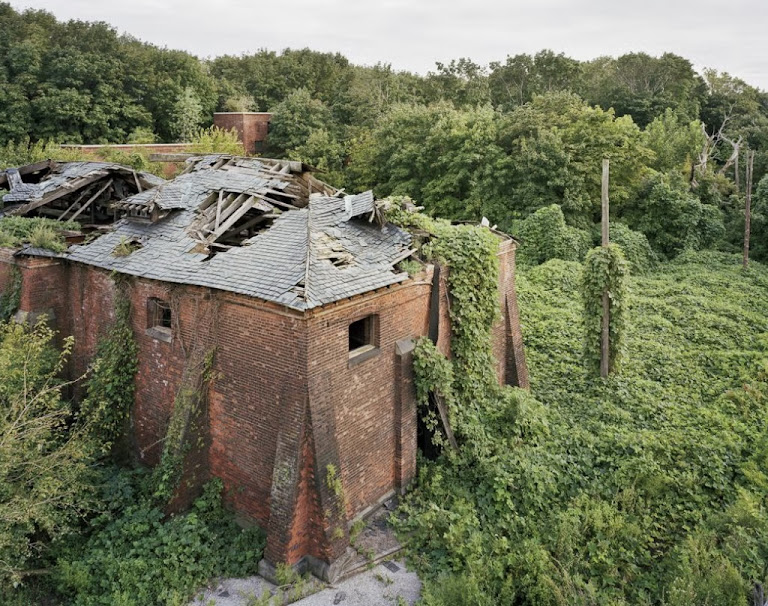
In the 1950s and 60s, the issue of drug addiction became a serious threat. The pavilions that once housed tuberculosis patients were repurposed for treating drug dependency. The practice of isolation returned. Graffiti from those who spent part of their lives here can still be seen on the walls of the abandoned buildings.
- In the 1970s, there were plans to turn the island into a casino.
In 1971, an unexpected idea emerged: to transform the island into an “East Vegas.” This proposal came from two city council members. Later, other plans were considered, including building a prison or a cultural campus. In 2015, researchers from PennPraxis, commissioned by the city council, even developed a plan for limited public access to the island—but none of these projects were ever realized.
Although the Brother Islands are sparsely populated or completely uninhabited today, their past reflects centuries of colonization, expansion, urbanization, and administrative transformations that shaped New York City.