

This is a museum without walls, featuring a living collection of over 4,000 varieties of trees, shrubs, vines, and herbaceous plants. It’s the only public garden in the New York metropolitan area that masterfully blends classical horticultural artistry with bold design. Spanning 28 acres, it boasts picturesque gardens, woodland trails, and historic estates, all overlooking the majestic Hudson River. Dive deeper into this extraordinary fusion of nature, art, and history in one captivating space below on bronx.name.
A Rich Geological and Social History
The landscape where Wave Hill stands has ancient geological roots. A billion years ago, solid bedrock—Fordham gneiss and Manhattan schist—formed here. Over millennia, glaciers that once blanketed the region gradually receded. Softer marble then sculpted the Hudson River Valley. The first humans to set foot on these lands were Paleo-Indians—hunter-gatherers who tracked mammoths.
The lands stretching from Manhattan to Poughkeepsie became home to the Lenape tribe. They hunted, gathered seafood, cultivated corn, beans, and squash, traded with other tribes, and navigated the Hudson River (known as Muhheakantuck) in canoes carved from tulip trees.
With the arrival of the Dutch in the 1600s, tensions arose, particularly over the concept of land ownership.
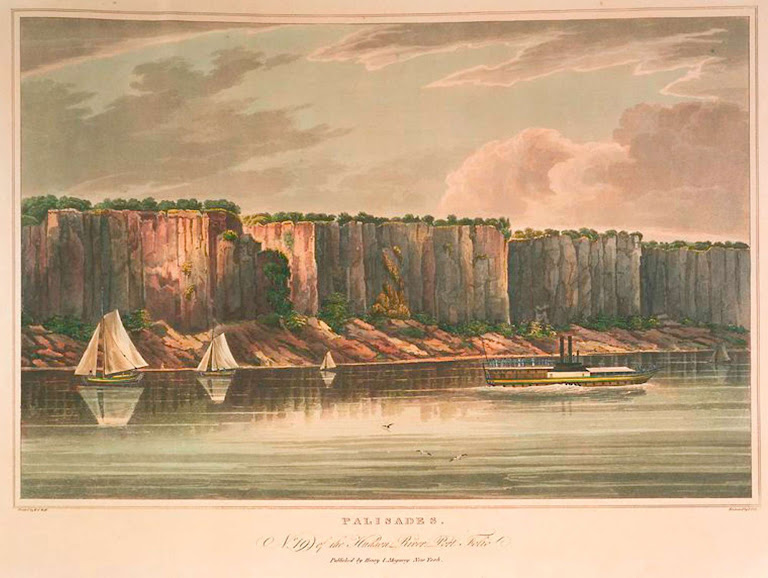
By the mid-18th century, most Lenape were forced to leave their ancestral lands due to disease, conflict, and forced displacement. During this period, the area of modern-day Wave Hill became part of the vast estate of Adriaen van der Donck, and later, the Philipsburg Manor, owned by Frederick Philipse III. After its confiscation during the American Revolution, the land was divided and sold to farmers.
Two Landmark Houses
It all began in 1836 when William Lewis Morris and his wife, Mary, purchased a plot of land in Riverdale. By the early 1840s, a house was built in the then-fashionable Greek Revival style using gray fieldstone. In 1866, the estate was acquired by prominent publisher William Henry Appleton. This part of the Bronx was transforming into a summer retreat for New York’s elite. The Appletons renovated the house into a Victorian villa, adding a third story, a mansard roof, and a lantern.
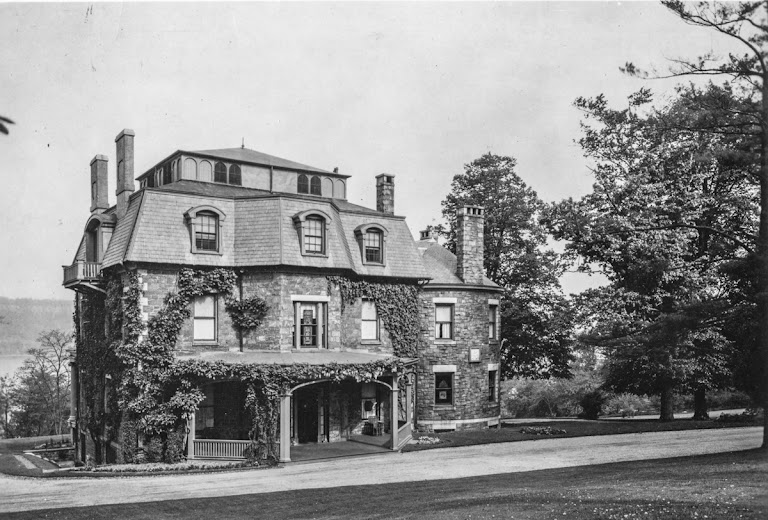
In 1903, the house came into the hands of George Perkins, who leased Wave Hill to various celebrities. Notable residents included:
- A young Theodore Roosevelt
- Composer Arturo Toscanini
- Mark Twain and his family
- Queen Elizabeth The Queen Mother during her visit in 1956
- Bashford Dean, a scholar and eccentric collector of medieval armor (for whom a special castle-style hall was even built to house his extensive collection)
In 1933, Perkins’ daughter, Dorothy, settled here with her husband, Edward Freeman. They enlisted architect Oliver Perry Morton to modernize the house, removing Victorian elements and adding a wing in the style of an English country estate.
Another prominent building on the Wave Hill grounds is Glyndor House, which now hosts an art gallery and administrative offices. Originally, a Victorian villa romantically named Nonesuch stood here, built in the 1860s by Oliver Harriman. In 1895, George Perkins also acquired it, adding a magnificent north-facing veranda and a south-facing porch.
However, in 1926, after a lightning strike, Glyndor suffered significant damage. Perkins’ widow had to decide whether to restore it or rebuild. She chose the latter, and in 1928, Glyndor II emerged on the same foundation—smaller in scale but more refined. Mrs. Perkins lived there for the remainder of her life.
Gardens and Key Locations at Wave Hill
- The Pergola.
On a sprawling lawn, amidst lush greenery and tranquility, stands the elegant Italian-inspired pergola, framing a living tableau of the Hudson River. In spring and summer, it’s adorned with tropical and annual plants, even bearing real kiwi fruit. In the evening, a special ambiance pervades—the incredible views and fragrant aroma immerse you in vibrant, profound sensations.
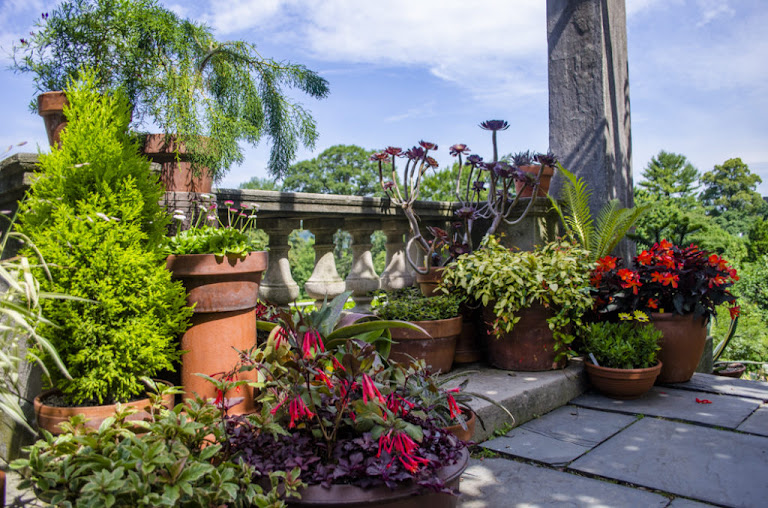
- The Flower Garden.
The Flower Garden at Wave Hill is an artistic haven enclosed by a rustic wooden fence. Each section is like a hand-woven tapestry, featuring perennials, annuals, bulbs, shrubs, and even vegetables. Every flowerbed has its own chromatic melody. At its center are symmetrically arranged, ever-changing seasonal container displays.
- The Herb Garden.
This isn’t just a botanical collection; it’s a living textbook. Here, you’ll find culinary and medicinal herbs, as well as plants with practical applications—from Chinese indigo to cotton and flax.
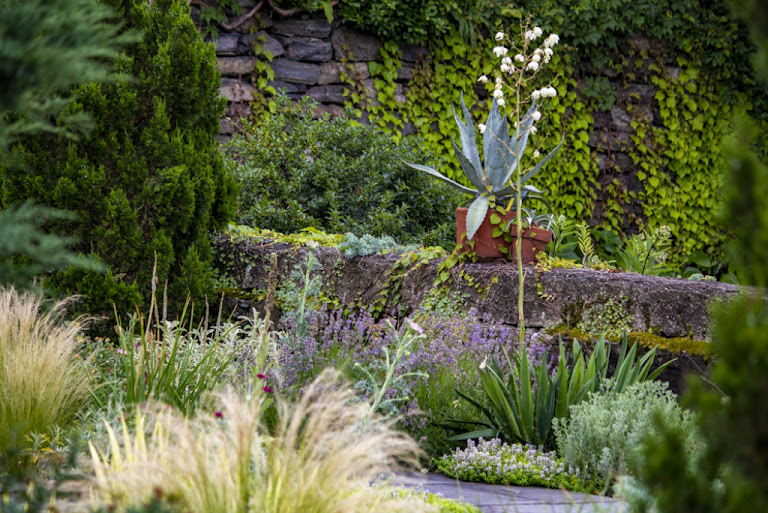
- The Dry Garden.
This area is designed for plants accustomed to arid climates. Its soil is lightened with sand to ensure impeccable drainage, and stone walls provide protection from the wind. Here, you’ll discover ornamental plants that typically thrive on Mediterranean slopes and limestone cliffs.
- The Marco Polo Stufano Conservatory.
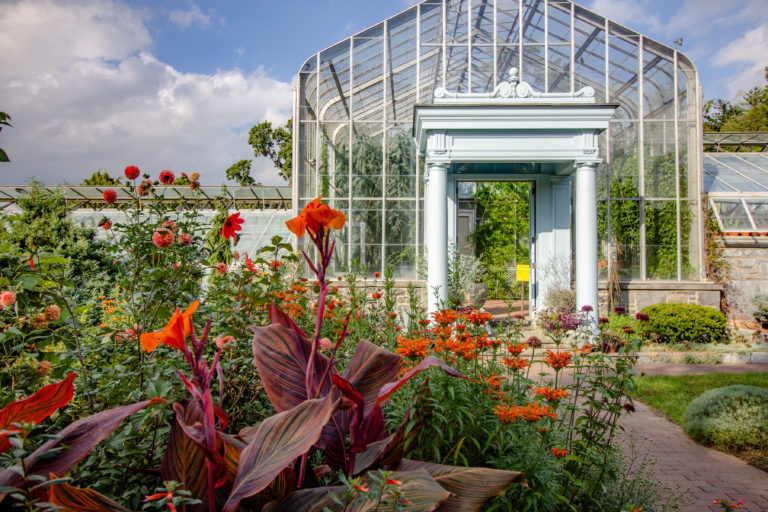
Situated between two historic estates, this conservatory is dedicated to the memory of former garden director Marco Polo Stufano. Built in 1906, it underwent renovations, retaining only its historic portico.
Inside, you’ll find several micro-worlds.
The Palm House features fragrant flowers and large-leaved plants, which are moved to the Flower Garden in the summer.
The Tropical House mimics a jungle with humid walls, ferns, and bromeliads, equipped with a misting system that simulates a rainforest.
The Cactus and Succulent House presents a desert world, where over 1,100 plants thrive on raised benches, organized by continent: America on the left, the rest of the world on the right.
- The T.H. Everett Alpine House.
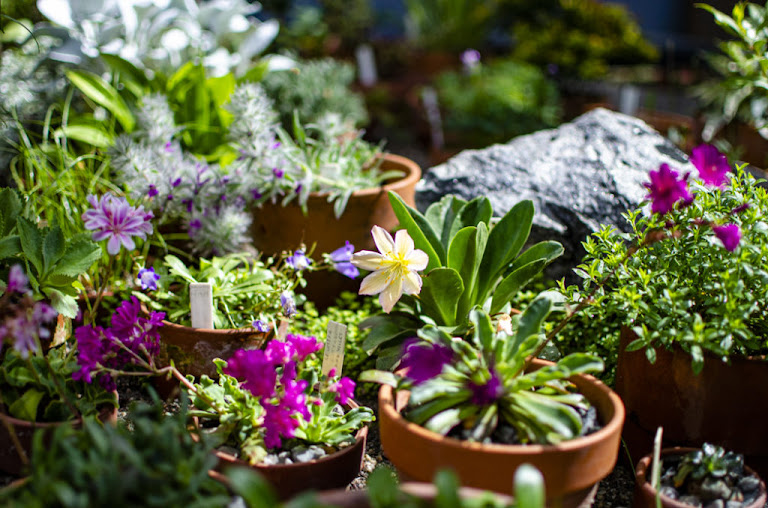
The Alpine House is specially designed for the delicate inhabitants of mountain ranges. Here, under a glass roof, plants that naturally survive harsh weather above the clouds flourish. This unique corner is named after T.H. Everett, a teacher and mentor to Wave Hill’s first garden director, Marco Polo Stufano. It was after a trip to the Royal Botanic Gardens, Kew, in 1965 that Stufano envisioned and then created a similar space in the Bronx.
“It’s like a jewel box, but instead of jewels, it’s tiny alpine plants. And this isn’t Manhattan—it’s a miracle in the Bronx,” said garden writer Tom Christopher.
- The Wild Garden.
At Wave Hill’s highest point sprawls the Wild Garden—at first glance, natural, yet meticulously planned. Inspired by William Robinson’s principles, this garden embodies the harmony between humans and the landscape. Here, the first snowdrops and crocuses emerge in late winter, while the last asters and salvias appear in October. Throughout the season, the color palette shifts, like a living watercolor.
Useful Information for Visitors
Wave Hill is more than just a garden; it’s a place where nature inspires discovery. It offers enriching educational programs, all sharing a common goal: to spark curiosity, foster creative thinking, and strengthen the connection between people and the natural world.

Programs include:
- For Adults. Guided walks, lectures, workshops, and wellness programs offered year-round—an opportunity to relax and learn more about nature from Wave Hill experts and visiting specialists.
- For Children and Families. Programs that help children explore the world through play, art, and nature, fostering observation skills, imagination, resilience, and curiosity.
- For Schools and Educators. School groups and teachers can participate in nature and creativity-focused programs, involving field research and art projects.
- Youth Internships. Paid internships for teenagers and young adults, providing an opportunity to gain experience in environmental fields, art, or community work.
What to know before visiting Wave Hill:
- Open Tuesday through Sunday from 10:00 AM to 5:30 PM. Last entry is at 5:00 PM. Admission is free on Thursdays (excluding organized groups).
- Parking is available in an on-site lot and an additional lot at Riverdale Park. Spaces are offered on a first-come, first-served basis.
- Accessibility: Special transportation is available for visitors with limited mobility (though not to all areas due to terrain challenges), and manual wheelchairs can be borrowed.
- Photography: Professional photography (with props, equipment, or staging) requires permission and prior registration. Wedding, portrait, and commercial sessions are only permitted with authorization and payment.
- Food: Food can be brought to designated picnic areas near the Glyndor Gallery or on the Lower Lawn.
- Prohibited Items: Blankets, chairs, balls, rollerblades, skateboards, drones, frisbees, and similar items that could damage the gardens are not permitted.
- Smoking/Vaping: Smoking and vaping are prohibited.
- Group Visits: Groups of 15 or more require advance booking at least 2 weeks prior. Free Thursday admission does not apply to organized groups.
- Special Events: Organized gatherings, photoshoots, and celebrations are only allowed with prior permission.
Wave Hill is more than just a garden. It is a space for contemplation and an escape from urban bustle, inspiring generations of artists, scientists, and politicians.