

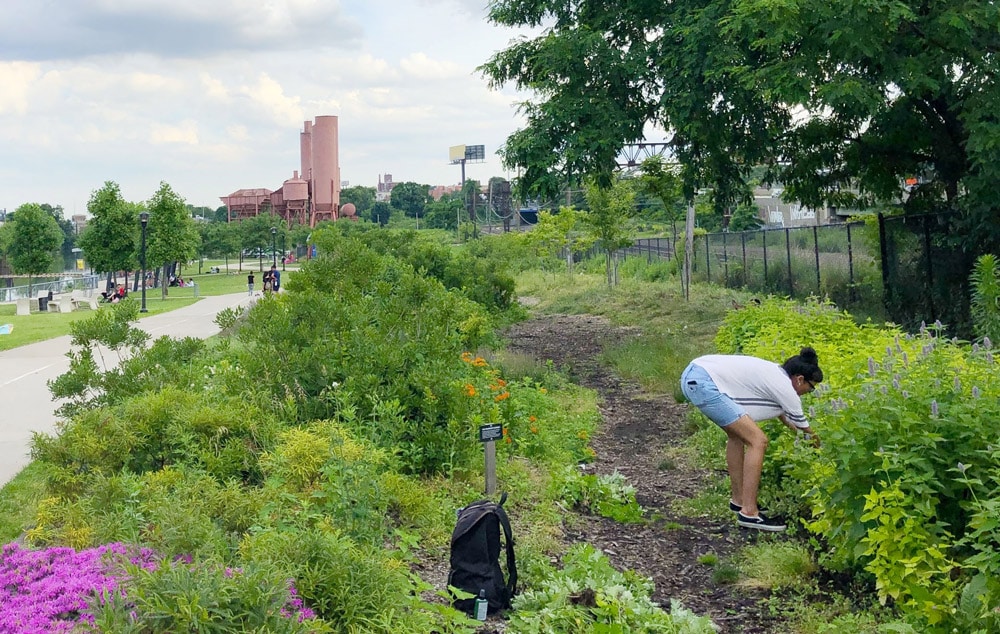
This half-hectare edible park, located within Concrete Plant Park, has become the first project in New York City where it’s officially permitted to forage for wild and cultivated edible and medicinal plants. The initiative launched in 2017 as a pilot “foodway” project—a concept for a sustainable food landscape within an urban environment. Learn more on bronx.name.
Idea and Purpose of Creation
The Bronx River Foodway is more than just a city garden or park. It’s an innovative pilot project that transformed a former industrial site at Concrete Plant Park into New York City’s first legal space for gathering edible and medicinal plants. Launched in 2017 in partnership between NYC Parks and the Bronx River Alliance, it has become an experimental ground for rethinking urban land use.
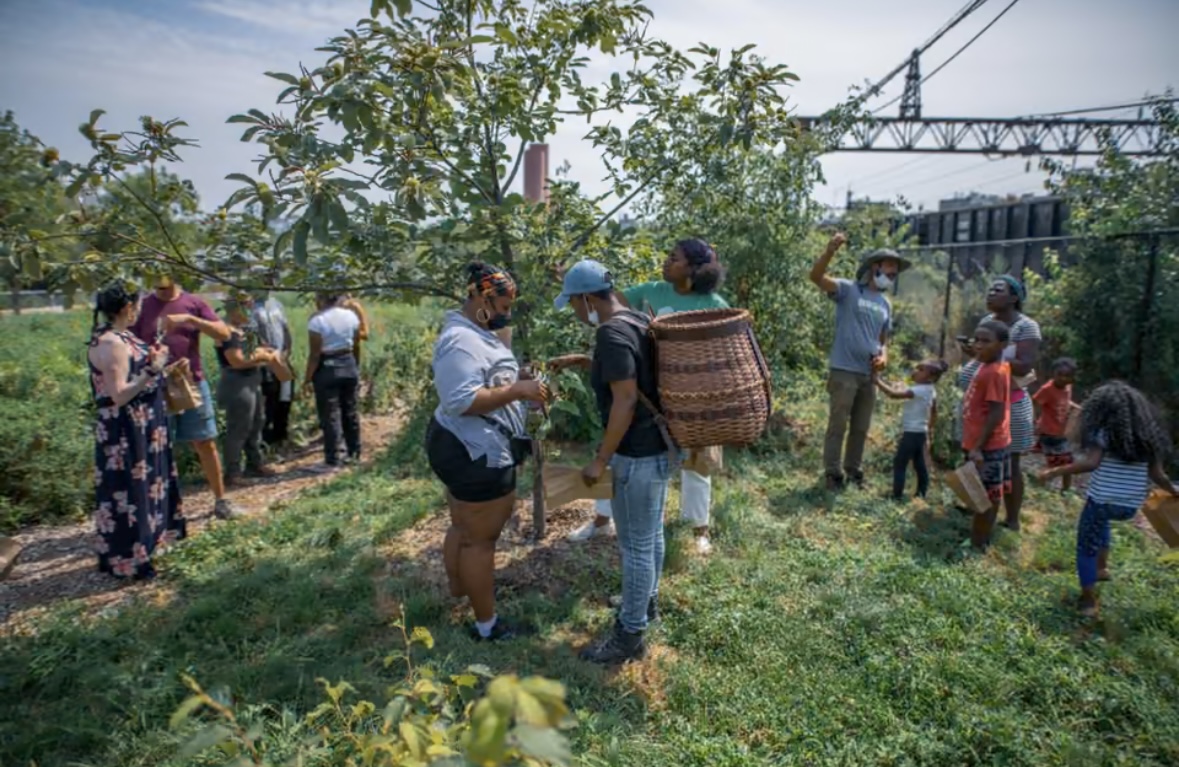
The primary goal of the Foodway is to demonstrate how public spaces can not only beautify the city but also nourish its residents. The project invites us to imagine a new model of urbanism: a space where wild plants are a resource, and city dwellers are not just observers, but active participants in environmental, food, and cultural transformation.
The Foodway was designed as a tool to enhance food independence, foster community development, and promote a sustainable lifestyle. Here, people can not only learn about the plants growing nearby but also legally harvest mint, berries, edible flowers, and other crops.
Key innovations and values:
- A green infrastructure model that helps mitigate the effects of climate change, especially during heavy rains, when the area functions as natural drainage.
- Inclusive access to nature, which is particularly important for residents of the South Bronx—an area with high environmental inequality and limited access to green spaces.
- A food sovereignty model that shows how public land can serve local communities—not just as a recreational space, but also as a source of food, knowledge, and interaction.
Funding was provided by NYC Parks and the Creatives Rebuild New York initiative, which supports innovative cultural and community projects. The Bronx River Foodway is an example of how even a small plot of land can become a powerful tool for environmental justice, education, and sustainable development.
Main Locations
Situated on a narrow strip between the railway and the river, the Bronx River Foodway features a clear linear structure. A central pathway divides the space, leading to key features: a boat launch, reading areas, picnic spots, and relaxation zones. On both sides, meadows, restored salt marshes, and open landscapes create diverse habitats.
The planting plan is based on various layers:
- To the north, a woodland edge mosaic formed by low-growing trees (serviceberry, holly, dogwood), beneath which grow shrubs, perennial flowering plants, and medicinal herbs (echinacea, yarrow, mugwort, plantain, thyme, dandelion, goldenrod).
- Further south, an aromatic garden with lemon balm, mountain mint, and other fragrant perennials (sage, calendula, borage), as well as a nut grove featuring hazelnuts, chestnuts, walnuts, and even ornamental onions.
- Particularly attractive is the berry pathway near the kayak launch, where visitors can pick currants, raspberries, or blueberries before a water excursion.
- At the southern end of the Foodway are fruit trees (pears, peaches, persimmons, mulberries) and dense plantings of less common vegetables like skirret, sea kale, and Jerusalem artichokes. This area also includes spaces designed to highly attract pollinators—bees, butterflies, and beetles.

Thanks to the Bronx River Alliance’s initiatives, the park has become a center for education, environmental justice, and empowering the local community’s access to resources.
Programs and Projects Within the Initiative
Two key figures at the Bronx River Foodway are Nathan Hunter (coordinator and the sole full-time NYC Parks representative assigned to this space) and Journei Bimwala (artist-in-resresidence, herbalist, and educator).
Among the main programs and projects are:
- Tours with Bimwala.
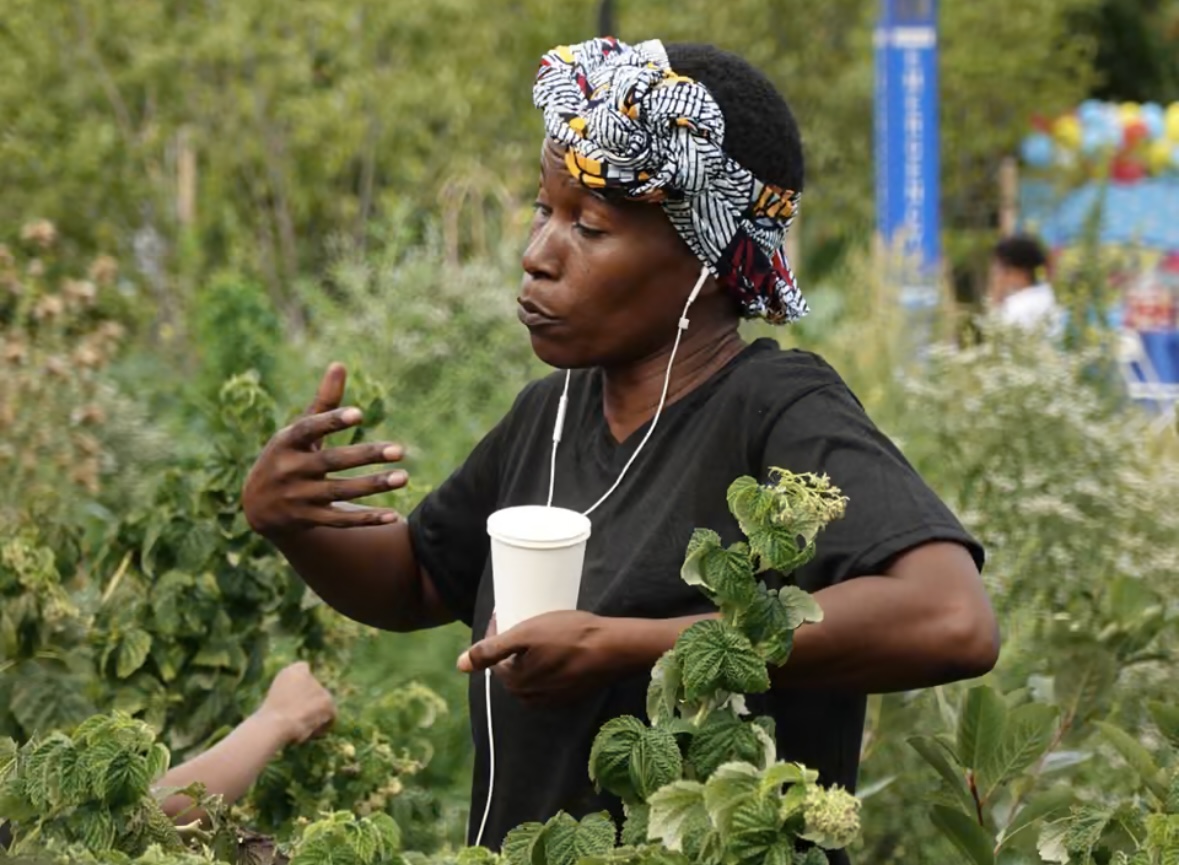
Weekly during the warm season, traditional medicine expert Bimwala leads educational walks along the Foodway path. Dozens of residents arrive with baskets to learn to identify wild edible and medicinal plants, discover their history, use in various cultures, and harvest crops.
- Gardening Tuesdays.
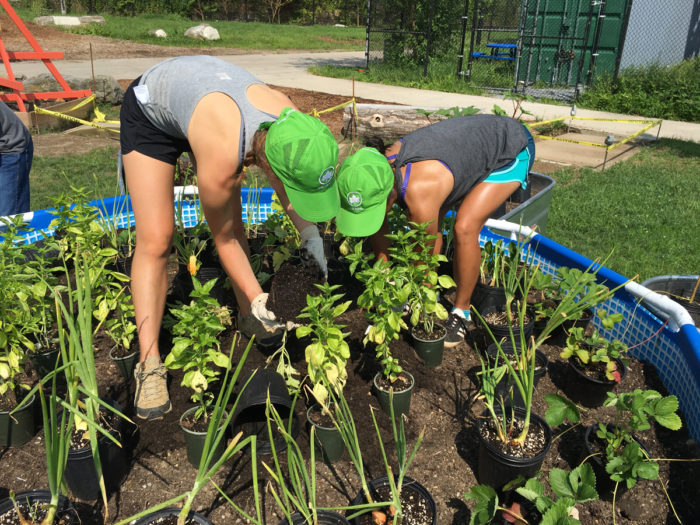
Every Tuesday, the Foodway opens its locations to anyone interested in communal gardening. Under the guidance of specialists, residents learn to plant, care for plants, compost, and transplant crops. This is not only about working with the soil but also a space for sharing knowledge, socializing, and building trust among community members.
- Volunteer Days.
On the first Saturday of each month, the Foodway hosts days when volunteers collectively clean the area, maintain plantings, and create new garden beds or infrastructure elements. It’s an opportunity to make a real contribution to the space’s improvement, meet like-minded people, and feel part of a larger ecological community.
- Community Banquet.
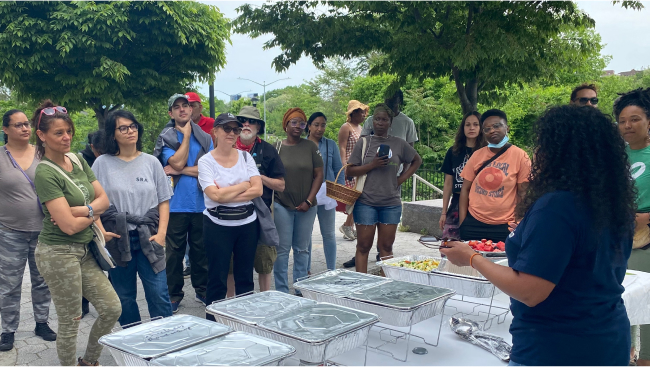
The annual communal feast celebrating the end of the season in November is a festive event where community members, volunteers, harvesters, and chefs gather. The tables feature dishes made exclusively from what grew at the Foodway: wild greens, berries, and herbs. It’s an opportunity to honor the work of those who grew and prepared the food, share recipes and stories, and feel the strength of a community that feeds itself.
- Winter Apothecary.
When the harvesting season ends, the Foodway team opens a winter apothecary—a free distribution point for medicinal herbs gathered during the summer and fall. Residents can receive dried mugwort, mint, rose hips, thyme, and other herbs for teas, inhalations, and tinctures. This supports community health and well-being during the winter months.
- Virtual Classes.
For those unable to attend in person, the Bronx River Alliance’s YouTube channel offers a series of educational videos. Topics include: basics of safe wild plant harvesting, home gardening, cooking with unusual crops, tips for growing medicinal herbs, and more.
- Mushroom Cultivation Program.
During the off-season, the Foodway team focuses on mushrooms. A three-part series is implemented:
- A mushroom identification walk with Bimwala.
- A mushroom cultivation workshop.
- A practical session: growing mushrooms in coffee grounds bags.
- Soil Testing.
In cooperation with Cornell University, continuous soil quality monitoring is conducted. The Foodway team uses X-ray equipment to check for toxic substances. Residents can bring soil from their own plots for free analysis.
Focus on Health
“We live in what’s called the asthma triangle — a region of the South Bronx crisscrossed by highways and industrial zones,” says Nathan Hunter.
He emphasizes that many of the plants growing within the Bronx River Foodway have natural healing properties—specifically, they help alleviate respiratory ailments, which are particularly common among residents due to polluted air. Amidst the concrete ruins of a former factory, in the shadow of old silos, people can freely, safely, and without cost collect medicinal plants. This fundamentally changes the perception of access to health in the city.
Herbalist and educator Journei Bimwala, who conducts educational tours at the Foodway, adds:
“In our African American community, historically, there has been a lack of full trust in the medical system. Instead of shaming people for that, we return to our knowledge — to the earth.”
As an example, she cites the New England aster, which grows in the park—a natural remedy for relieving asthma symptoms, well-known in traditional herbal medicine.
In a city where collecting plants in parks is typically punishable by a fine of up to $200, creating a legal, inclusive, and safe place to gather food and medicinal herbs in an underserved, predominantly non-white neighborhood is a radical and vital act of care.
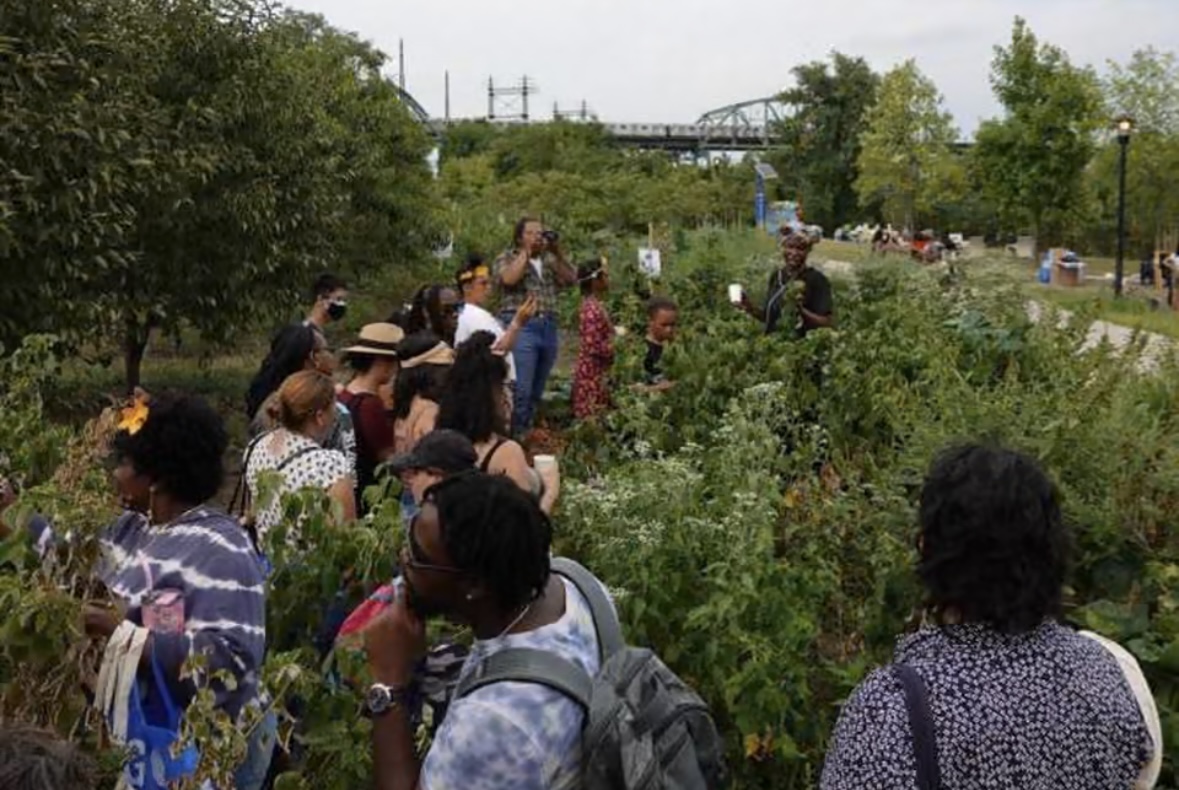
Thus, the Foodway becomes not just a part of the urban green landscape, but a center of health, knowledge, and mutual respect, where the medicine of nature intertwines with the voices of the community.