

Americans now consume about 400 million cups of coffee daily, fueling a $30 billion industry. While Starbucks and Dunkin’ Donuts still dominate the market, cities like New York, San Francisco, and Chicago are seeing a rising demand for craft coffee. Its consumers are often young, trend-conscious people willing to pay more for a high-quality product. In this article, bronx.name tells the story of one such craft coffee company that recently relocated from Brooklyn to the Bronx.
The U.S. Coffee Market
The coffee world has experienced several “waves.” In the ’60s, Folgers turned it into a mass-market product. In the ’90s, Starbucks kicked off the second coffee boom. Now, we’re in the third wave, with brands like Blue Bottle, Intelligentsia, and Stumptown focusing on premium quality.
“Coffee has a special beauty that Americans haven’t experienced before,” says Stumptown President Joth Ricci.
At Stumptown, for example, a single cup can cost $6—the price of a good bottle of wine. The company is valued at around $52 million. They source the best beans from around the world, roast them at their Brooklyn facility, and then deliver them to their shops or wholesale clients.
Experts predict that premium coffee is the future of the market.
“People are paying for a unique experience,” says IBISWorld analyst Andy Brennan. “Yes, it’s a bit snobbish, but it’s an unashamed snobbery.”
In Australia, where Brennan is from, craft coffee already accounts for about half of the market in major cities. It seems the U.S. is following the same path.

“The coffee you drink has become part of your identity,” he adds. “People are moving away from Starbucks because it’s become so common.”
While Stumptown doesn’t see itself as a threat to Starbucks, the craft coffee market is highly competitive. Their main rivals are Blue Bottle and Intelligentsia, but new players are emerging. For example, Grady’s Cold Brew has abandoned the classic cafe model in favor of a “do-it-yourself” approach.
A New Player in the Coffee Market
There’s a lot of truth to the saying that “there are no accidents.” Grady Laird, who lived in the well-known hipster neighborhood of Williamsburg, Brooklyn, was working for GQ magazine and was a long way from the worlds of coffee, restaurants, and sales. One day, while walking through the city, he saw a group of young parents on their way to a preschool, holding bottles of cold coffee. From that moment on, the idea of how to make an aromatic coffee drink that was cool and refreshing without adding a ton of ice stuck with him.
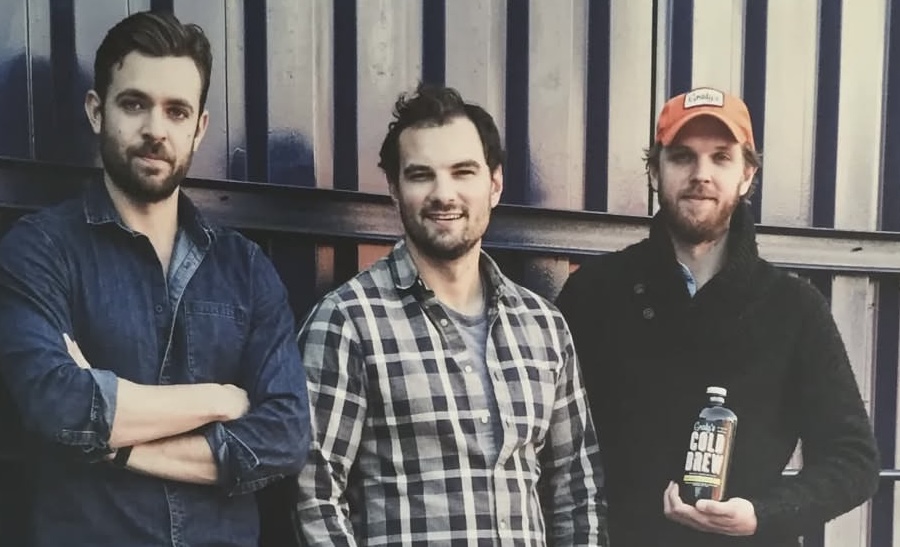
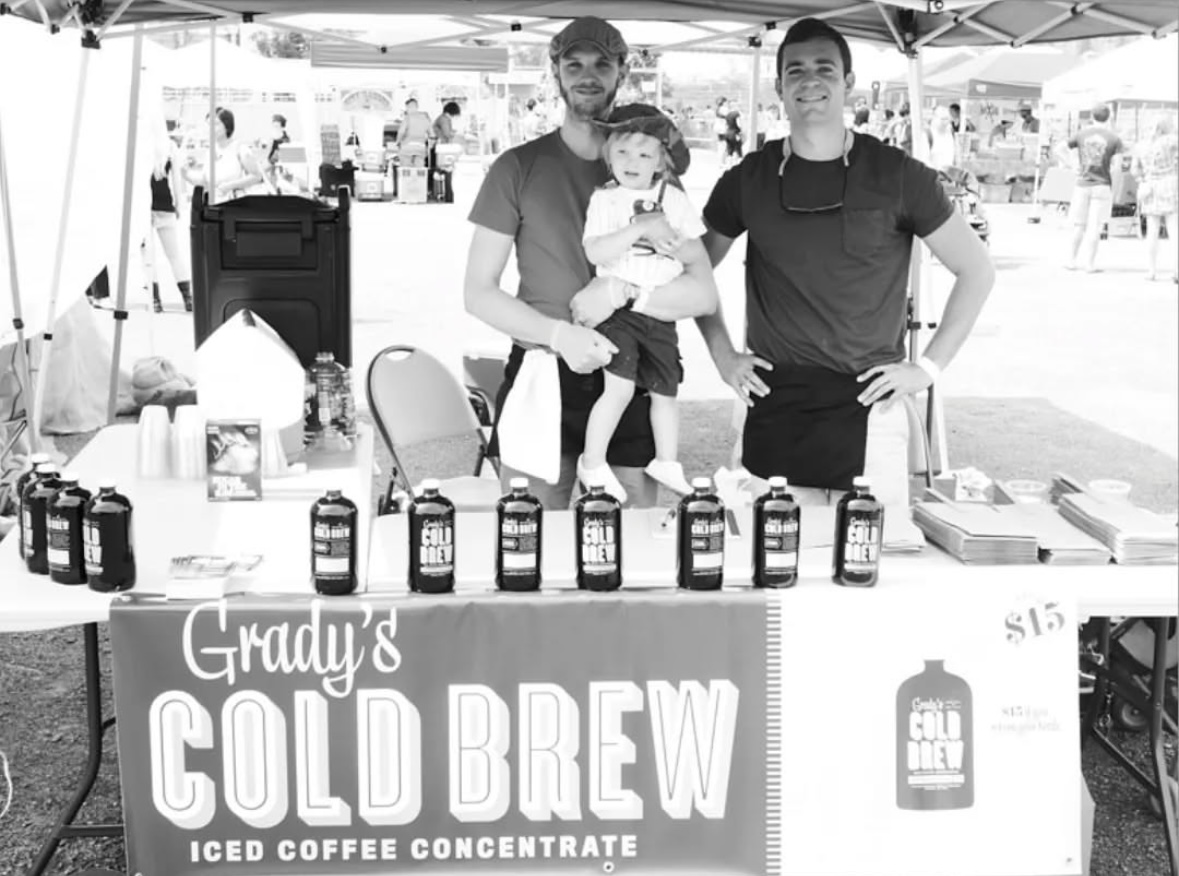
Laird even wrote a long article about how to make coffee concentrate using a cold-brew method. He tried to create his own version, going through many attempts while playing with proportions and flavors. The drink he came up with was unique, and his first tasters were his friends, acquaintances, and colleagues. Eventually, Grady started selling his coffee to other Conde Nast publications and then quit his job entirely to devote himself to the business. In 2011, he founded the company with Dave Sands and Kyle Buckley. During the week, the team focused on brewing and delivery, and on weekends, they sold the drink at the popular Smorgasburg food market in Brooklyn. At first, Grady’s was only available online and in a few small shops in Brooklyn and Manhattan. But after participating in Smorgasburg, they had a real breakthrough when representatives from Whole Foods took notice. By 2012, Grady’s products were on the shelves of the national supermarket chain.
Grady’s Cold Brew quickly launched a large-scale production facility in North Williamsburg, with a 6,000-square-foot space. Laird went from brewing on a small kitchen counter to using 1,000-gallon stainless steel tanks where experienced technologists created a true cold-brewed coffee.
Laird calls his company a “pioneer in the world of cold coffee” because it started when cold brew was still a novelty. Now, cold brew can be found in almost every New York cafe, and even giants like Starbucks and Dunkin’ have added it to their menus. However, Grady believes his company was one of the first to mass-bottle and sell cold coffee in the U.S.
Unlike coffee with ice, cold brew is made by steeping ground beans in cold water for 20 hours. The result is a rich concentrate that is then diluted with water or milk.
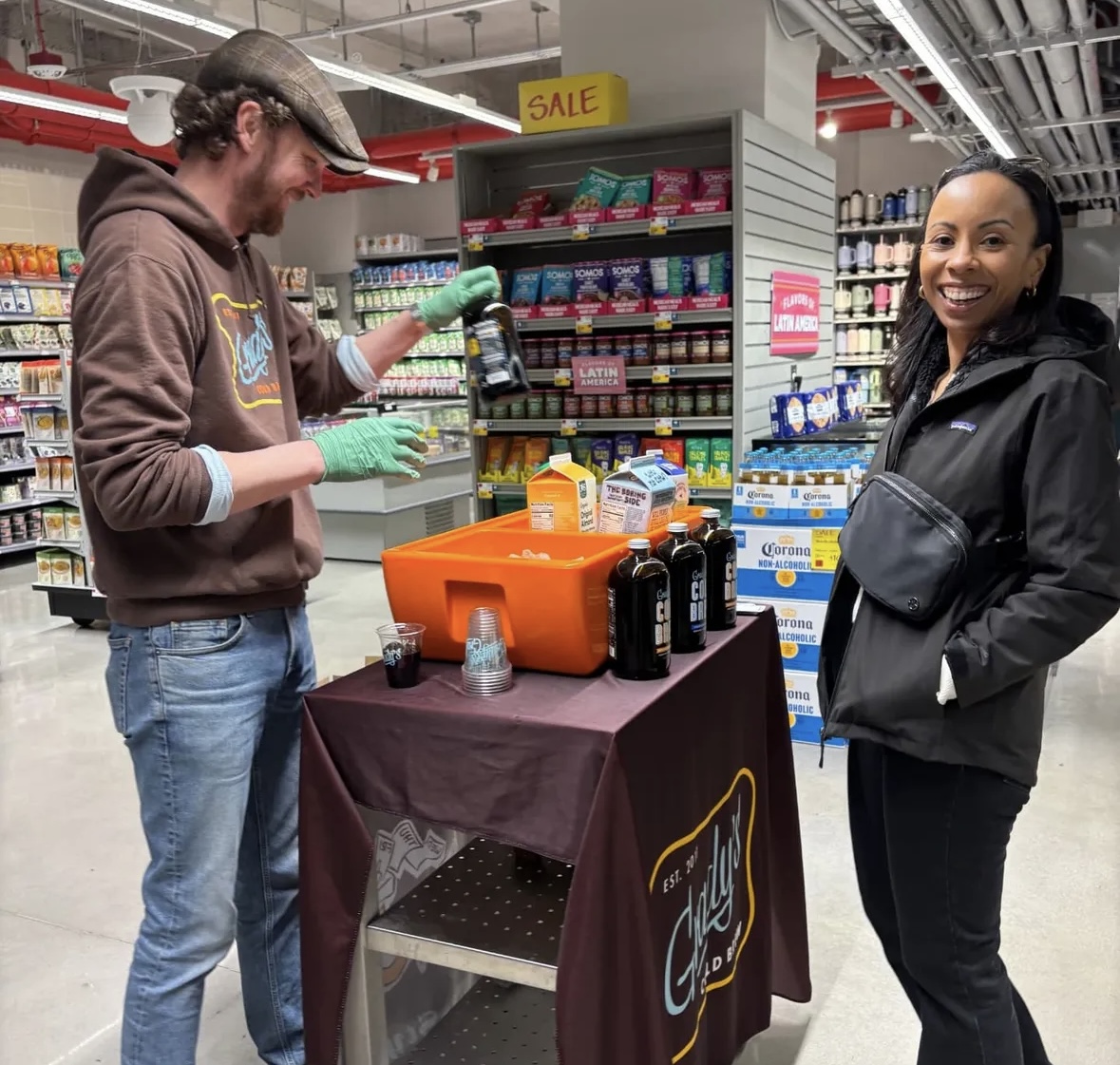
When cold brew started to gain popularity, Laird noticed that prices in cafes were reaching $4–5 per serving. He decided to make cold coffee more accessible so everyone could afford it. This led to the creation of Grady’s Cold Brew coffee concentrates, which can be diluted with water or milk at home.
What’s with the New Orleans Connection?
Grady Laird based his coffee drink on what’s known as New Orleans-style coffee. It’s not just regular coffee brewed in New Orleans; it’s a drink with a unique recipe and ingredients. The key feature of New Orleans coffee is the addition of roasted and ground chicory root. This ingredient gives the drink a deeper, richer, slightly earthy, and nutty flavor.
New Orleans coffee has interesting historical roots. Because of its location, the city was always an important port for importing coffee from the Caribbean, so coffee was very common there. But chicory was also popular, dating back to the French rule of Louisiana when it was imported from France and considered beneficial to health.
In the early 1800s, political tensions between France and the U.S. led Napoleon to try and restrict the coffee supply to America, encouraging the use of chicory as an alternative. Later, during the Civil War, when naval blockades limited coffee imports, chicory—which was still coming from France—became the primary substitute in the South. Its popularity grew even more due to advertising about its “medicinal” properties.
After the war, even when the coffee supply resumed, New Orleans residents maintained their love for the drink. Over time, to make coffee cheaper to brew, people began regularly mixing it with chicory—and so, a unique coffee style was born that remains a characteristic feature of the region today.
Grady’s Cold Brew coffee also contains chicory, which sets it apart from other cold coffee producers.
Grady’s Cold Brew Opens New Facility in the Bronx
For 10 years, Grady’s Cold Brew grew in Brooklyn, and in 2021, the company moved to the Bronx. Grady Laird could never have imagined that his journey would go from writing that article about cold-brew concentrate for a magazine in Williamsburg to running a huge, 15,000-square-foot facility in the Bronx.
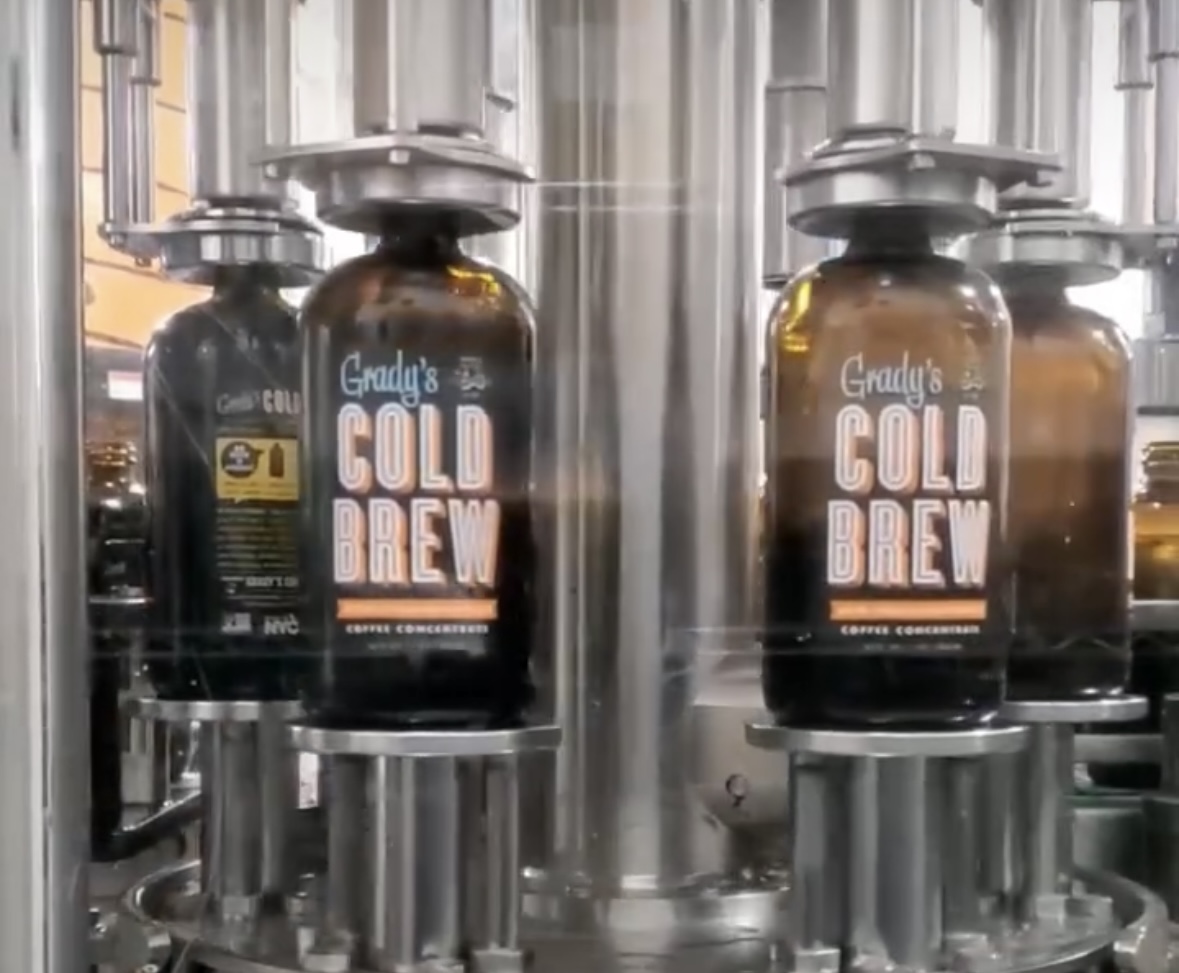
The modern facility, with its huge stainless steel tanks and professional equipment, has allowed Grady’s to significantly increase production volumes without sacrificing quality. Now, Grady’s Cold Brew has become part of the large business community at the well-known Hunts Point Food Distribution Center. It was a change to be in such a whirlwind of people and trucks after the more relaxed vibe of Brooklyn, but everyone eventually got used to it. The move to the Bronx was also financially beneficial for the entrepreneurs. Rent for a space twice as large here costs less than what the company was paying in Williamsburg.
So, the coffee innovators continue their work, popularizing the idea of drinking cold coffee among New Yorkers and beyond. Of course, the company makes its biggest profits in the summer, and each year seems to get hotter. But true cold-brew connoisseurs drink it all year long. That’s because cold-brewed coffee has lower acidity than hot-brewed coffee. Hot water extracts more acid from coffee beans than cold water. This means that cold-brewed coffee has a lower pH level and less bitterness than hot coffee. This can be beneficial for people with sensitive stomachs or acid reflux issues.
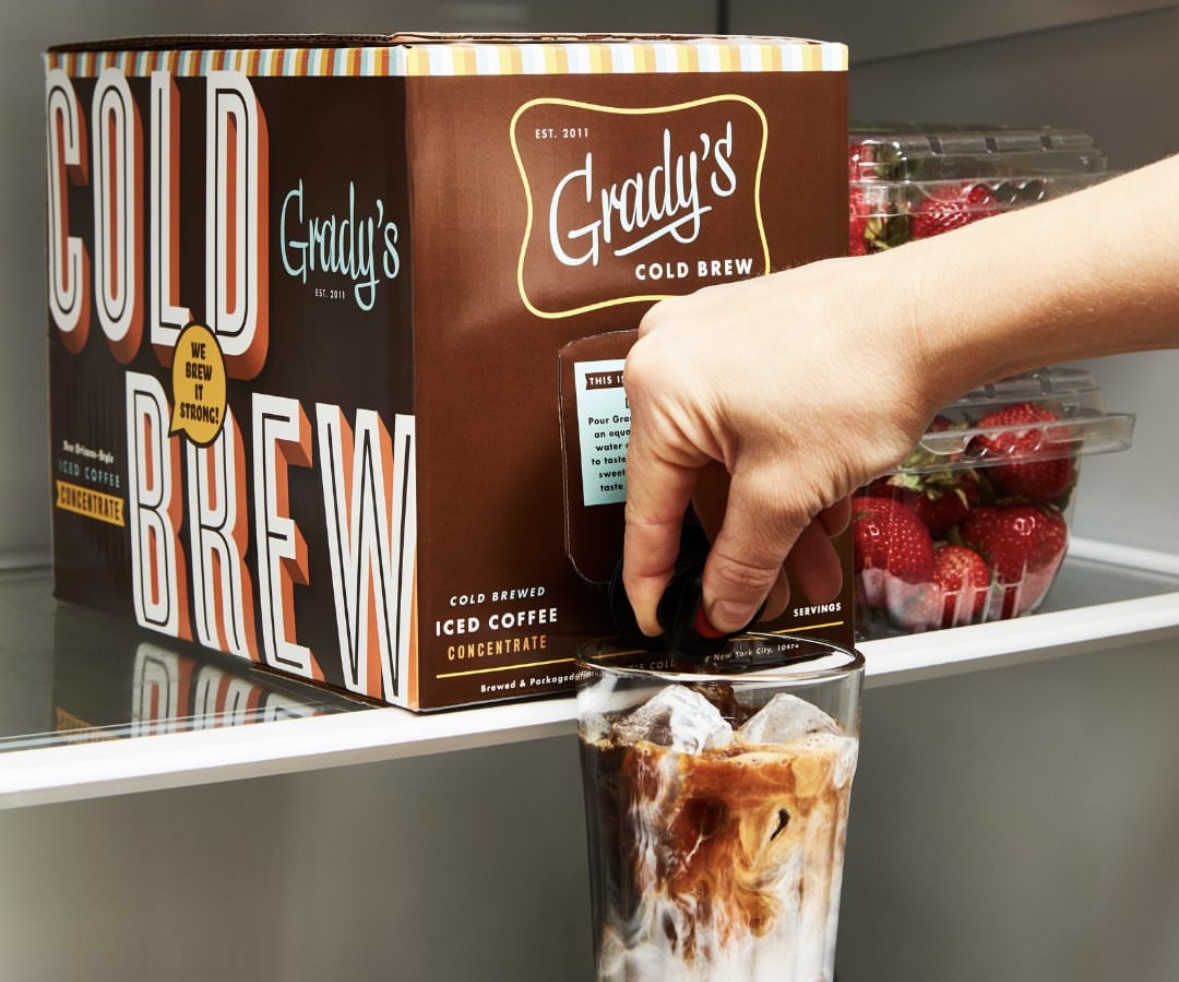
Today, Grady’s Cold Brew offers several product options: ready-to-drink cold brew, concentrate for at-home dilution, and specially packaged bags of ground beans for brewing. Grady’s concentrates are also used to make cocktails, smoothies, desserts, or even marinades. This allows the company to reach a diverse audience, from coffee enthusiasts to those looking for a quick and convenient way to cool down without spending a lot of money.