

Did you know that New York was once a major hub for ice production? It’s where the city’s first “ice entrepreneurs” emerged, harvesting and selling ice from the Hudson River. As consumption skyrocketed, dedicated ice factories began to pop up. This article tells the story of one such factory that has long since retired from its original purpose. Today, it’s home to a very different kind of institution, far removed from business and manufacturing. Read on for more details from bronxname.
New York’s 19th-Century Ice Business
John J. Felter, John J. Perry, and Edward Felter were among the first to harvest and sell ice from the Hudson River in New York. Their business was so successful that they founded “Barmore, Felter, and Company.” This success spurred other ice companies to merge, leading to the creation of the Knickerbocker Ice Company in 1831. The company quickly became popular for the high quality of its ice, which it harvested from the Hudson and lakes stretching from the Catskills to Albany.
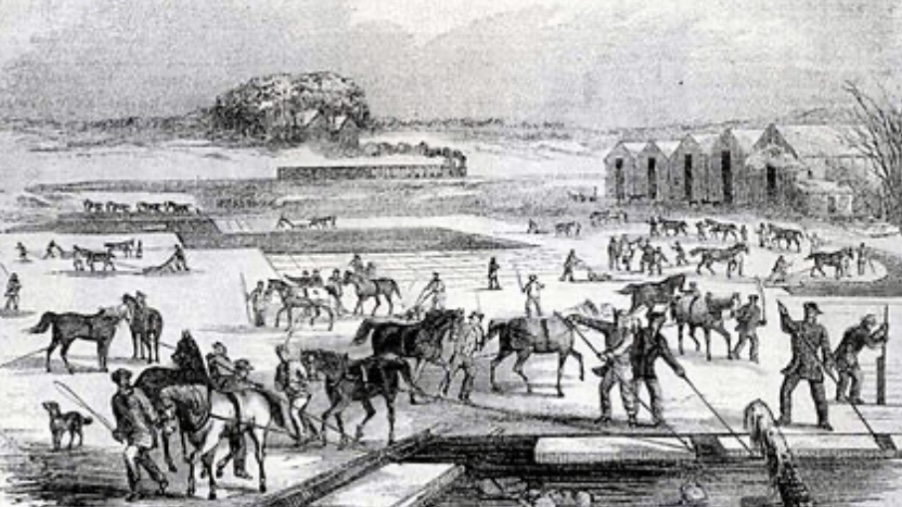
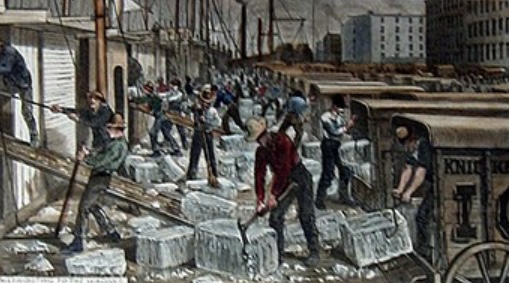
In 1855, the Knickerbocker Ice Company was officially incorporated, bringing together several smaller companies, each contributing their technologies to improve ice harvesting and storage. At its peak, the company owned dozens of steamboats and 75 ice barges, with a workforce of around 3,000 employees. The ice business created many new jobs during the Industrial Revolution.
By 1882, the Knickerbocker Ice Company was New York’s largest ice provider, with numerous storage facilities across the city. Historians estimate that by the end of the 19th century, New York consumed about 285,000 tons of ice per year. However, with the invention of artificial ice in 1900, the company’s popularity began to wane, and it finally closed its doors in 1924.
The Bronx Ice Factory
The ice factory in the Bronx was built in 1898 at 20 Bruckner Boulevard. A few years later, it was expanded by Jacob Ruppert, an American brewer and congressman who was also a highly influential figure in the Bronx at the time. In 1915, during the expansion of the waterfront, Ruppert insisted that a convenient route be created for transporting ice blocks to his Ruppert Brewery on East 92nd Street in Manhattan. Today, that site is home to the luxury condominiums known as the Ruppert Yorkville Towers.
The opening of the new factory was a blow to the Tammany bosses who controlled the ice market and consistently inflated prices. Ruppert created a winning combination of successful, complementary businesses. The ice factory supplied his brewery, which was a constant gathering place for fans of the legendary New York Yankees baseball team, which Ruppert also owned.
Read about the legendary Yankees stadium here.
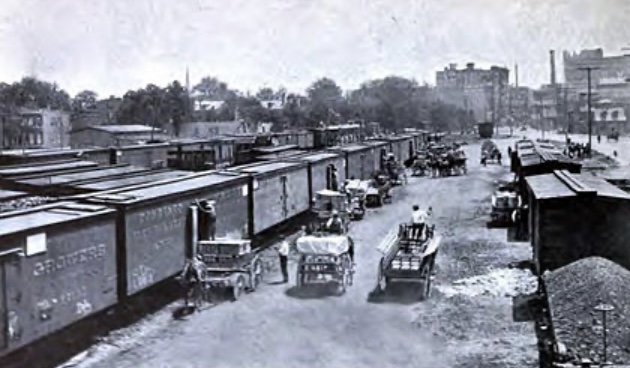
However, when the brewery closed in the 1960s, the factory almost immediately ceased operations as well. Initially, the building attracted significant interest from potential tenants because it was thoughtfully designed, had a functional layout, and was in a great location. But the former factory eventually became a victim of “urbicide,” a term coined to describe the destruction of urban spaces, when the notorious city planner Robert Moses came to power. For a long time, the only thing that saved it from demolition was a large billboard that generated substantial revenue. Many New Yorkers know about the building because of the massive Uber billboard on its roof that overlooks the Harlem River.
Bringing the Old Building Back to Life
The owner of the building at 20 Bruckner was Lewis Katz, a lawyer with a side business in advertising and parking lots. In 2014, he died in a plane crash, leaving his son all his property, including the former factory.
At the same time, the Port Morris neighborhood began to actively develop, and Katz’s son saw an opportunity to lease out the building for a profit. He hired workers to do a thorough cleanup and began looking for tenants. He didn’t have to wait long. Within a few days, the first applicant appeared: a company called Dream. Katz immediately signed a lease with them. Dream is an organization that runs educational programs primarily for low-income Black students from East Harlem and the Bronx.
This contract literally saved the building from demolition. Environmental activists had repeatedly complained about it. The old structures needed repairs and posed a safety risk to pedestrians. The interior was also taken over by thousands of pigeons, so the hygienic conditions were, well, less than ideal.
But after the lease with Dream was signed, everything changed. A major renovation was carried out, both inside and out.
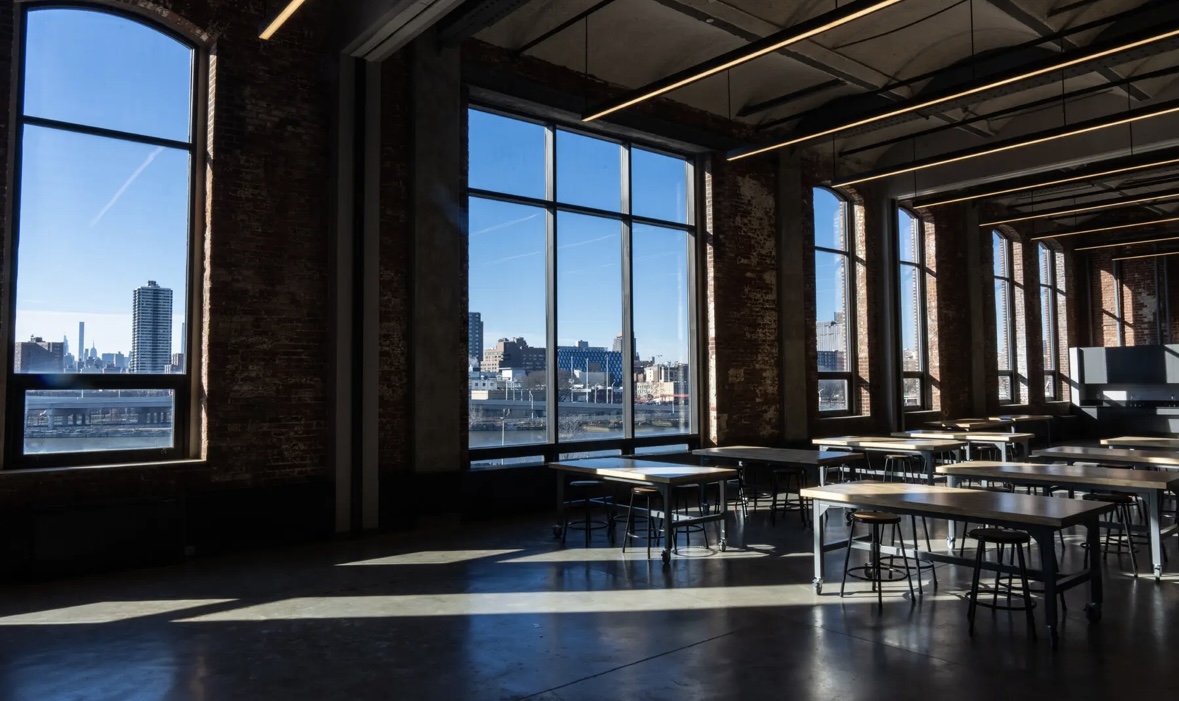
The four-story building has a remarkable ceiling height—from 17 to 22 feet—and a total area of about 40,000 square feet. Some interior walls were demolished to create open spaces. The building has three elevators—two freight and one passenger—all of which were modernized. Other major transformations included enlarging the windows to improve natural light. Additionally, contractors reinforced the reinforced concrete columns to support future loads.
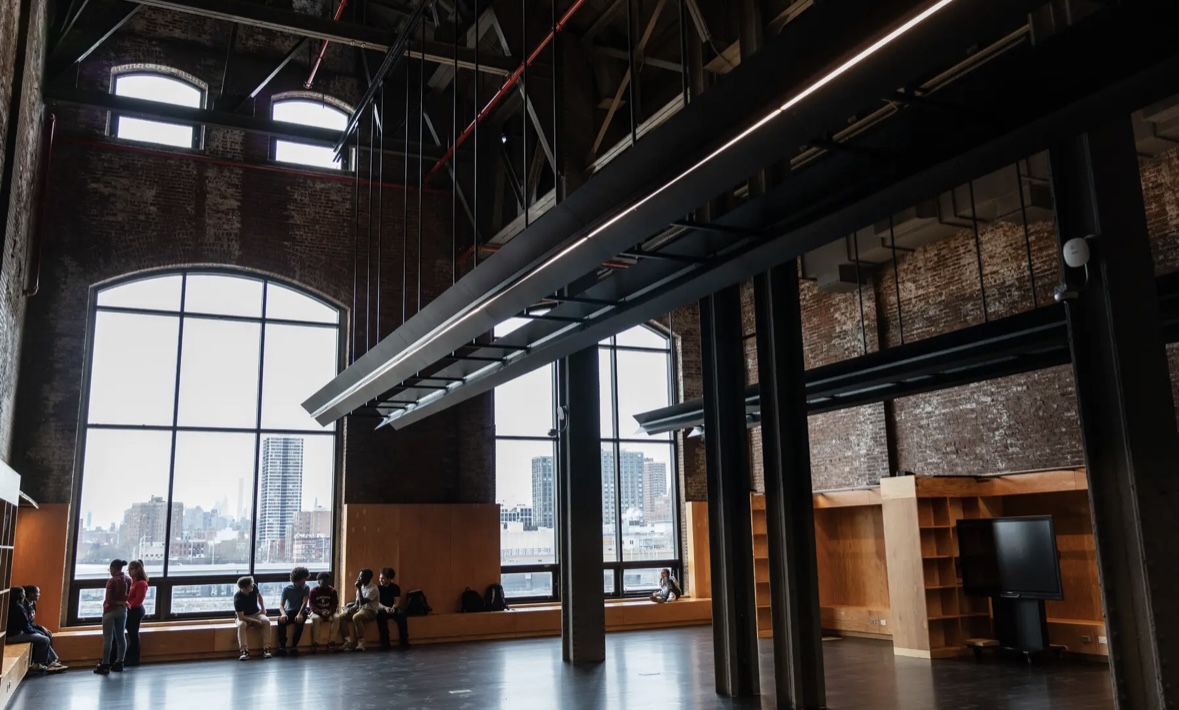
A unique advantage of the building that the Dream representatives absolutely loved during their first visit was the large rooftop terrace.
The metal doors were replaced with front and back lobbies, and outdoor benches and a glazed storefront were added, making the former mute brick facade along Bruckner Boulevard more welcoming and transparent.
The completed project honors the original building’s industrial heritage while creating a modern learning space that meets the needs of the 21st century. The designer and architect aimed to preserve some historical elements, leaving the exposed steel structures, authentic red brick, barrel-vaulted ceilings, and large arched windows.
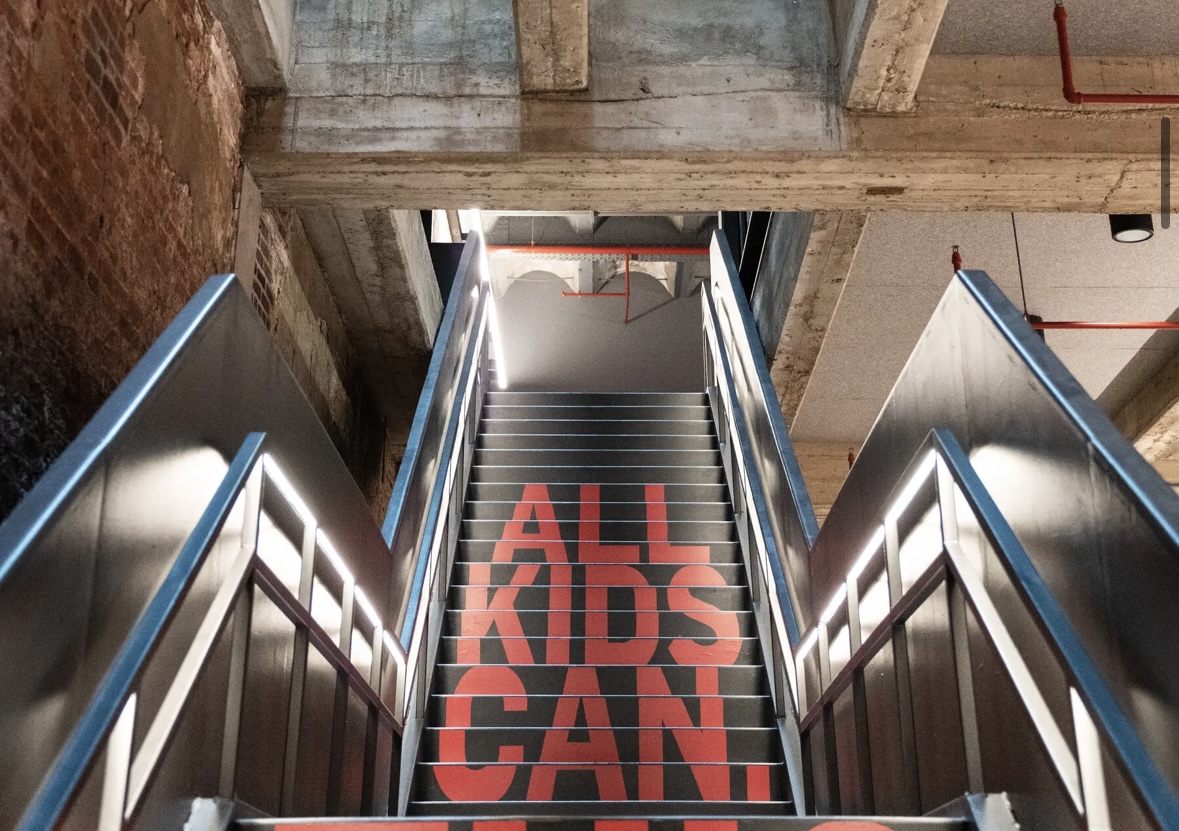
From an Old Factory to a Modern School
So now, the old building in the Port Morris neighborhood of the South Bronx, where ice was once made and stored for Jacob Ruppert’s brewing empire, is a school. It was designed by the acclaimed British-Ghanaian architect David Adjaye.
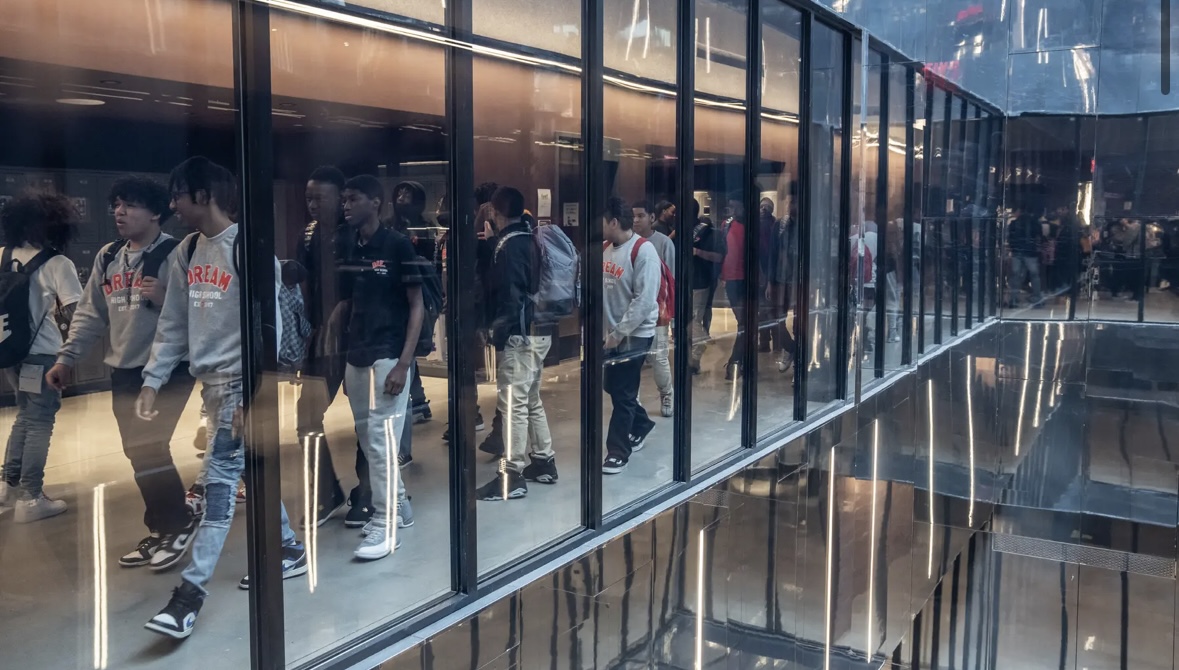
The project cost $50 million, funded by private charitable donations. The school is designed for 1,300 students from pre-K through 12th grade. Priority enrollment is given to residents of nearby public housing and children with special needs.
The school also offers summer and after-school programs, as well as ongoing mental health support and counseling for students and their parents.
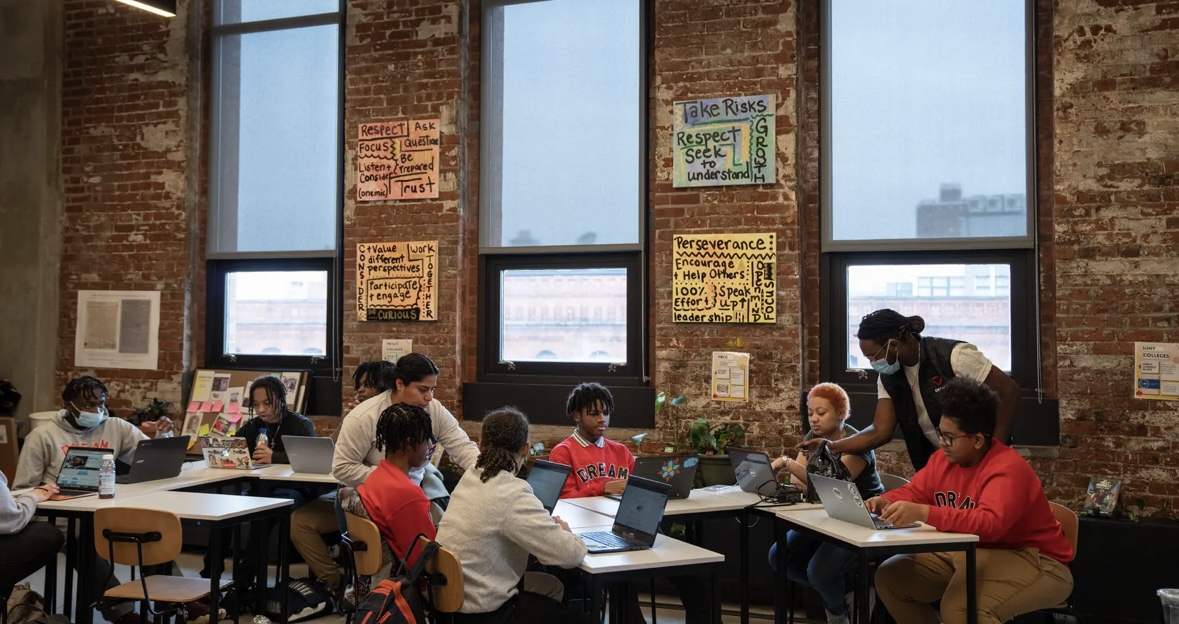
On the third level is the “Hall of Dreams”—a bright, three-story space that serves as a gathering place. Next to it is a large room for art events.
Each floor features both formal and informal zones for relaxation and activities. The first floor houses the “Play Space.” The building is completed with a new gymnasium, a science lab, and an outdoor rooftop surrounded by a landscaped garden that serves as an open-air classroom and sports center.
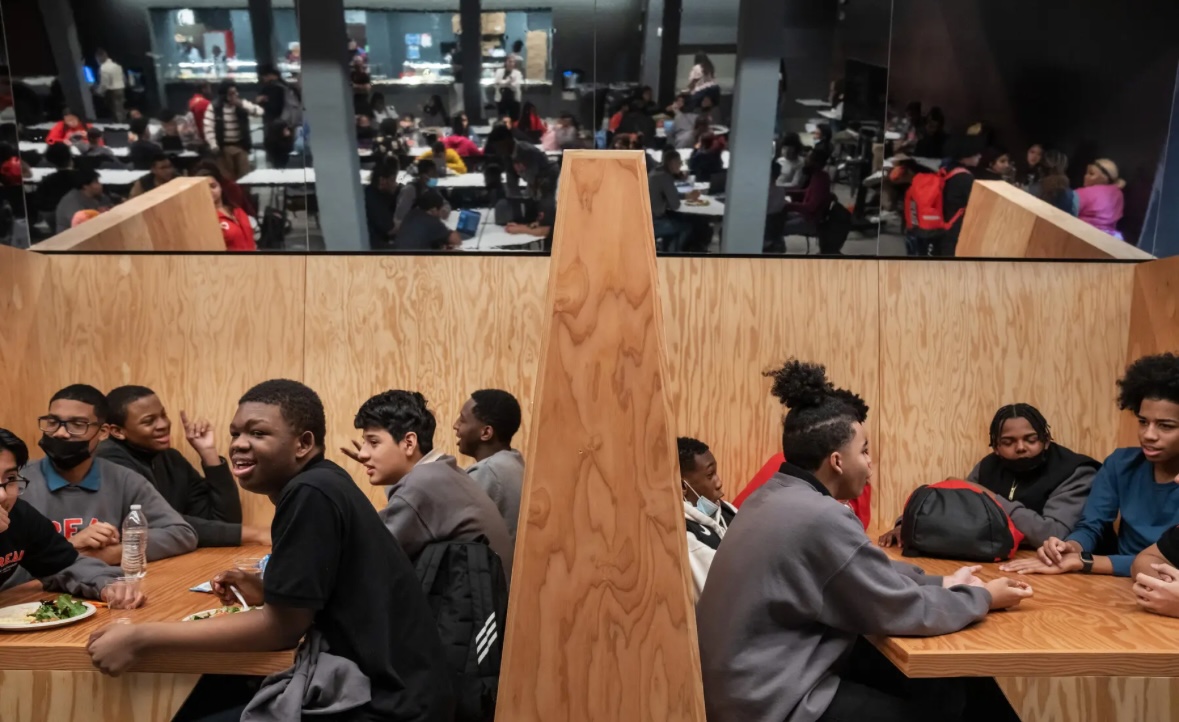
For the students, the new Dream school in the Bronx has become a place of hope and opportunity. Building anything in New York today is incredibly difficult, so more often than not, old buildings are given a new life. As the saying goes, “In New York, we all live with ghosts.” But the children who are lucky enough to attend this school don’t mind spending time in the former kingdom of ice. The most important thing is that today, a wonderfully warm and welcoming atmosphere prevails here.
Read the story of the Bronx courthouse here.