

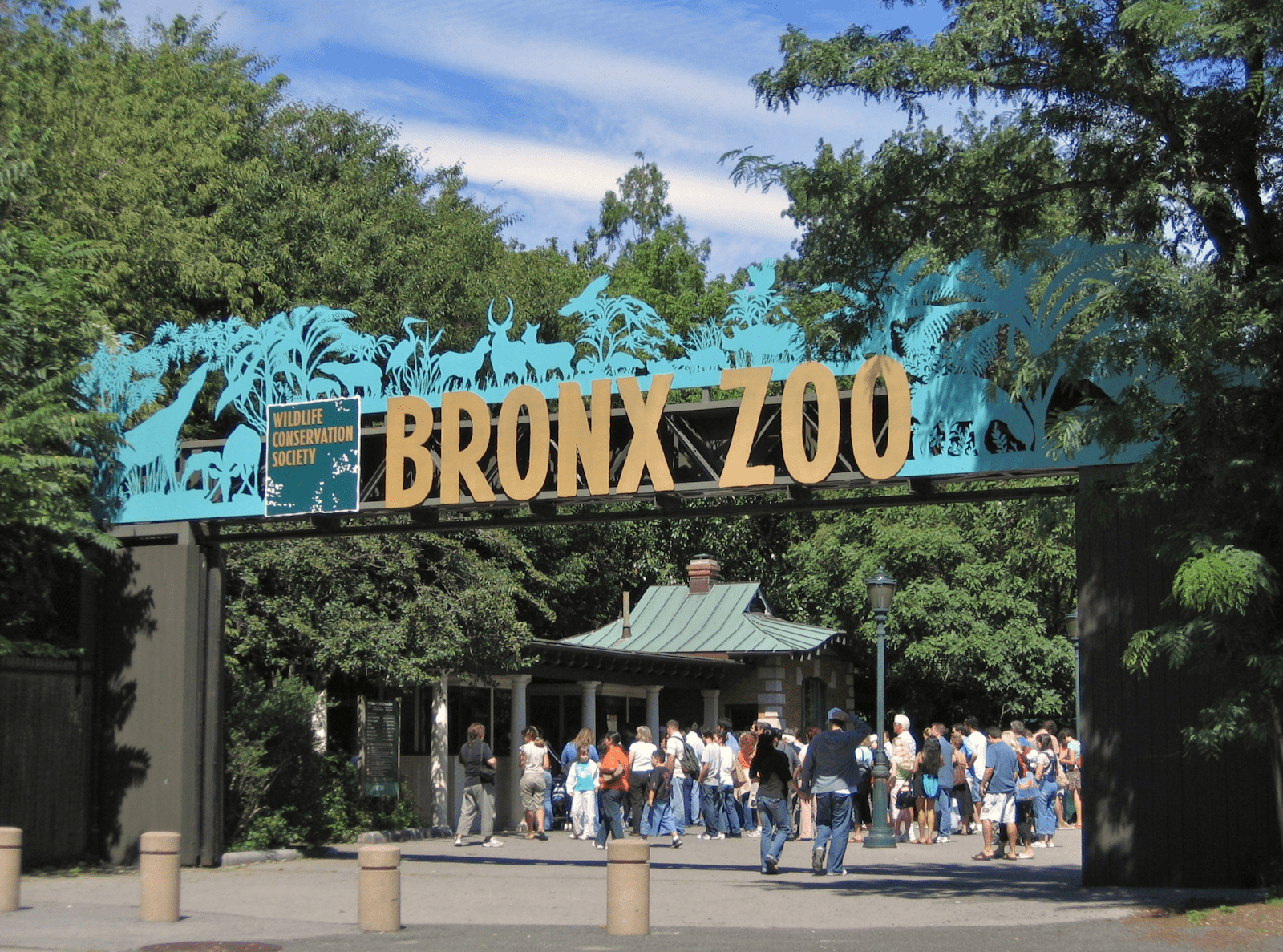
New York City boasts countless attractions that draw tourists and locals alike. Among them, the Bronx Zoo (also known as the Bronx Zoological Park or Bronx Zoological Garden) stands out as a unique landmark of nature, architecture, and zoology. Let bronx.name guide you through the fascinating history and highlights of this extraordinary place.
History of the Zoo’s Founding
The Bronx Zoo, one of the largest conservation parks, was established in 1895. The initiative came from a group known as the Boone and Crockett Club, which later became the Wildlife Conservation Society. Their goals were to create a zoo, support zoological research, and promote wildlife conservation in the United States. Prominent figures like Madison Grant and C. Grant LaFarge spearheaded these efforts.
The zoo officially opened its doors on November 8, 1899, featuring 22 exhibits and 843 animals. Its first director, William Temple Hornaday, held the position for 30 years, during which he laid the foundation for the zoo’s conservation efforts.
The zoo’s emblem, designed by wildlife artist Charles R. Knight, featured a ram and an eagle, symbolizing the commitment to preserving North American wildlife.
Early Efforts in Conservation
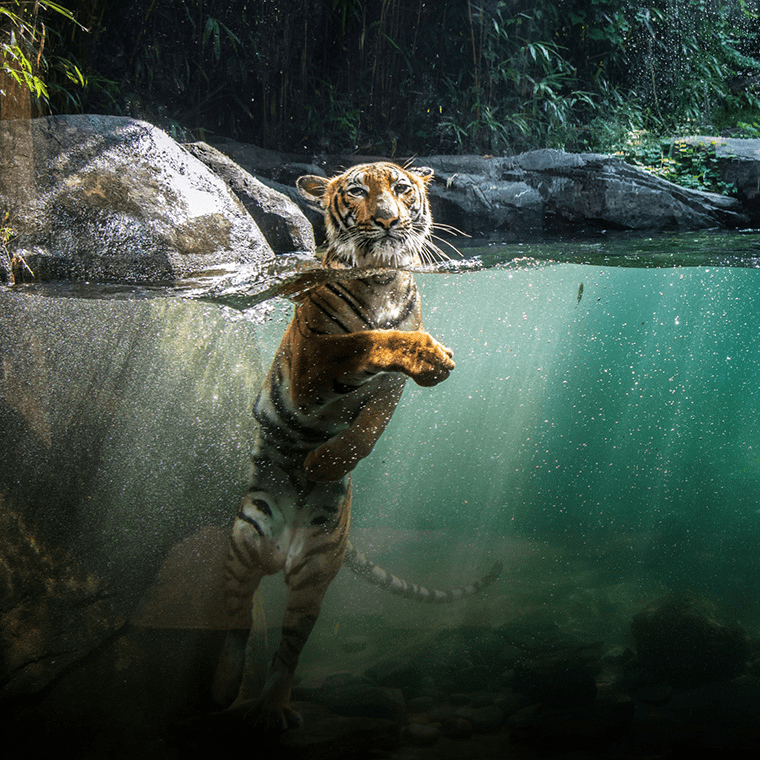
From the very beginning, the Bronx Zoo played a crucial role in wildlife conservation. In 1905, it established the American Bison Society to prevent the extinction of bison, whose population had dwindled from tens of millions to a few hundred. By 1907, the zoo had successfully reintroduced bison into the wild. A century later, the zoo continued its conservation work by reintroducing three Chinese alligators into their natural habitat.
Architecture of the Bronx Zoo
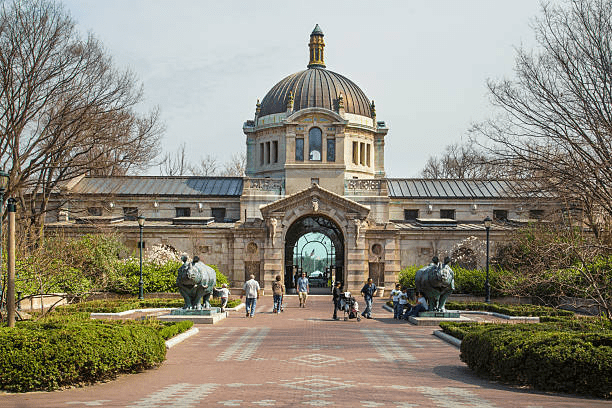
The Bronx Zoo’s grounds feature remarkable architectural highlights. The firm Heins & LaFarge designed a series of pavilions surrounding a circular sea lion pool. Another iconic structure is the Rainey Memorial Gates, sculpted by Paul Manship, which honor hunter Paul James Rainey and were added to the National Register of Historic Places in 1972.
One notable landmark is the Rockefeller Fountain, originally from Como, Italy. American entrepreneur William Rockefeller purchased it for 3,500 lire (approximately $17,600 today) and donated it to the zoo.
Notable Animals at the Bronx Zoo
- Thylacines: In 1902, the zoo acquired a thylacine (Tasmanian tiger) from animal trader Carl Hagenbeck. The zoo continued to acquire these animals until the last one died in 1919.
- Barbary Lions: In 1903, the zoo received two Barbary lions, extinct in the wild at the time. They bred successfully and became a major attraction.
- Komodo Dragons: In 1926, the zoo showcased adult Komodo dragons for the first time.
- Okapi: In 1937, the zoo introduced okapi, also known as the forest giraffe or zebra giraffe.
- James’s Flamingos: By 1960, the zoo housed these flamingos, believed to be extinct in the wild.
- Sumatran Rhino: In 1990, the Bronx Zoo was one of three facilities in North America to house a Sumatran rhino.
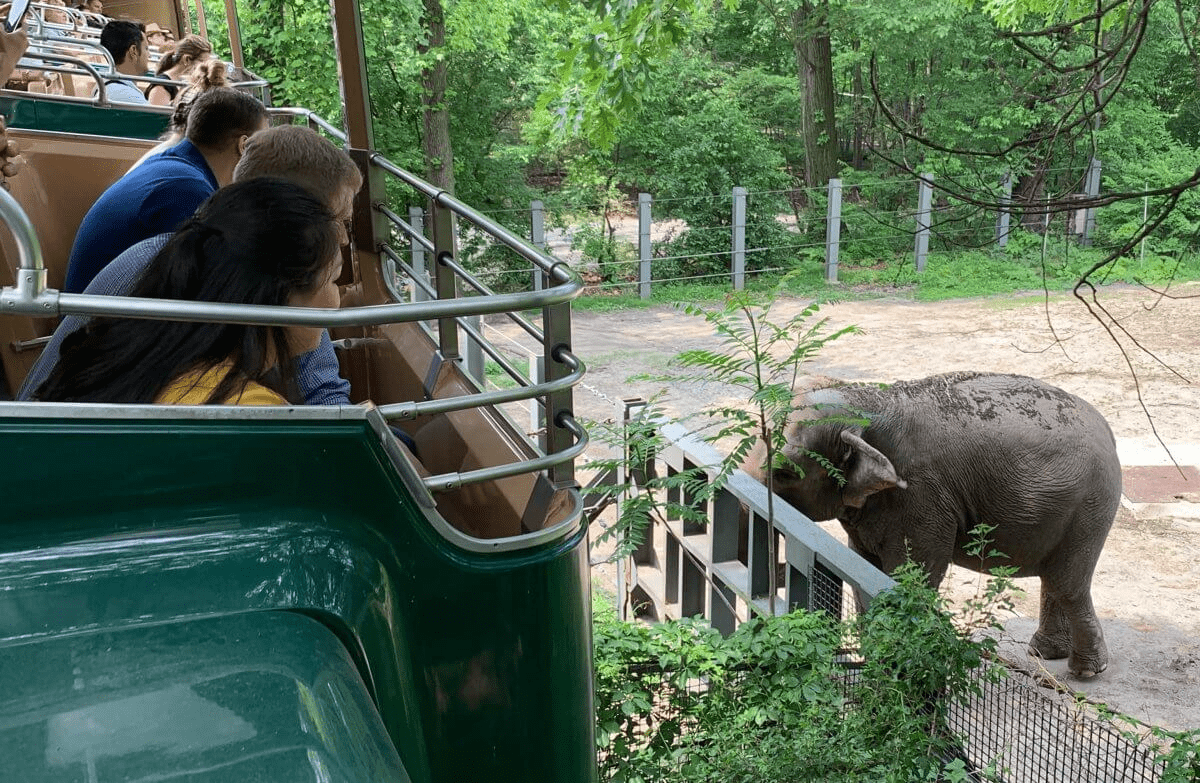
By 2010, the zoo was home to over 4,000 animals representing 650 species, many of which are endangered.
Tragic and Comedic Incidents
- Fatalities: In 1985, two tigers fatally attacked a zookeeper who entered their enclosure—the first such incident in the zoo’s history.
- Unusual Deaths: In 2007, otters drowned a langur monkey that had been sunbathing near their habitat.
- Intrusions: In 2001, a man scaled a 20-foot wall to join the gorillas, stripping down to his shorts before being escorted away by staff.
- Mechanical Failures: In 2008, a sky ride broke down, leaving some passengers stranded for five hours.
Escapes
- 1902: A jaguar escaped from its enclosure.
- 1957: A platypus named Penelope escaped and was never found.
- 1995: A snowstorm caused a bird aviary collapse, allowing some to escape while others perished.
- 2011: An escaped cobra sparked public fascination and internet memes before being safely recaptured.
Ota Benga
In 1906, the zoo controversially exhibited Ota Benga, a member of the Mbuti pygmy people, in a cage with monkeys. Although he was allowed to roam freely, the display sparked protests from African American clergy and civil rights leaders.
“The Most Dangerous Animal in the World”
In 1963, the zoo hosted an exhibit titled “The Most Dangerous Animal in the World.” It featured a mirror behind bars, prompting visitors to reflect on humanity’s impact on the environment.
Conclusion
The Bronx Zoo stands as a symbol of conservation, history, and the delicate relationship between humans and wildlife. Visiting the Bronx Zoo is not just a chance to marvel at its inhabitants but an opportunity to understand the importance of preserving our natural world.