

Park · the Bronx · ⭐ 9.3/10 · 9142 reviews · updated: 2026-08-04 20:04:51
Address: Broadway and Van, Cortlandt Park South, Bronx, NY 10471, United States
Van Cortlandt Park — a colonial estate that became the Bronx’s green engine room
Van Cortlandt Park covers 1,146 acres in the northwest Bronx, making it the third-largest park in New York City, and it carries an unusual density of firsts. The oldest building in the borough stands here — a 1748 fieldstone manor that housed both George Washington and the British general chasing him. The first public golf course in the United States opened on its meadows in 1895. Its cross-country course, laid out in 1913, is still the most storied five kilometres in American distance running, and generations of high-school runners know its hills by name. Around all of that lies genuine woodland: ridges of Fordham gneiss, an eighteen-acre lake, a buried brook that is about to be brought back into daylight, and five distinct marked trails. It is a park you can use for sport, for history or for silence, depending on which gate you walk through.
Highlights
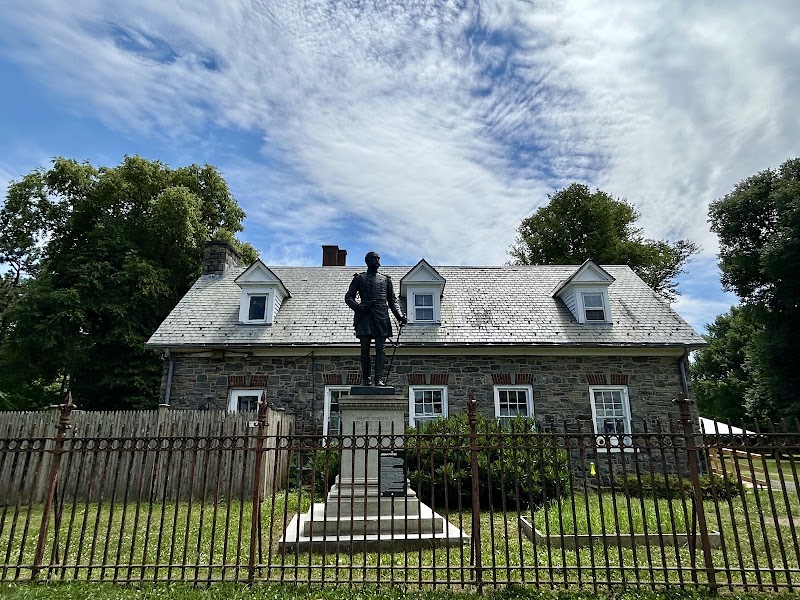
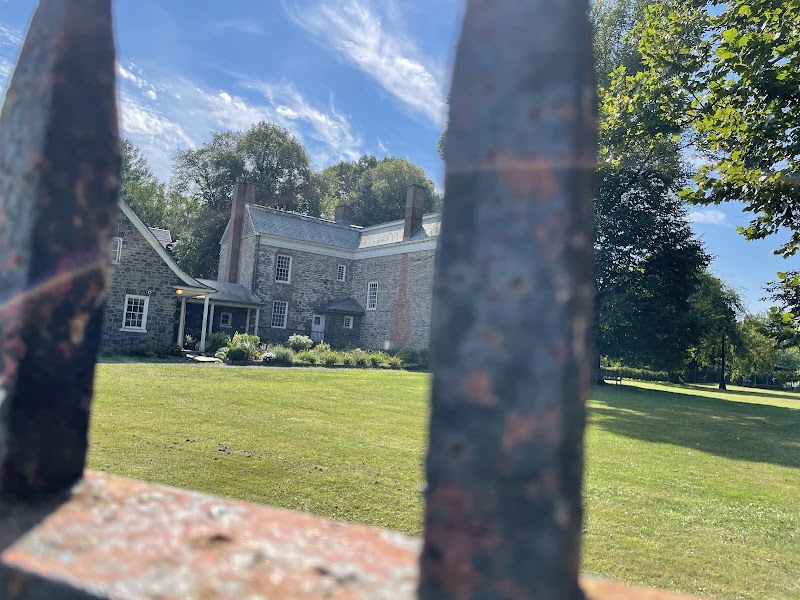
- Van Cortlandt House Museum — built from 1748 by Frederick Van Cortlandt, who died before it was finished, and completed in 1749. This two-and-a-half-storey Georgian house of rough fieldstone is the oldest surviving building in the Bronx, with carved keystone faces above the windows said to represent family members, Dutch-tiled fireplaces and original woodwork. It has been a museum since 1897, run by the National Society of Colonial Dames, and was made a National Historic Landmark in 1976.
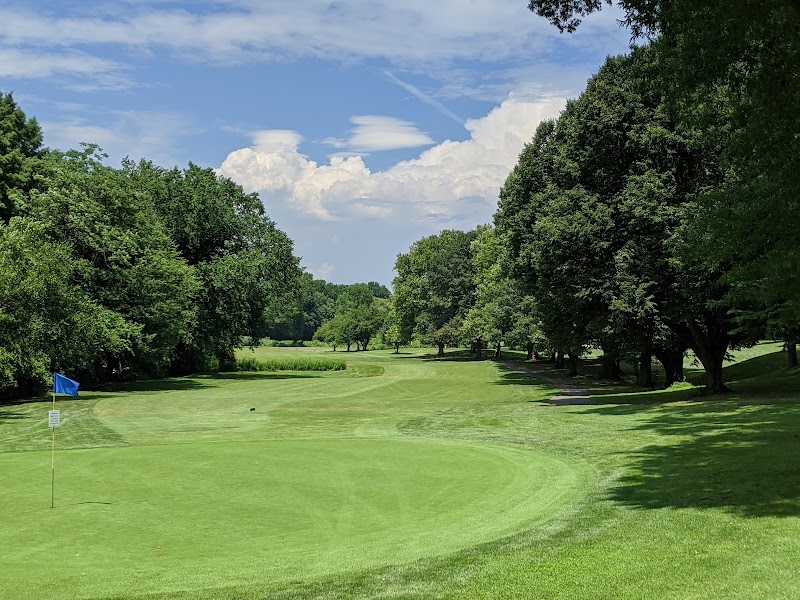
- Van Cortlandt Golf Course — opened on 6 July 1895 as the first public golf course in the United States, laid out as nine holes north of the lake by T. McClure Peters. The country’s first public golf tournament was played here in 1896, and in 1899 Tom Bendelow — the “Johnny Appleseed of American golf” — expanded it to eighteen holes across some 120 acres.
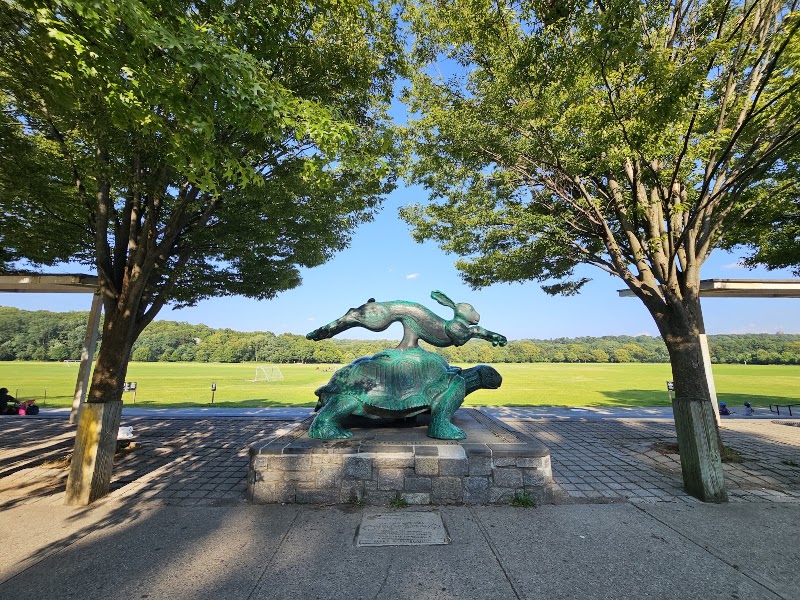
- The Parade Ground — a vast flat expanse converted from the estate’s grain fields, drilled on by the National Guard from the park’s earliest years and now the largest continuous playing field complex in the borough, hosting cricket, baseball, soccer and rugby simultaneously on a good Saturday.
- The cross-country course — opened in 1913 and unchanged in character since: the flat opening loop, the dusty Cow Path, Freshman Hill, Cemetery Hill, the footbridge, the Back Hills and the plunge of Roller Derby Turn. Alberto Salazar, Marty Liquori, Alan Webb, Edward Cheserek and Olympic 1500 m champion Matthew Centrowitz all raced here.
- The Old Croton Aqueduct Trailway — 1.1 miles opened as a trail in 1968, running along the 1840s water tunnel that first brought clean water to Manhattan, with a surviving gatehouse and stretches of disused brick tunnel visible from the path.
- Vault Hill — the Van Cortlandt family burial ground, established in 1749 and the oldest such site in the Bronx. In 1776 Augustus Van Cortlandt hid New York City’s public records in the vault to keep them from the British, retrieving them for the new American government after the war.
What you’ll find
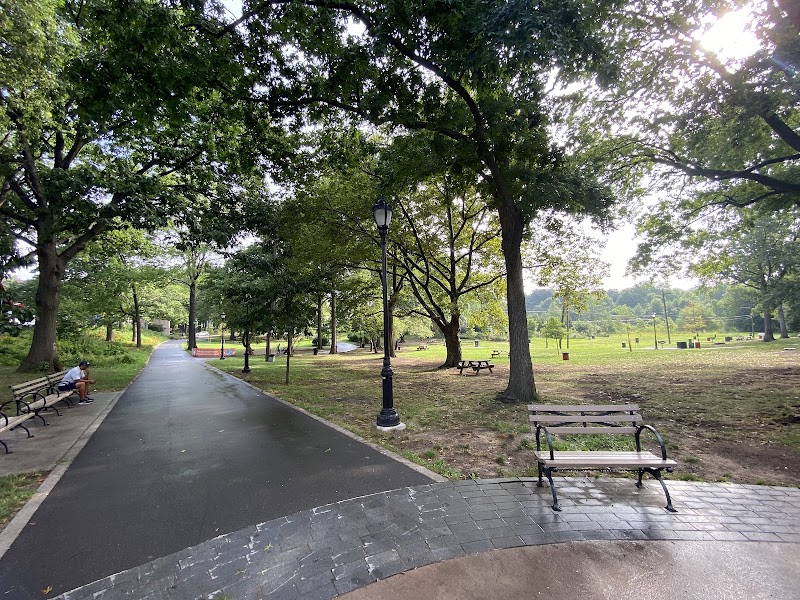
The park divides cleanly into three: the flat, hard-worked south — Parade Ground, lake, golf, house museum — the wooded ridges of the northwest, and the Croton Woods and old railroad corridor to the east. Five marked trails stitch them together, and none of them is longer than about a mile and a half, which makes combining two or three easy.
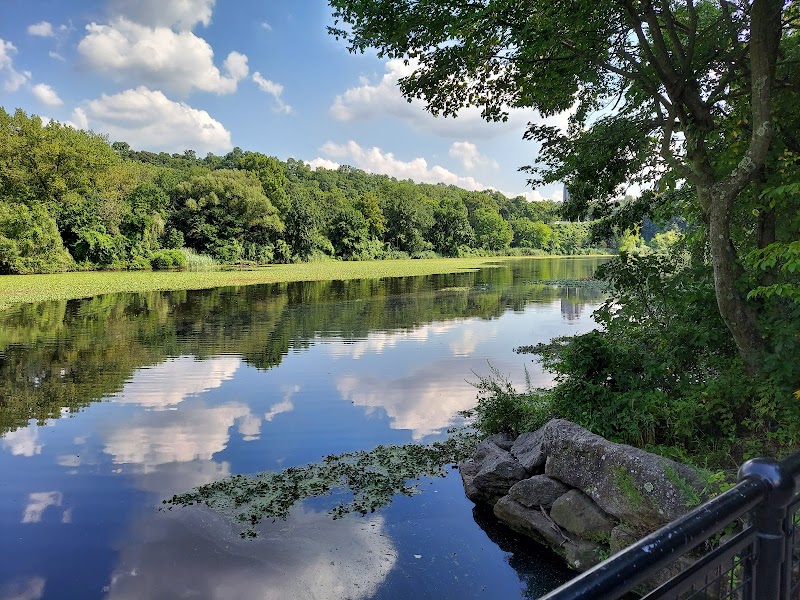
- Van Cortlandt Lake — at eighteen acres, the largest freshwater lake in the Bronx, and an accident of industry: Jacobus Van Cortlandt dammed Tibbetts Brook in 1699 to power a sawmill and created the pond. It is four to eight feet deep and holds largemouth bass, black crappie, bluegill, carp, bullhead and yellow perch.
- The Putnam Trail — 1.5 miles along the roadbed of the old New York and Putnam Railroad, rebuilt as a paved path and reopened in October 2020; it runs north to the Westchester county line and links directly into the South County Trailway for a much longer ride or run.
- The John Kieran Nature Trail — 1.25 miles opened in 1987 and named for the naturalist and broadcaster John Kieran. Along it stand thirteen stone pillars, samples tested for the facade of Grand Central Terminal before Indiana limestone was chosen.
- The Cass Gallagher Nature Trail — 1.4 miles named in 1984 for a local environmental campaigner, looping through the rocky northwest forest over exposed Fordham gneiss glittering with mica and quartz — the bedrock is roughly a billion years old.
- The John Muir Trail — 1.5 miles established in 1997, the east-west connector that crosses the park’s northern forests through several oak associations and the best of its spring wildflowers.
- Mosholu Golf Course and the driving range — a second, shorter public course opened in 1914; the Croton Water Filtration Plant, completed in 2015, sits about 160 feet beneath it, invisible from the fairways.
Things to do — and who it’s for
- Runners — the single most historic cross-country venue in the United States, free to run any day of the week. The classic five-kilometre loop is well worn and easy to follow, and the Manhattan College Invitational alone brings something like twelve thousand high-school athletes here each autumn.
- Cyclists and stroller-pushers — the paved Putnam Trail is flat, car-free and continuous into Westchester, the most family-usable long path in the borough.
- History visitors — the house museum, Vault Hill and Indian Field give you the Revolutionary War at close range, including the darker chapters, and the aqueduct trail adds the story of how the city solved its water supply.
- Golfers — you can play the oldest public course in the country on a public tee time, then walk to a second full course inside the same park.
- Birders and walkers — the northwest forest and the lake edge are quiet on weekday mornings, with woodpeckers, warblers on passage, herons and waterfowl on the lake, and almost no crowd noise once you are past the Parade Ground.
- Team sports and big groups — the Parade Ground is one of the few places in New York where a large gathering, a cricket match and three simultaneous soccer games do not interfere with one another.
Getting there & practical
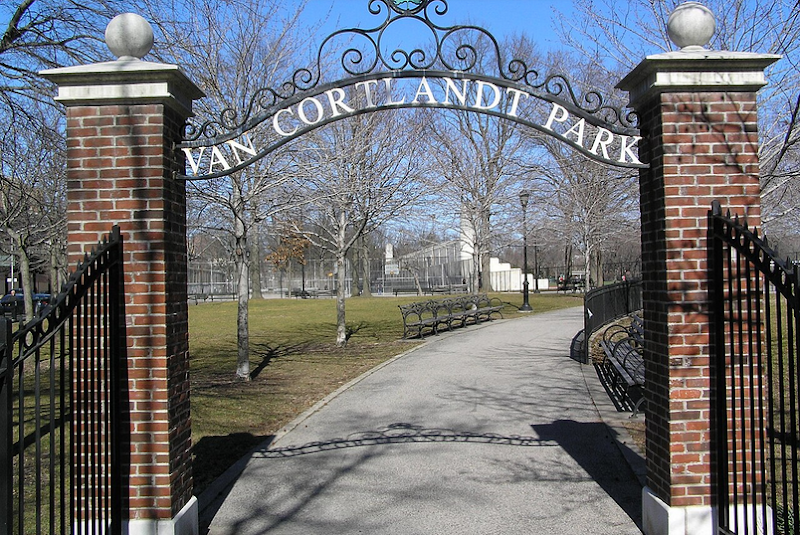
The park sits between Riverdale, Kingsbridge, Norwood and Woodlawn in the northwest Bronx and has usable entrances on nearly every side. The 1 train terminates at Van Cortlandt Park–242nd Street, which drops you at the southwest corner beside the Parade Ground, the house museum and the golf course — this is the easiest arrival for a first visit. The 4 train ends at Woodlawn on the northeast side, closest to the Van Cortlandt golf clubhouse and the eastern woods. Metro-North’s Hudson Line runs west of the park, and the Bx9, Bx10, Bx16 and Bx34 buses plus the BxM3 and BxM4 express routes serve the perimeter; Bee-Line routes from Westchester stop nearby as well. The park itself, its trails, the Parade Ground and the lakeside are all free; the two golf courses, the driving range and admission inside the Van Cortlandt House Museum are the separately paid exceptions. Park land follows standard NYC Parks hours from early morning to late evening; the house museum keeps limited daytime hours and closes on some weekdays, so check before travelling specifically for it. Allow ninety minutes for a walk and the house, half a day if you add a trail, and most of a day for golf.
When to visit
Spring is the park’s quietest pleasure — ephemeral wildflowers on the John Muir and Cass Gallagher trails in April, the lake alive with turtles and nesting waterfowl, and the golf and playing fields reopening after winter. Summer belongs to the Parade Ground: cricket from morning until dusk, weekend barbecues, and enough tree cover on the ridge trails that the forest stays several degrees cooler than the open ground. Autumn is the signature season. From September to November the park hosts race after race on the cross-country course, the oak-hickory canopy turns through the whole spectrum, and the Croton Woods are at their best; if you want to see what makes this park famous, come on a Saturday morning in October and watch the hills. Winter strips the forest back to bedrock and stone walls — Vault Hill, the aqueduct gatehouse and the gneiss outcrops are easiest to read with the leaves down, the Putnam Trail stays walkable, and the lake occasionally freezes hard enough to recall the 1890s, when thousands of skaters used it on a single winter day.
Good to know
Jacobus Van Cortlandt acquired the land from Frederick Philipse in the late 1690s and dammed Tibbetts Brook in 1699 for a sawmill, unintentionally creating the lake that still anchors the park. His son Frederick inherited the estate in 1739 and began the manor house in 1748, dying in 1749 before it was complete. The Revolutionary War came directly to the property: after the Battle of Long Island in 1776 George Washington used the house as a headquarters, British General William Howe took it over on 13 November 1776 after the Battle of White Plains, and Washington returned in 1781 to plan with Lafayette and Rochambeau. In August 1778, on the ground now called Indian Field, a company of Stockbridge Militia — Mohican men fighting for the American side — was ambushed and destroyed, with thirty-eight killed; a monument marks the site. The family sold the estate to New York City in 1888 under the New Parks Act campaign led by journalist John Mullaly, and the park’s civic life began almost immediately: golf in 1895, the country’s first public golf tournament in 1896, a Samuel Parsons-designed Colonial Garden in 1903 that drainage problems doomed by the 1930s, Mosholu Links in 1914, and organised cross-country racing from 1913 onward, with the modern 3.1-mile course fixed on 5 November 1921. Restoration continues today: after decades of neglect and the 1975 fiscal crisis, the golf courses were rebuilt from 1985, a new skate park, playground and path improvements were completed in 2020, and the Van Cortlandt Park Alliance works alongside NYC Parks under a master plan published in 2014. The largest single project is still ahead — the daylighting of Tibbetts Brook, which will bring more than a mile of buried stream back to the surface, create new parkland along the old railroad right-of-way and remove hundreds of millions of gallons a year of stormwater from the sewer system. The construction contract has been awarded and the easement under transit property signed, with major work expected to begin in the autumn of 2026.
Visitor tips
- Pick your subway by purpose: the 1 train to Van Cortlandt Park–242nd Street for the house, Parade Ground and lake; the 4 train to Woodlawn for the golf clubhouse and the eastern woods. Walking between the two ends takes real time.
- If you want to see the cross-country course at full pitch, come on an autumn Saturday morning. If you want it empty, come on any weekday — the trail is free, open and unmarked by fences.
- The northwest forest trails are rocky and root-crossed rather than paved. Save the Putnam Trail for strollers, wheels and beginners, and keep the Cass Gallagher loop for boots.
Questions & answers
Is Van Cortlandt House really the oldest building in the Bronx? Yes. Construction began in 1748 and was completed in 1749, and it is the oldest surviving building in the borough. It has operated as a museum since 1897 and was designated a National Historic Landmark in 1976.
Was this genuinely the first public golf course in America? Yes. The Van Cortlandt course opened on 6 July 1895 as the first municipal, publicly accessible golf course in the United States — originally nine holes, expanded to eighteen in 1899 by Tom Bendelow. The first public golf tournament in the country followed here in 1896.
Does it cost anything to enter the park? No. The park, its trails, the Parade Ground, the lake shore and Vault Hill are free. Golf, the driving range and entry inside the house museum are paid separately.
What is the best way to get there by subway? The 1 train ends at Van Cortlandt Park–242nd Street on the southwest side, next to the Parade Ground and the house museum; the 4 train ends at Woodlawn on the northeast side. Choose according to which half of the park you want.
Can you cycle in the park? Yes. The Putnam Trail was rebuilt as a paved, car-free path and reopened in October 2020; it runs 1.5 miles north and connects into the South County Trailway in Westchester, so a much longer ride is possible without touching traffic.
Why is the cross-country course so famous? Because it has been raced continuously since 1913 and its features — the Cow Path, Freshman Hill, Cemetery Hill, the Back Hills — are part of American running vocabulary. Tens of thousands of high-school and college athletes compete here each autumn, and Olympic-level runners have made their names on it.
What is happening with Tibbetts Brook? The brook, which flows from Yonkers and currently disappears into the sewer system, is being “daylighted”: brought back above ground for over a mile along a former railroad corridor, creating new parkland and sharply reducing sewer overflow into the Harlem River. The contract is awarded and major construction is expected to start in autumn 2026.
Is there any Revolutionary War history on the site? A great deal. Washington headquartered in the house after the 1776 Battle of Long Island and returned in 1781 with Lafayette and Rochambeau; General Howe occupied it in November 1776; city records were hidden in the Vault Hill crypt in 1776; and the Stockbridge Militia was destroyed at Indian Field in August 1778.
Photos
Show 1 more photos
Visitor reviews
Reviews last updated: 2026-08-04 20:04:51
Data is refreshed monthly. Sources: bronx.name and editorial picks based on reviews.
I love this park, I've been coming here for over 25 years, and there really is something for everyone. There are great trails for hiking, biking and running, plus a pool that's open in the summer. The park also has baseb…
Van Cortlandt Park is really beautiful, it offers so many things to do, like hiking, barbecue areas, a playground, a golf course, running tracks and sports fields! I love watching people play sports, and you can even go…
My visit to Van Cortlandt Park was a wonderful and refreshing experience. This park is one of the largest and most beautiful green spaces in the Bronx, and it offers a perfect escape from the bustling city life of New Yo…
A Bronx classic. The trails feel like a real forest, the lake is quiet. The oldest public golf course in the country is right next door. The Van Cortlandt Museum is worth a look — the oldest building in the Bronx. The cr…
I love this park so much. It's so quiet, with its lush greenery and beautiful views. There's a playground, a track-and-field field and a sports court that I love to stroll past. And the best part is the walking trails, w…