

Park · the Bronx · ⭐ 9.1/10 · 1780 reviews · updated: 2026-08-04 20:04:56
Address: Roberto Clemente State Park, 301 W Tremont Ave, Bronx, NY 10453, United States
Roberto Clemente State Park — New York’s first urban state park, on the Harlem River
Most state parks are somewhere you drive to. This one is at the bottom of a hill in Morris Heights, wedged between apartment towers and the Harlem River, and it was built precisely on the argument that people who cannot leave the city still deserve a state park. Twenty-five acres, about three-quarters of a mile of riverfront, an Olympic-size pool complex, a big recreation building that works year-round, ballfields, courts and a promenade along the water: it opened in 1973 as the first New York state park created in an urban setting, and a year later it took the name of a baseball player who had died delivering earthquake relief. Since then it has become something more than a park for this stretch of the Bronx — a swimming pool for children who have nowhere else to learn, a gym in February, a place for a wedding photograph against the river, and a bronze statue that made the neighborhood’s Puerto Rican community visible in the city’s public art for the first time.
Highlights
- The Roberto Clemente statue — a seven-foot bronze by sculptor Maritza Hernandez, commissioned by Goya Foods and unveiled in 2013; it was the first statue honoring a Puerto Rican to be unveiled in New York City.
- The Olympic-size pool complex — the park’s summer centrepiece, running structured sessions and a long-standing learn-to-swim programme for children.
- The multi-purpose recreation building — gymnasium and fitness centre open through the year, so the park does not close down when the weather turns.
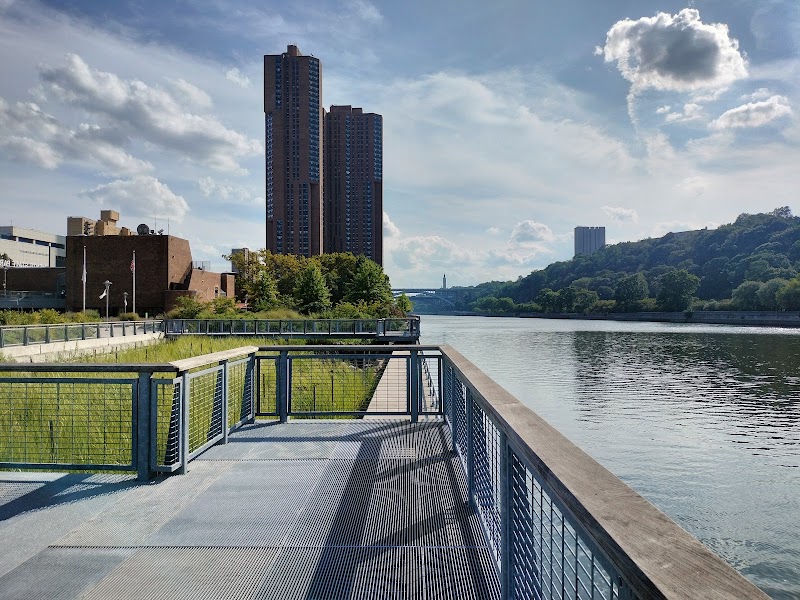
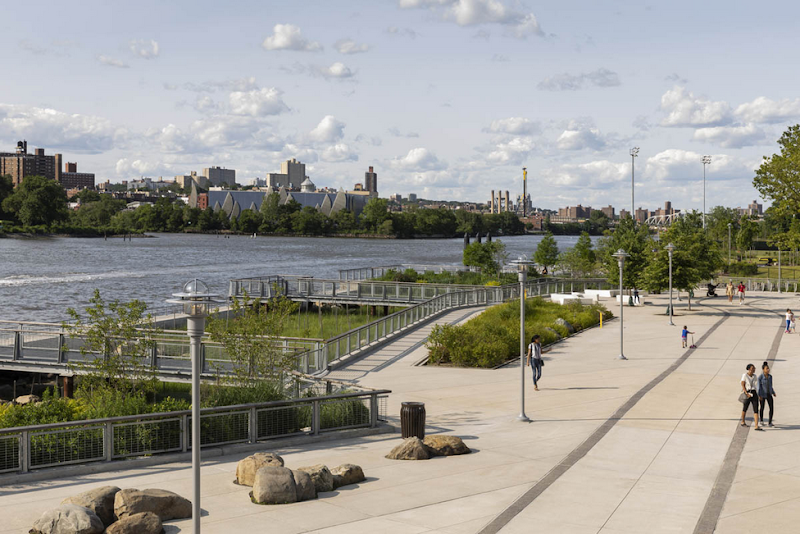
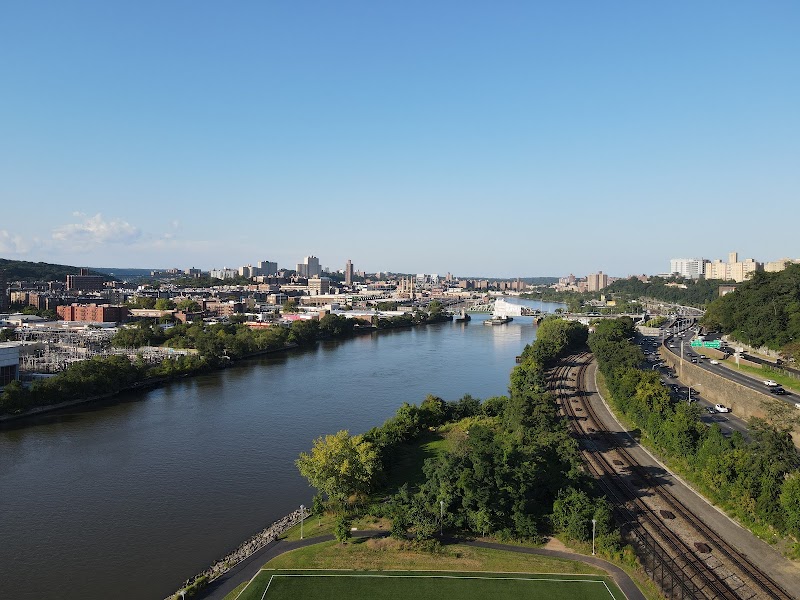
- The waterfront promenade — an esplanade along roughly three-quarters of a mile of Harlem River frontage, rebuilt after Hurricane Sandy with a new pathway, a river overlook and a boat launch.
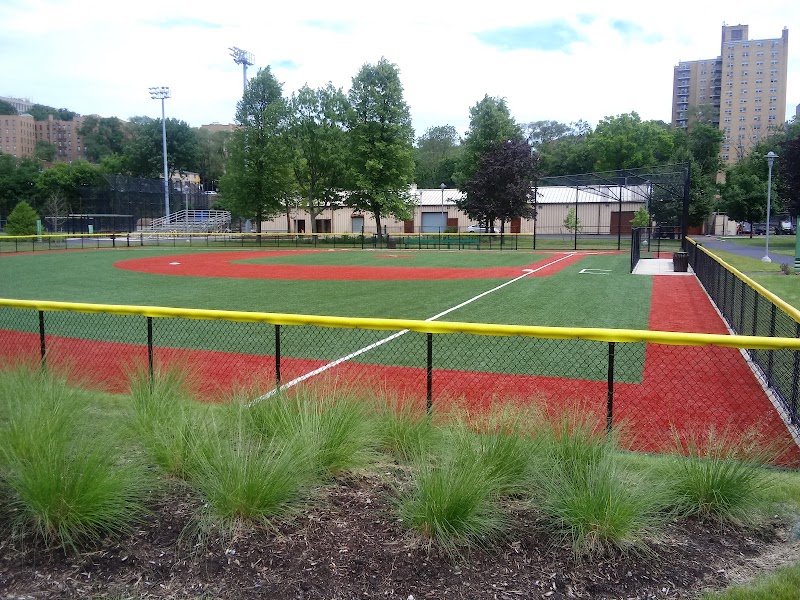
- Ballfields and basketball courts — a full outdoor sports offer that hosts school, league and college play.
- The Chimney Swift Tower — an unusual piece of habitat infrastructure installed during the park’s long modernisation, built to shelter a bird that lost its nesting chimneys to the modern city.
What you’ll find
The park was laid out by the landscape architecture practice of M. Paul Friedberg, and it shows: hard surfaces, terraces and steps handle the drop from the neighborhood down to the river, and the active facilities are stacked efficiently on a narrow site so that the waterfront edge stays open.
- An outdoor aquatics complex with an Olympic-size pool, operating on a summer season with scheduled daily sessions.
- A recreation building housing a gymnasium and a fitness centre with its own weekly hours.
- Baseball and multi-purpose fields plus outdoor basketball courts.
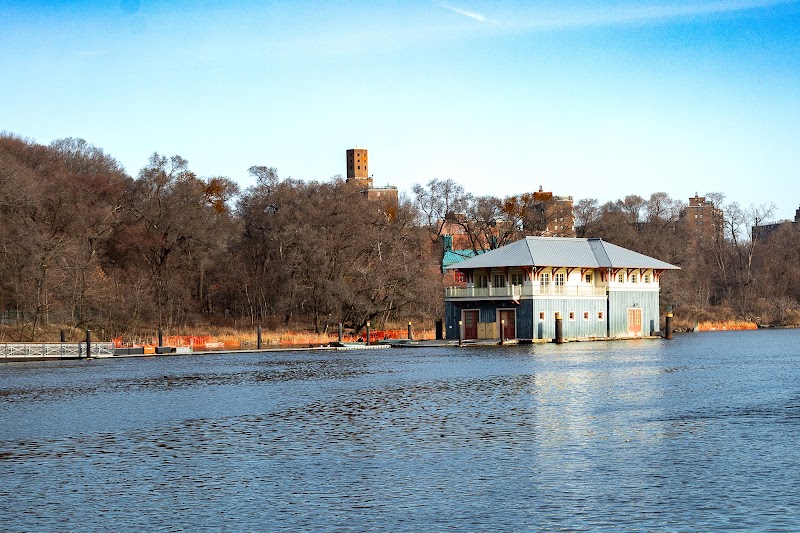
- A waterfront esplanade with a river overlook, pedestrian and cycling pathway and a boat launch.
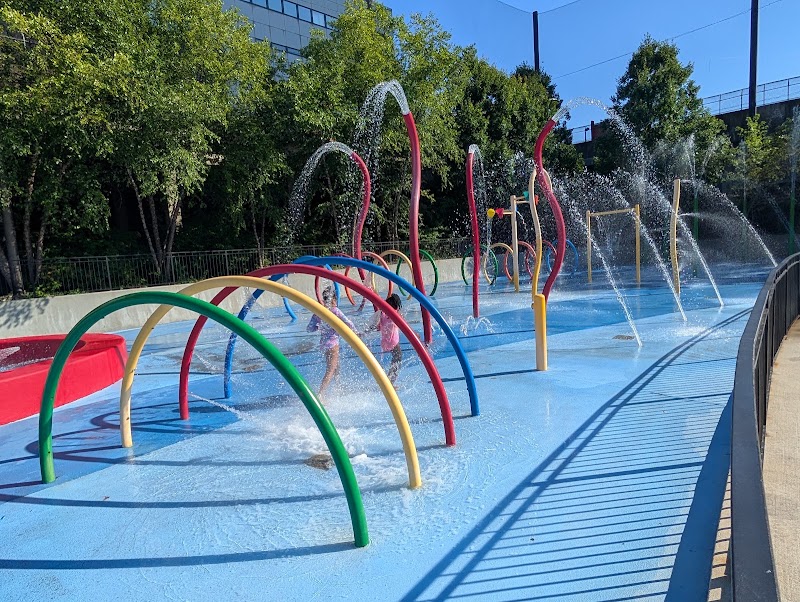
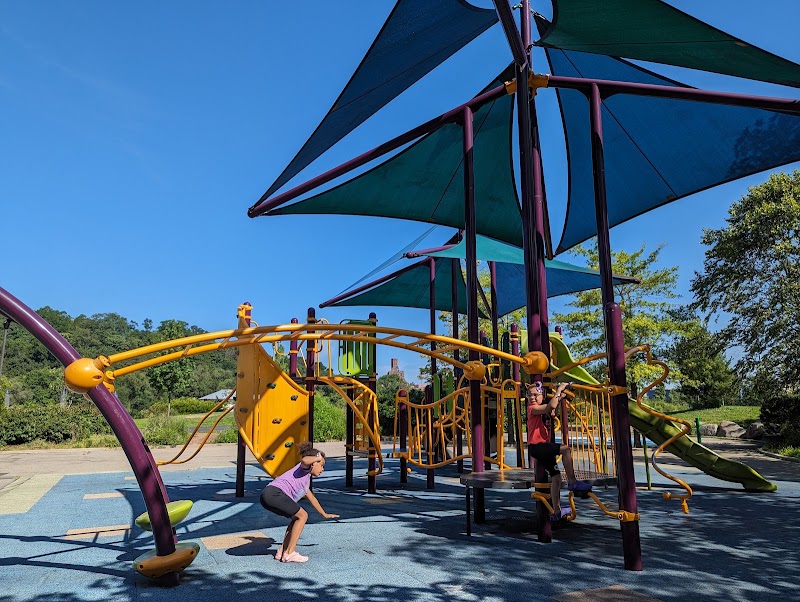
- Playgrounds — including one opened in 2013 — and picnic areas with tables.
- Open lawn and plaza space used for concerts, festivals and community programming.
Things to do — and who it’s for
- Swimmers and swimming families — the Olympic-size pool and the learn-to-swim programme for school-age children are the reason many local families know this park at all.
- Year-round exercisers — the gym and fitness centre give the park a winter life that outdoor-only parks cannot match.
- Baseball fans and pilgrims — the Clemente statue is a destination in its own right, particularly for Puerto Rican and Latin American visitors.
- Walkers, runners and cyclists — the rebuilt riverside pathway gives a flat, protected route with continuous water views.
- Paddlers — the boat launch added in the post-Sandy rebuild opens the Harlem River to kayaks and canoes.
- Event-goers and families — summer concerts, festivals and organized recreation programmes run through the warm months.
Getting there & practical
The park sits at the western edge of Morris Heights, on the Harlem River in the west Bronx. Metro-North’s Hudson Line stops at Morris Heights station a short walk away, which is the fastest arrival from Manhattan. By subway, take the 4 train to Burnside Avenue and change to a westbound local bus that ends at the park; the Bx18, Bx40 and Bx42 routes all serve the towers and the park approach. Entry to the park is free — the promenade, lawns, fields, courts, playgrounds and the statue cost nothing. The aquatics complex and the fitness centre are the exceptions in practice: they run on their own seasons, session times and rules on registration, and parking on site may be charged during the busy season, so check the current schedule before planning a swim. The park is open daily year-round on state park hours, generally from early morning into the evening rather than the very long hours of city parks, with reduced indoor hours on holidays. Allow an hour for the promenade and the statue, half a day if swimming or sport is the point of the visit.
When to visit
Spring is when the riverside pathway comes into its own: cool air, long light on the water, the fields back in use and the park busy without being crowded. Summer is the park at full capacity — the pool opens for its season, concerts and festivals fill the plaza, and the promenade is the coolest place in the neighborhood on a hot evening; come early for the first pool session if you want space. Autumn brings the best light of the year on the Harlem River and the most comfortable conditions for running or cycling the esplanade, with the trees along the terraces turning against the water. Winter is the reason this park was built the way it was: while outdoor-only parks empty out, the gymnasium and fitness centre keep working, and the bare riverfront on a clear cold day gives sharp views across the water with almost nobody on the path.
Good to know
The park opened in 1973 as Harlem River State Park — the first state park New York created in an urban setting, and the first within New York City. It was designed by the landscape architect M. Paul Friedberg and his firm on a difficult twenty-five-acre strip: part of the site was built over the former Tremont Bridge, and land at the northern end was donated by New York University. In 1974, the year after it opened, the park was renamed for Roberto Clemente. The Puerto Rican outfielder — described by New York State Parks as the first Latino-American inducted into the Baseball Hall of Fame — had died on December 31, 1972, when the aircraft carrying his relief supplies to victims of the Nicaragua earthquake crashed shortly after take-off; he was thirty-eight. The naming was a deliberate statement about who this park was for. Modernisation has been continuous since 2000: the aquatics facility was rehabilitated, the basketball courts rebuilt, a green roof was installed on the gymnasium, the baseball field was renewed, a Chimney Swift Tower was erected as wildlife habitat, and in 2013 a new playground designed by The RBA Group opened alongside the unveiling of the Clemente statue. The seven-foot bronze, by sculptor Maritza Hernandez and commissioned by Goya Foods, was the first statue honoring a Puerto Rican unveiled in New York City. After Hurricane Sandy, the Harlem River bulkhead was replaced in a project completed in 2015, which also delivered a new pedestrian and bicycle pathway, a river overlook and a boat launch. In June 2019, Governor Andrew Cuomo announced a major transformation of the park and its waterfront, the largest single investment in its history.
Visitor tips
- Come by Metro-North if you can. The Morris Heights station is close enough to walk and turns an awkward crosstown trip into a short ride along the river.
- Check the pool season and session times in advance — the aquatics complex runs a summer calendar with fixed daily sessions, not open all-day swimming.
- Walk the promenade north to south rather than doubling back; the statue, the overlook and the best river views line up along the route.
Questions & answers
Why is a state park inside New York City? That was the point. Opened in 1973 as Harlem River State Park, it was the first New York state park created in an urban setting — an explicit attempt to bring state-level recreation facilities to city residents who could not travel to them.
Who was Roberto Clemente and why is the park named for him? He was a Puerto Rican baseball outfielder and humanitarian, described by New York State Parks as the first Latino-American inducted into the Baseball Hall of Fame. He died on December 31, 1972, in an air crash while carrying relief supplies to Nicaragua after an earthquake. The park was renamed in his honour in 1974.
Is there really a statue of him? Yes — a seven-foot bronze by sculptor Maritza Hernandez, commissioned by Goya Foods and unveiled in 2013. It was the first statue honoring a Puerto Rican to be unveiled in New York City.
Can I swim there? Yes. The park has an Olympic-size outdoor pool complex operating on a summer season with scheduled daily sessions, plus long-running learn-to-swim classes for children and water exercise programmes for seniors. Check the current season dates and session times before you go.
Is anything open in winter? Yes, and that is unusual for a park this size. The multi-purpose recreation building holds a gymnasium and a fitness centre that operate through the year on weekly hours, with reduced indoor hours on holidays.
How big is it and what is the waterfront like? About twenty-five acres in Morris Heights, with roughly three-quarters of a mile of Harlem River frontage. The esplanade was rebuilt after Hurricane Sandy in a project completed in 2015 that added a pedestrian and bicycle pathway, a river overlook and a boat launch.
How do I get there without a car? Metro-North’s Hudson Line stops at Morris Heights station within walking distance. By subway, the 4 train to Burnside Avenue connects to westbound local buses — the Bx18, Bx40 and Bx42 all serve the approach — that run down to the park.
Is it free? Entry to the park is free, including the promenade, lawns, fields, courts and the statue. The aquatics complex and fitness centre operate on their own schedules and registration rules, and on-site parking may be charged in the busy season.
Photos
Show 1 more photos
Visitor reviews
Reviews last updated: 2026-08-04 20:04:56
Data is refreshed monthly. Sources: bronx.name and editorial picks based on reviews.
I visited Roberto Clemente State Park for the first time since childhood. This park often comes up in negative conversations because of its neighborhood and other factors. However, this review is strictly about the park…
Came for the first session (10 a.m.) on a Tuesday.
*CASH ONLY
*NO LOCKERS
*NO FOOD/DRINKS
*WHITE T-SHIRT AND COLOR ONLY TO ENTER THE POOL
Had a day off and wanted to spend time at the pool with my 12-year-old son. A…
This hidden gem sits between I-278 and the East River in the Bronx. Parking is available in the park and on the street; Metro-North (Morris Heights stop) drops you off by the entrance.
The park was recently renovated, a…
The pool is great for kids!! They always have a great time! The community events are really wonderful!
Not bad, which is surprising. I had a great time with my child. Just too many people, and the staff is young and real sticklers for the rules. But it was really cool. The food is inexpensive, lots of space, no lockers.