

Park · the Bronx · ⭐ 9.5/10 · 3565 reviews · updated: 2026-08-04 20:04:53
Address: 2900 Southern Blvd, Bronx, NY 10458, United States
Bronx Park — the river park that gave the city a zoo and a botanical garden
Bronx Park covers 718 acres along the middle course of the Bronx River, and it is the rare public park whose two most famous tenants have almost eclipsed the park itself. The New York Botanical Garden occupies its northern quarter, the Bronx Zoo its southern quarter, and both are separately ticketed institutions with their own gates, hours and rules. What sits between and around them is ordinary, free, open parkland: a river gorge with hardwood swamp and floodplain forest, a Forever Wild preserve of eastern hemlock and hardwoods, seven playgrounds, ball fields, tennis and basketball courts, and a stretch of the Bronx River Greenway that lets you walk or ride along the only fresh-water river in New York City. The park came into being under the New Parks Act of 1884, with the first 640 acres acquired in 1888 and 1889, and the zoo and garden were written into the deal from the start.
Highlights
- The Bronx River gorge — the river runs south through the park for about two miles, dropping through a rocky gorge with three waterfalls, bordered by red maple hardwood swamp and floodplain forest. It is one of the very few natural streamside landscapes left anywhere in the city.
- The Bronx River Forest — a 35-acre Forever Wild preserve at the northern end of the park, a mixture of eastern hemlock and hardwoods with many trees over a century old, protected from development and left to grow.
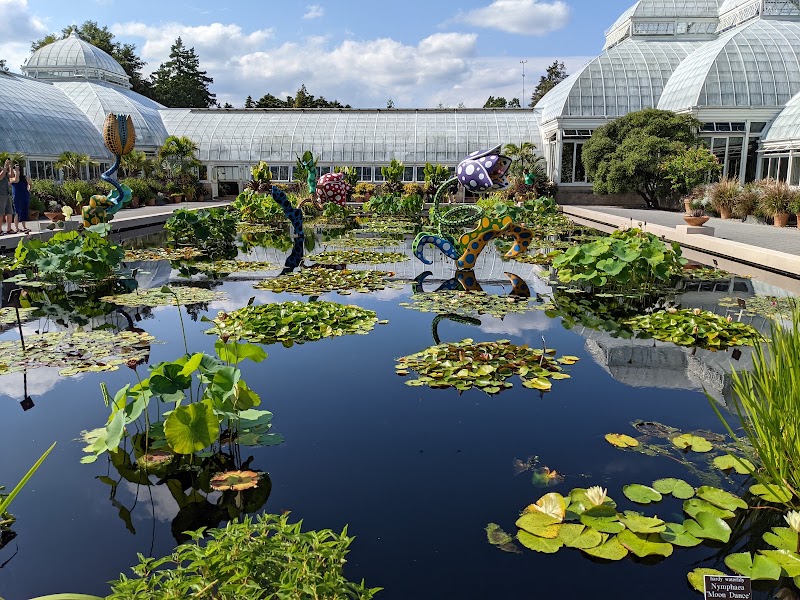
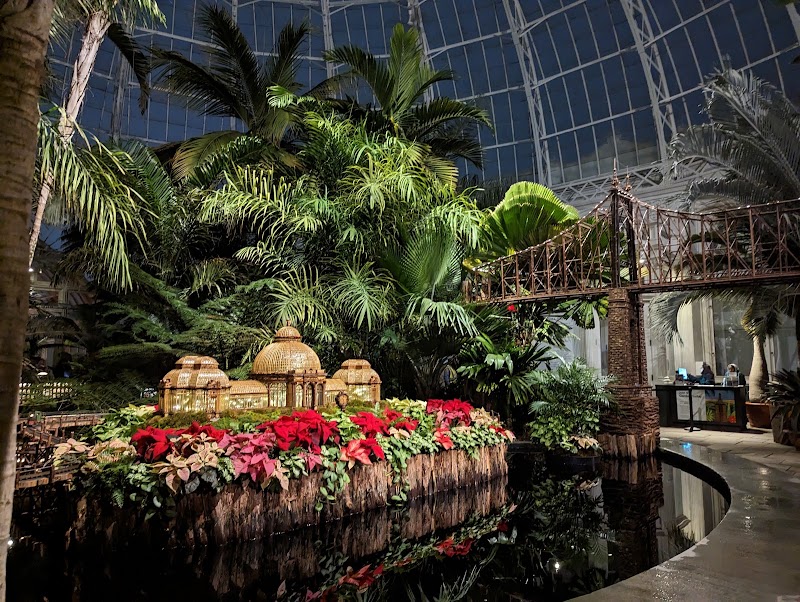
- The New York Botanical Garden — founded in 1891 on the park’s northern 250 acres, home to more than a million living plants, the Enid A. Haupt Conservatory and the Thain Family Forest, the largest surviving remnant of the woodland that once covered New York. It was designated a National Historic Landmark in 1967. Separate paid admission.
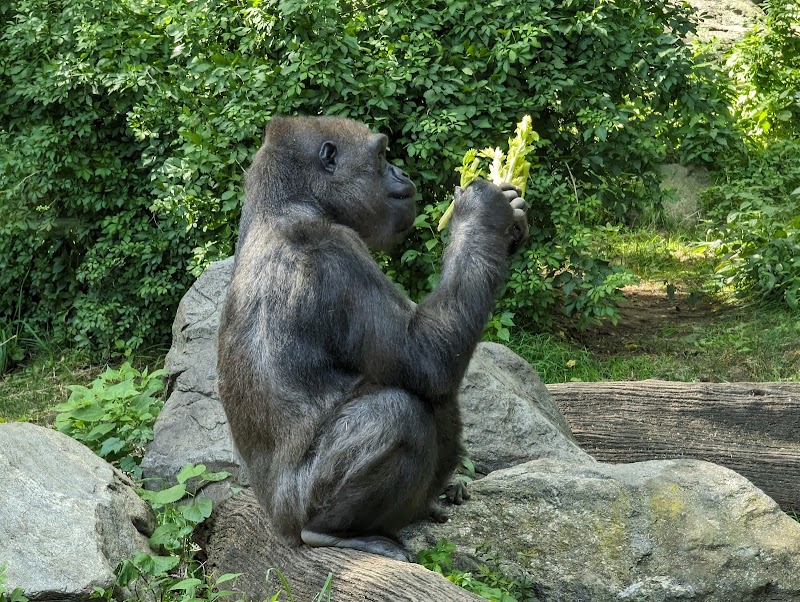
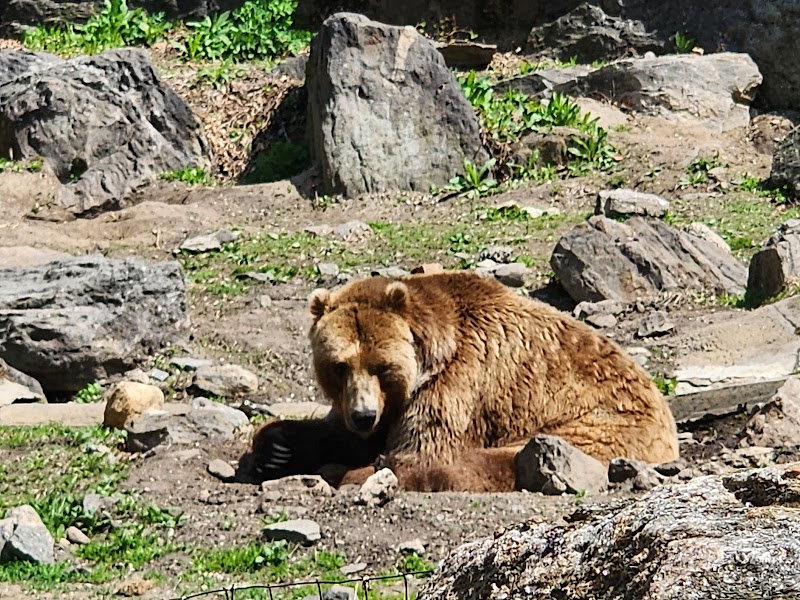
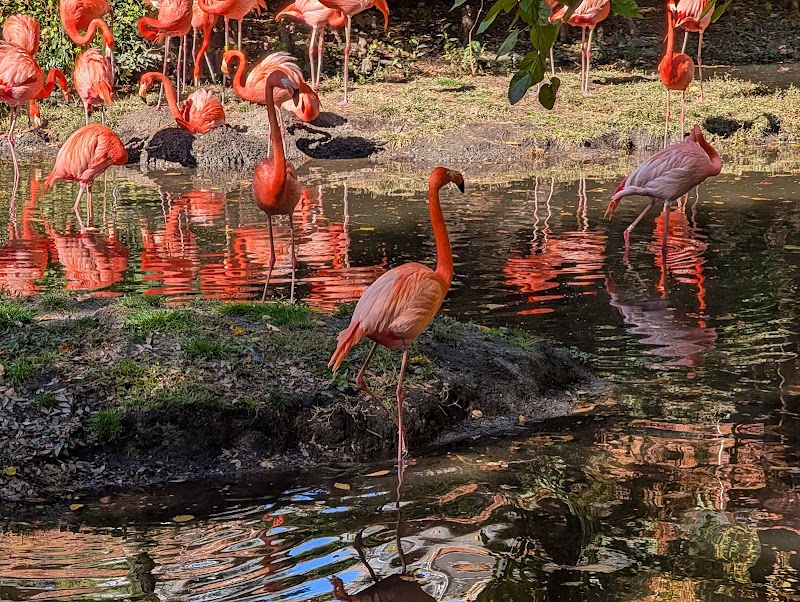
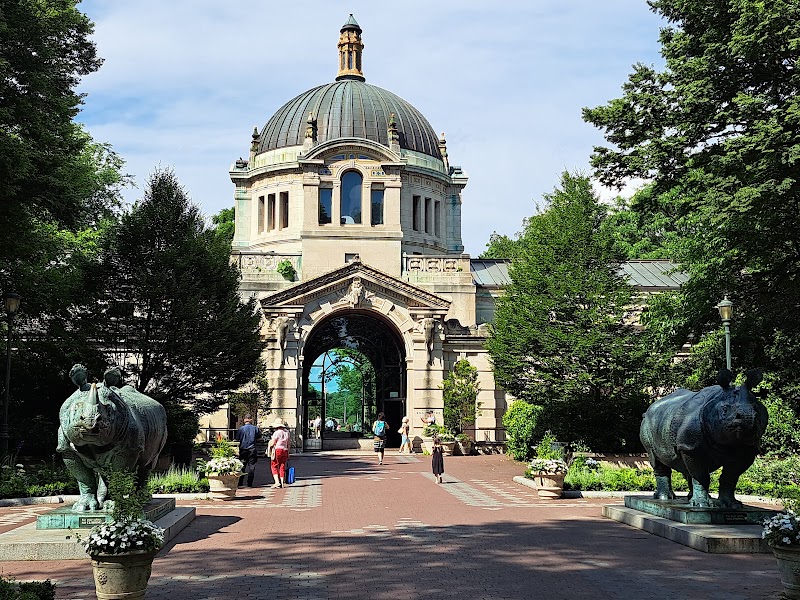
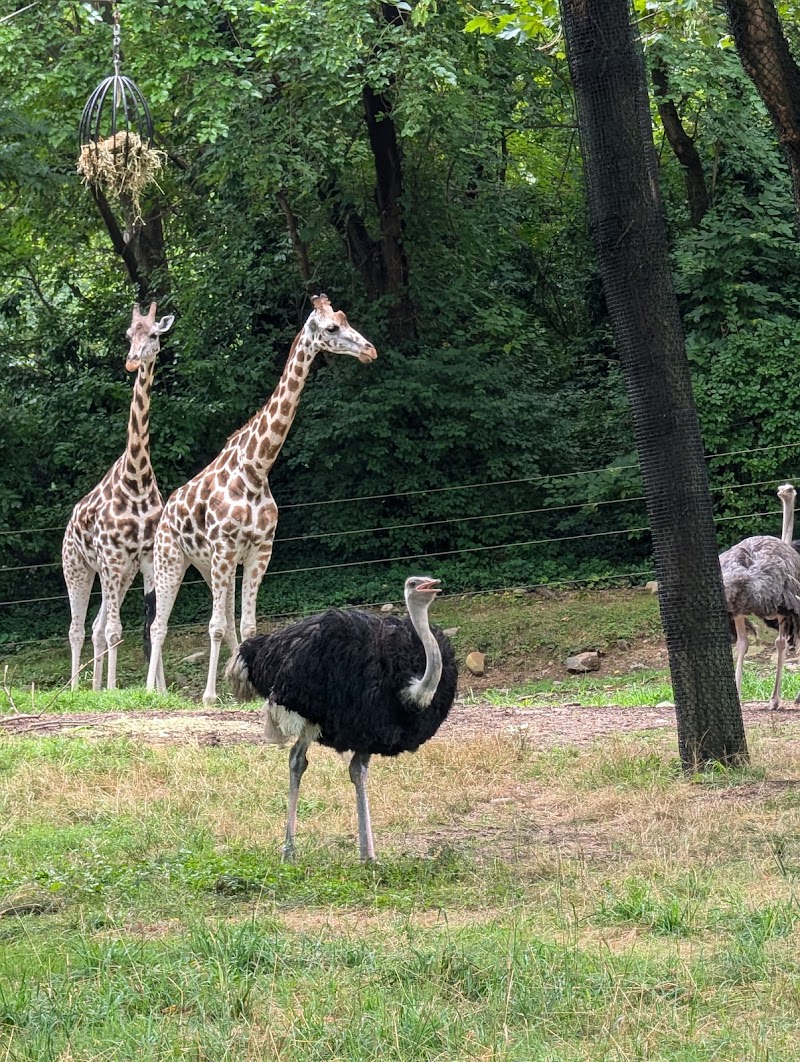
- The Bronx Zoo — opened on 8 November 1899 by the New York Zoological Society across 265 acres, now holding roughly 4,000 animals of about 600 species, with Congo Gorilla Forest, JungleWorld, World of Birds and the Wild Asia Monorail among its signature exhibits. Separate paid admission.
- The Lorillard Snuff Mill — a stone mill inside the Botanical Garden grounds, the oldest surviving tobacco manufacturing building in the United States and a National Historic Landmark, standing beside the river the Lorillard family used to power it.
- The Bronx River Greenway — the continuous riverside route opened in 2013, linking Bronx Park north toward Shoelace Park, a mile-long ribbon of parkland along the east bank with a boat launch, and south toward the fish ladder installed at the river dam in 2015.
What you’ll find
Think of the park in three layers: two walled institutions, the river corridor that threads between them, and the neighbourhood recreation ground along the eastern edge. Only the first layer costs anything.
- Seven playgrounds — four of them along the eastern side of the park: Ben Abrams Playground, Brady Playground, Waring Playground and Rosewood Playground, each serving a different adjoining block.
- Sports facilities — baseball diamonds, tennis and basketball courts, football and soccer fields, all free and all outside the institutional walls.
- Bicycle and walking paths — the greenway sections give a car-free route along the river, usable for commuting as well as recreation, and connecting to a much longer chain of Bronx River parks.
- The old-growth woodland — the hemlock and hardwood preserve at the north end, and within the Botanical Garden the Thain Family Forest, believed never to have been cleared, on the slopes above the river gorge.
- The lakes and dams — Bronx Lake and Lake Agassiz, both formed by damming the river inside the zoo and garden grounds, with waterfalls at the mill and views along the Riverwalk.
- Metro-North’s Botanical Garden station — a Harlem Line stop directly at the garden’s gate, which makes Bronx Park one of the few New York parks with genuine commuter-rail access.
Things to do — and who it’s for
- Families making a day of it — the zoo and the garden are each a full day on their own, and both are aimed squarely at children, with a monorail, a butterfly garden and a children’s adventure garden between them.
- Anyone on a budget — the park outside the institutions is entirely free, and the river corridor, the forest preserve, the playgrounds and the courts need no ticket at all.
- Cyclists and walkers — the Bronx River Greenway gives a flat, largely car-free route along the water, connecting a chain of parks north and south of Bronx Park.
- Nature and tree people — hemlock and hardwood forest, floodplain woodland, a river gorge and a genuinely old-growth tract within the Botanical Garden make this the best place in the borough to see what the land looked like before the city.
- Local sports teams and neighbours — diamonds, pitches and courts along the eastern side are in constant use and function as the everyday park for the surrounding blocks.
- Architecture and history visitors — the Lorillard snuff mill, the Victorian glasshouse of the Enid A. Haupt Conservatory and the zoo’s original Beaux-Arts buildings amount to a serious architectural itinerary.
Getting there & practical
Bronx Park sits in the central-eastern Bronx, edged by the Fordham, Belmont, Bronxdale, Pelham Parkway and West Farms neighbourhoods. The 2 and 5 trains run along the eastern side with stations at East 180th Street, Bronx Park East, Pelham Parkway, Allerton Avenue and Burke Avenue — the most convenient way to reach the free parkland and the zoo’s eastern gates. Metro-North’s Harlem Line stops at Botanical Garden station right at the garden entrance, which is the fastest approach from Manhattan. Buses Bx9, Bx12, Bx19, Bx22, Bx26, Bx39 and Bx41 serve the perimeter, and Bee-Line routes connect from Westchester. Entry to the park itself — the river corridor, the forest, the playgrounds, the ball fields and the greenway — is free at all times. The Bronx Zoo and the New York Botanical Garden are separate paid attractions with their own gates and their own hours; the garden opens Tuesday to Sunday and on Monday federal holidays, and offers free grounds admission to New York City residents on Wednesdays, while the zoo runs a free limited-admission day on Wednesdays for which tickets must be reserved online in advance and a handful of star exhibits still carry a charge. Allow a full day for either institution, and about two hours if you only want to walk the river and the forest.
When to visit
Spring is the Botanical Garden’s showpiece season — the orchid show inside the conservatory, then magnolias, cherries, daffodils and the azalea slopes outside, with the river running high and the floodplain forest greening up. Summer is when the zoo is at its best for children, with the monorail running and long daylight hours, though midday heat is real; the hemlock shade along the river is the cool alternative on the free side of the fence. Autumn is the connoisseur’s season: the hardwood gorge turns through October and November, the Thain Family Forest shows why an uncleared woodland looks different from a planted one, and the crowds at both institutions thin sharply after the summer holidays. Winter suits the conservatory, which stays warm and green all year and hosts the holiday train show, while outside the bare gorge exposes the rock, the dams and the waterfalls that the leaves hide for the rest of the year — and the greenway stays walkable in all but deep snow.
Good to know
Bronx Park exists because of a deliberate act of civic assembly. Under the New Parks Act of 1884 the city put together roughly 640 acres in 1888 and 1889 from several holdings: land from Fordham University, granted on the condition that it be used for a zoo and a botanical garden; the Lorillard family’s riverside property, where the snuff mill still stands; and the Lydig estate. The Botanical Garden was founded in 1891 on the northern 250 acres, driven by the botanist Nathaniel Lord Britton and his wife Elizabeth after they saw the Royal Botanic Gardens at Kew and resolved that New York should have an equivalent. The New York Zoological Society opened the zoo on 8 November 1899 on 265 acres to the south. That leaves roughly 200 acres of Bronx Park as ordinary free public parkland — which is where the river gorge, the Forever Wild forest and the neighbourhood recreation grounds are, and it is the part most visitors never realise is there. The Bronx River itself is central to the whole story: it rises near North White Plains in Westchester, flows two miles through this park’s gorge and empties into the East River at Soundview Park, and it is the only true freshwater river within New York City. It was industrial and then badly polluted for most of the twentieth century; the Bronx River Alliance and NYC Parks have spent decades restoring it, opening a continuous greenway in 2013 and installing a fish ladder at the downstream dam in 2015 so that migratory fish could reach habitat upstream for the first time in generations. The Lorillard snuff mill, meanwhile, has outlived the industry that built it and is now recognised as the oldest existing tobacco manufacturing building in the United States and a National Historic Landmark, as is the Botanical Garden as a whole, designated in 1967.
Visitor tips
- Decide before you travel whether you are visiting the park or one of the institutions. The zoo and the garden each need a ticket, their own entrance and most of a day; the free parkland, the river and the forest need none of that.
- If cost matters, plan around Wednesday: the Botanical Garden gives free grounds admission to New York City residents that day, and the zoo runs a free limited-admission day with tickets that must be reserved online in advance and sell out.
- Metro-North’s Botanical Garden station is the fastest arrival from Manhattan and puts you at the garden gate; if you want the free riverside park and the playgrounds instead, use the 2 or 5 train on the eastern side.
Questions & answers
Are the Bronx Zoo and the Botanical Garden the same thing as Bronx Park? No. They are two separate institutions occupying land inside the 718-acre park — the garden on the northern 250 acres, the zoo on 265 acres to the south. Each has its own gates, hours and paid admission. The rest of Bronx Park is free public parkland.
Does it cost anything to enter the park? No. The river corridor, the Bronx River Forest, the greenway, the playgrounds and the sports facilities are free and open on standard park hours. Only the zoo and the garden charge.
Is there a way to visit the institutions cheaply? Wednesday is the day to plan around. The Botanical Garden offers free grounds admission to New York City residents on Wednesdays, and the Bronx Zoo runs a free limited-admission day on Wednesdays, though zoo tickets must be reserved online in advance and a few star exhibits are still ticketed separately.
What is the best way to get there? Metro-North’s Harlem Line stops at Botanical Garden station directly at the garden gate. The 2 and 5 subway trains run along the park’s eastern edge with several stations, and seven Bronx bus routes serve the perimeter.
Is the Bronx River clean enough to enjoy? It is dramatically better than it was. Decades of restoration by NYC Parks and the Bronx River Alliance produced a continuous greenway in 2013 and a fish ladder at the downstream dam in 2015 that reopened upstream habitat to migratory fish. It is a river for walking, cycling and paddling programmes rather than swimming.
Is there real forest in the park? Yes. A 35-acre Forever Wild preserve of eastern hemlock and hardwoods sits at the northern end, and within the Botanical Garden the Thain Family Forest is the largest remaining piece of the woodland that once covered the city, thought never to have been cleared.
What is the old stone building by the river? The Lorillard snuff mill, inside the Botanical Garden grounds — the oldest existing tobacco manufacturing building in the United States and a National Historic Landmark, powered in its working life by the Bronx River itself.
How much time should I allow? A full day for the zoo or the garden separately; do not try to combine them in one visit. Two hours is enough for the river walk and the forest, and an afternoon covers the free parkland and playgrounds comfortably.
Photos
Show 1 more photos
Visitor reviews
Reviews last updated: 2026-08-04 20:04:53
Data is refreshed monthly. Sources: bronx.name and editorial picks based on reviews.
Easy to get to, great for walking, running, biking or rollerblading. Spend time with family and friends… or just enjoy the weather
What a wonderful day! I really enjoyed spending time with my kids, discovering something new in the garden and watching them play happily with their Lego sets to round off the day.
A really nice zoo outing for the whole family.. The shuttle service makes life easier with kids, with pickup and drop-off points; they run so often, every 5 minutes, that there's more for us to see than we can manage…
The winter trip was fun, there were a few animals, but not many because of the cold, but the indoor exhibits are just great. We had to get out of the cold, great for kids, it was a wonderful family outing. Plus military…
If you're going with kids, I recommend going early, right when it opens. We really enjoyed it when we brought our grandson, and at the end of the tour we rode the garden tram! Perfect timing for the peonies, azaleas and…